Project Mosul: Protecting Iraq’s Cultural Heritage

marinos-150x150by Dr. Marinos Ioannides, Cyprus University of Technology, Department of Electrical Engineering, Computer Engineering and Informatics, Digital Heritage Research Laboratory 

Neville Chamberlain famously said “In war, whichever side may call itself the victor, there are no winners, but all are losers.” Lives are lost, homes and livelihoods are damaged and culture is erased.

In Iraq, a country devastated by invasions and divided by civil war, destruction of cultural artefacts has become common-place. The last few months have seen Islamic State militants burning books from libraries, destroying ancient artefacts housed in the Mosul Museum and more recently bulldozing the ancient Assyrian city of Nimrud.

While it has since transpired that many of the Mosul Museum artefacts destroyed were replicas, some of the larger objects were indeed real. This wanton destruction of cultural heritage has resulted in an outcry from the digital heritage community and beyond.  The historically important city of Mosul holds artefacts of huge cultural and historical importance and the Mosul Museum is the second largest museum in Iraq after the National Museum of Iraq in Baghdad. The museum was first looted during the Iraq war in 2003 and millions of pounds of sculptures and images taken. The Mosul Museum has had a rough ride and needs the support of the GLAM community.

The Lion of Mosul by neshmi
on Sketchfab

Positive action has now been taken by the Initial Training Network for Digital Cultural Heritage (ITN-DCH), a Marie Curie Actions training project that is part of the EC Seventh Framework Programme, through the instigation of a volunteer project. Project Mosul is seeking volunteers to help virtually restore the Mosul Museum. This includes finding photos, processing data, contributing to the website and generally helping out with organising the effort to identify the museum artefacts.

Other EU projects such as the Europeana Space and the 4D-CH-WORLD are joining their forces to help and support this volunteer effort of the young Marie-Curie researchers.

The main volunteer activities that support is needed for are:

  • Uploading pictures of the artefacts found in the Mosul Museum

  • Developing the Web platform

  • Mask images using photoshop

  • Spreading the word about the project

  • Get the word out

  • Processing an artefact using automated photogrammetry to create three-dimensional models

To find out more about how you can support the volunteer activities see the Project Mosul website or join the Google Group.

Some of the artefacts already added to the site.

The project will run so long as it is needed until the destroyed artefacts can be completely reconstructed and re-produced by using latest novel technologies like the 3D printing. All the reconstructed objects will be available under Open Access licenses and will be ‘exhibited virtually’ on the Cloud under the project’s web portal.

Project Mosul is aligned with the scopes of Europeana Space Project. Europeana Space has received funding from the European Union’s ICT Policy Support Programme as part of the Competitiveness and Innovation Framework Programme, under GA n° 621037.

This article has been collected by Marieke Guy from Open Knowledge Foundation, a consultant on the Europeana Space project supporting activities related to open licensing, and it appeared orginally in OKF blog.


Photomediations: An Open Book

by Kamila Kuc, Goldsmiths

A collaboration between academics from Goldsmiths, University of London, and Coventry University, Photomediations: An Open Book is the outcome of the Open and Hybrid Publishing pilot – which is one of six Europeana Space pilots. The pilot redesigns a coffee-table book as an online experience to produce a creative multi-platform resource that explores the dynamic relationship between photography and other media.

Photomediations: An Open Book uses open content, drawn from Europeana and other online repositories (Wikipedia Commons, Flickr Commons) and tagged with the CC-BY licence and other open licences. In this way, the book showcases the possibility of the creative reuse of image-based digital resources.

ohp Blog image


Through a comprehensive introduction and four specially commissioned chapters on light, movement, hybridity and networks that include over 200 images, Photomediations: An Open Book tells a unique story about the relationship between photography and other media. These main chapters are followed by three ‘open’ chapters, which will be populated with further content over the next 18 months: an open reader (featuring academic and curatorial texts), a social space and an online exhibition.


Photomediations: An Open Book’s online form allows for easy sharing of its content with educators, students, publishers, museums and galleries, as well as any other interested parties. Promoting the socially significant issues of ‘open scholarship’, ‘open education’ and ‘open access’, the pilot plays an important social and cultural role. It also explores an alternative low-cost publishing business model under the heading of ‘open and hybrid publishing’, as a viable response to the increasingly threatened traditional publishing structures.

http://photomediationsopenbook.net/


The Museum of Non Participation

201309308531performance

The Museum of Non Participation embeds its institutional critique in its very title, yet it releases itself from being an actual museum. Instead, it travels as a place, a slogan, a banner, a performance, a newspaper, a film, an intervention, an occupation: situations that enable this museum to “act.” The Museum of Non Participation is one aspect of Karen Mirza and Brad Butler’s wider artistic practice, an investigation of the terms and conditions of images, objects, collaboration, dialogue and the social.

Museums interrelate hierarchy and exclusion, social critique and (post) colonization. The “Museum of Non Participation” confronts (non) participation and the socio-political in art works. ‘Non Participation’ is not a negation, it is a threshold—a political plastic that expands and contracts, that is both unstable and malleable. “The Museum of Non Participation” does not disavow art objects, but it is driven to dislodge them from their central position within the field of art.

This Museum explores obicere through multiple, ephemeral processes: artworks as well as events and actions that neither the founding artists nor museums possess through sole authorship. In a similar vein, “The Museum of Non Participation” approaches “collecting” as not merely assembling objects, but as an act that assembles and ushers forth action and agency and does so through disruption. It asks how withdrawal can be made visible? How can ‘non participation’ be active and critical?

IMG_8252webaltnew3

Karen Mirza and Brad Butler’s work spans filmmaking, installation, drawing, publishing and curating. The artists draw influence from critical moments of change, protest and debate. This includes an accumulation of works entitled The Museum of Non Participation (2009-present). The term “non participation” for the duo is a device for questioning and challenging current conditions of political involvement and resistance.

Karen Mirza and Brad Butler are also the founders of the artist film and video space: no.w.here.


TV Pilot meets Museums Pilot: cooperation and link between two E-Space pilots

by Beatrix Lehmann, Museummedien

Institute for Museum Research photo by Stefan Rohde-Enslin

Institute for Museum Research photo by Stefan Rohde-Enslin

On Monday the 16th March 2015, the German partners of the E-Space TV Pilot (Doreen Ritter and Jennifer Mueller from RBB) and the E-Space Museums Pilot (Monika Hagedorn-Saupe from SPK, Sarah Wassermann from MEK and Beatrix Lehmann from Museumsmedien) had a meeting concerning their cooperation, at the Institute for Museums Research in Berlin.

It was the first meeting to strengthen a cooperation. The partners pointed out how they can benefit from each other, and how such a cooperation can support the goals of the Europeana Space project.

An interesting and useful link could be the use of RBB contents for the two Museums subpilots Toolbox and Blinkster App. Requests concerning topics and contents (television, radio or online broadcasts) will be prepared. Vice versa the use and potential use cases of the Toolbox for the RBB were discussed.

With regard to the Museums hackathon in March 2016, the partners will discuss different scenarios of a cooperation.

Sarah Wassermann (MEK), Monika Hagedorn-Saupe (IfM) Doreen Ritter (RBB) Jenifer Mueller (RBB) by Beatrix Lehmann (Museumsmedien)

The partners proposed to visit or to present the pilots and the project itself, on the following events:

IFA – Consumer Electronics Unlimited
Date: 4-9 September 2015, in Berlin, Germany
http://www.ifa-berlin.de/ (only in German available)

Annual autumn conference working group “Documentation” of the German Museums Association
Date: 12/14 October 2015, in Berlin, Germany

“Zugang gestalten! – Mehr Verantwortung für das kulturelle Erbe”
Make “access! – More responsibility for the cultural heritage ”
Date: 5/6 November 2015, in Hamburg
www.zugang-gestalten.de (only in German available)

CIVIC EPISTEMOLOGIES – Final Conference
Date: 12/13 November 2015, in Berlin, Germany
http://www.civic-epistemologies.eu/

RICHES project -Workshop in the role of Cultural Heritage for Social and Economic development
Berlin, Germany
http://www.riches-project.eu

Next meeting between TV and Museums pilots is scheduled for November 2015.


E-Space technical workshop

Europeana Space is establishing a Technical Space as a framework for storing, accessing and processing cultural heritage content and metadata. Based upon IPR licensing, curators, scholars, professional users and developers will be able to search for and manage resources within a safe space, to use and re-use them for the evolution of knowledge and the development of applications.

photo courtesy by Waag

photo courtesy by Waag

In this technical workshop it will be presented the architecture and implementation choices for the Technical Space of Europeana Space project, specifically:

  • The Data Infrastructure that includes the retrieval and storage layers for content and metadata from available sources.
  • The Metadata Processing Unit that integrates available services for the management and manipulation of metadata resources.
  • The Access APIs that constitute a set of interfaces that will be made available for the delivery of resources and the creation of applications.

Registration is still open and a live streaming of the event is provided by the hosting partner iMinds, starting from Monday 23rd h. 9.30.

www.europeana-space.eu/technical-workshop/

Discussion and interaction with invited stakeholders will focus on validating and expanding the specification of functional and non functional requirements of the Technical Space in order to fulfil the needs of a wide user base. Moreover, the workshop will allow participants to learn more and experiment with the Europeana Labs, presented and coordinated by Europeana Foundation representatives.

Speakers at the workshop are the Technical Coordinator Antonella Fresa (Promoter); Nasos Drosopoulos (NTUA); James Morley (Europeana Foundation).

The workshop opens with a public session including lunch/networking, on the 23rd March 2015 h. 9.30 – 17.00. The second day is a plenary of the Pilots reserved to the project partners.

PDF flyer of the event 

Learn More about Europeana Space: www.europeana-space.eu


Audiovisual Experimental Documentaries “to make visible what is not”

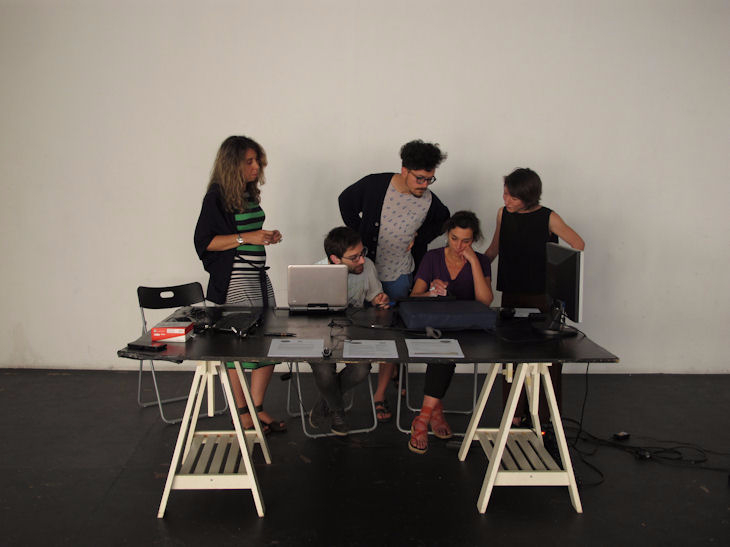
The CSA (Audiovisual Experimental Center) is a workshop for cine-audiovisual shooting, which was established during the academic year 2013-14, as part of the “Prosmart” master’s degree (in Prato), promoted by University of Florence in partnership with PIN (the University Center of Prato).
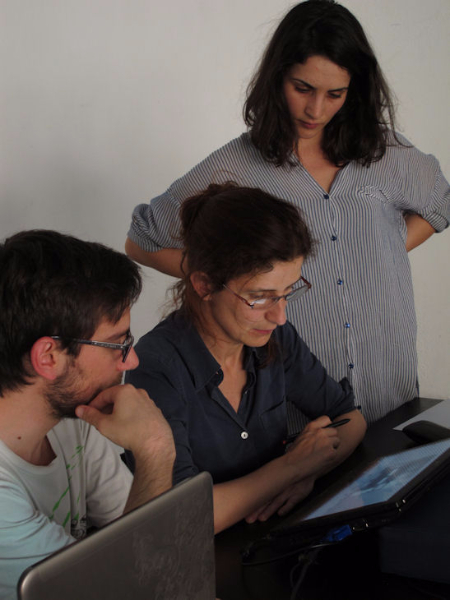
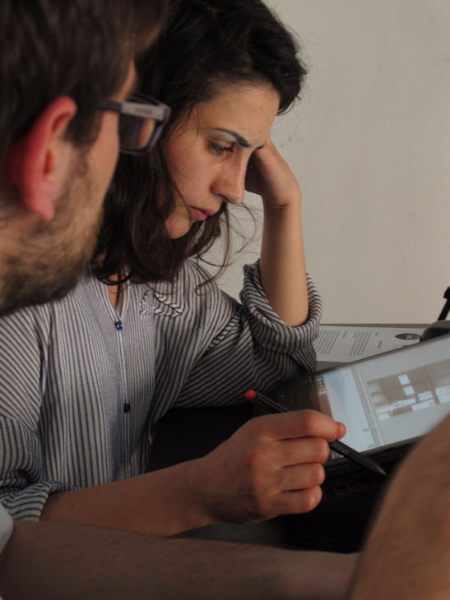
CSA is headed by the renowned Italian director Dr. Paolo Benvenuti and it is intended for students of Progeas (BA) and Prosmart (MA), hosted by the University Center of Prato. The overall workshop lasted about 300 hours. The final outcome are some professional quality documentaries, filmed by the students, under the leadership of Dr. Benvenuti. Based on the conviction that the main purpose of cinema is “to make visible what is not”, the short films shot document some of the craft activities which take place in Prato.
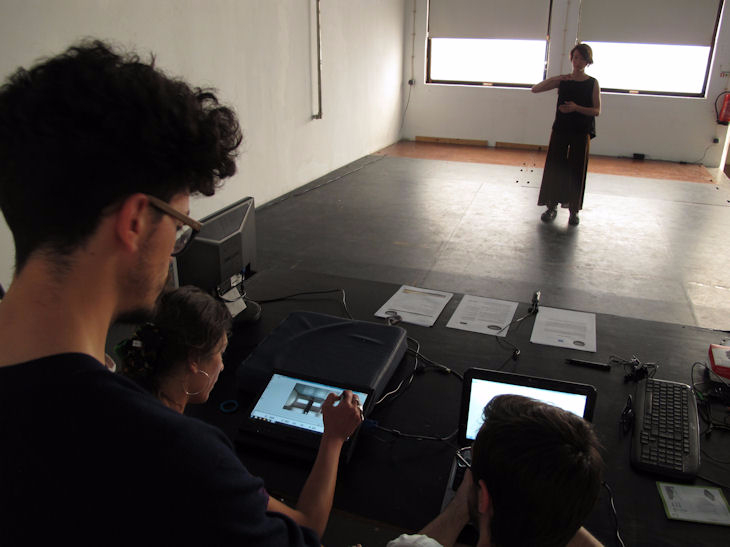
Some shooting equipment were available for the students and the workshop was articulated in different sections: in addition to the lessons of film documentary direction by Dr. Paolo Benvenuti, there were lessons of digital editing (software “Final Cut”) given by Dr. Mirco Rocchi and lessons of theory and history of film documentary given by Dr. Luigi Nepi. Therefore, students were provided with the theoretical, linguistic and practical knowledge, necessary to complete their works. At the end of this training course, the students were led by Dr. Grazia Vitelli along the post-production, mixing and finalization work (using “Première” software).

Since they illustrate and enhance with special care and effectiveness some specific production activities in Prato’s area, seven among the short documentaries filmed (see the filmography below), have been selected and delivered to the artists and craftsmen who contributed to the realization of the films. The delivery took place during an official ceremony, which was held January 9, 2015, at Auditorium Camera di Commercio di Prato, thus marking the beginning of an ongoing dialogue between the University and the artistic and productive manufacturing of the territory.
For further information: http://www.progeas.unifi.it/vp-140-laboratorio-didattico-csa.html


Filmography:

Mostodolce_A.Ragghianti

Mostodolce, by Andrea Ragghianti (2014, HD, colour, 7’28’’)

(about the first traditional brewery in Prato).


Neon_V.Rustemi

Neon, by Velesjana Rustemi (2014, HD, colour, 6’37”)

(about the work of Sergio Baldanzi, who realizes “old fashioned” neon light).


Anomalia_G.Masi

Anomalia, by Gabriele Masi (2014, HD, B/W, 4’40’’)

(about the creations by the artist Rudy Pulcinelli, whose style is based on the use of the seven main alphabets in the world).


La Filanda_T.CapecchiLa Filanda, by Tommaso Capecchi (2014, HD, colour, 5’25’’)

(about Gabriele Stanzani’s spinning company, which was born at the end of XVIIIth century and which is still using ancient machinery for the production of Italian fabrics).


Chapeau_I.Sonnati_M.Fedele

Chapeau, by Irene Sonnati e Marco Fedele (2014, HD, colour, 6’53’’)

(about the work of Ilaria Innocenti who, since 2005, creates hats in her Atelier, located in Prato).


Centoscale_V.RustemiCentoscale, by Velesjana Rustemi (2014, HD, colour, 2’58”)

(about the creations by Ignazio Fresu, an artist who creates in Prato works and installations that testify the transformation of the objects surrounding us).


NuovoMondo_Y.Cai_A.Polifroni

Nuovo Mondo, by Yingfang Cai e Agnese Polifroni (2014, HD, colour, 5’35’’)

(about the processing of the so called “Pesche di Prato”, the traditional Italian pastries, that Paolo Sacchetti has been making for years in the laboratory “Il Nuovo Mondo”, which is located in Prato).


Moreover, thanks to the regional funding obtained by Provincia di Prato through the POR (Operational Program) of the FSE (European Social Fund) 2007-2013, the PIN is now able to offer “MultiVisioni”, a free course of 600 hours (of which 180 internship) concerning image shooting and editing, for the production of television programs, documentaries and feature films.

For further information: http://www.poloprato.unifi.it/it/alta-formazione/offerta-formativa/multivisioni/home.html


Europeana Photography: excellent results

The Europeana Photography project sadly has come to its end. The project formally finished on 31 January 2015 and the final technical review took place in Leuven on 11th March 2015.

The review meeting, hosted by the Project Coordinator Fred Truyen at the premises of KU Leuven, welcomed the Project Officer Krzysztof Nichczynski and the reviewers Makx Dekkers and Tom Wachtel with whom the Europeana Photography WP leaders together with Antonella Fresa, the Technical Coordinator from Promoter, had the possibility to illustrate and discuss the project achievements.
Having successfully met all its objectives, the project was evaluated with “Excellent” mark.

slide2

Enjoy a selection of Europeana Photography images as available in Europeana at: http://www.allouryesterdays.be/partners.html

Despite the project is finished, all the partners are staying together in a new-born association that was created as a spin off of Europeana Photography: PHOTOCONSORTIUM – International Consortium for Photographic Heritage.


photoconsortium2


Presentation of the results of the first design phase

WP_20150306_010On March 6th 2015, the six suppliers who are currently working in the first design phase of the PREFORMA PCP project presented to the PREFORMA Consortium and to the external experts of the Evaluation Committee the results of their work.


The workshop represented a good opportunity to discuss the outcome of the design phase and at the same time it is the first step in the evaluation of this phase, which will be carried out during March.


The presentations of the workshop, as well as all other results of the design phase, will be made available at the beginning of April, as soon as the evaluation will be completed and the prototyping phase will start.


Stay tuned on the PREFORMA website and on the Open Source Portal!


Second EC concertation meeting for ongoing PCP projects

BeaulieuAntonella Fresa, Technical Coordinator of PREFORMA, attended the second concertation meeting for on-going PCP projects in DG Connect, organised by the European Commission in Brussels on the 5th of March 2015.


The event was organised as an opportunity to network and share experiences on common issues that these projects face while implementing PCPs, in particular focusing on practical issues that concern the actual execution of a PCP.


The topics addressed during the workshop were:

  • The transition from PCP to PPI
  • How to prepare a PCP call for tender
  • The link between PCP projects with other innovation policy measures (standardisation, venture capital and others)
  • The transition between the different phases of a PCP project


Download here all presentations (+ a presentation by Mr. Pierre Marro on access to risk finance), the minutes and the final agenda of this meeting.


Smart TV Apps at Europeana Space Workshop

by Jaap Blom, Sound & Vision (NISV)

wireframes1On 25-26th of February, the EuropeanaTV team organized a workshop at Rundfunk Berlin-Brandenburg (RBB) in Potsdam to work out a SmartTV app. It had to use RBB content about the Berlin wall together with related materials from Europeana.

The idea was to design the app using the LinkedTV editor tool, developed by Sound and Vision R&D, and Noterik’s multiscreen toolkit. The outcomes prepared us for the full-blown EuropeanaTV hackathon, which will be held at Waag Society in Amsterdam on 8-10 May as part of the Europeana Space project.

Day 1: Working on the concept

After a round of introductions, Annette Wilson from RBB started the day by presenting RBB’s initial ideas for the Smart TV app. Their idea was to extend an already developed Berlin Wall HbbTV app with related content – preferably videos – from Europeana. An editor from RBB would use the editor tool to select a number of RBB videos, then select a number of Europeana videos and publish these to the HbbTV app.

The first thing that we noted was that both the capabilities of the editor tool and the multiscreen toolkit could not be fully utilized in the proposed scenario. The editor tool is not currently optimized for selecting, but for the annotation of single videos. Furthermore, the multiscreen toolkit supports HbbTV, but is more interesting to use for applications that involve the interaction with multiple screens.

The Editor Tool

Right from the beginning there was ample ground for discussion, but before we went into that, it was time for us to introduce the editor tool and its capabilities.

In a nutshell, the editor tool is an annotation toolkit that can be configured, or extended, to provide an online dashboard for editors to annotate audiovisual content by either searching for related content through APIs (such as the Europeana API) or by simply providing a desired link and/or information.

To support the editor, the tool supports loading various kinds of pre-generated metadata to enhance the options for segmenting and annotating content. For example, when connected to the LinkedTV platform, editors using the tool can select named entities and keywords extracted from subtitles as input for queries to find related content – using for example one of LinkedTV’s enrichment APIs. Applying shot segmentations extracted from the video, the editor tool adds the option to select a range of camera shots to define chapter boundaries.

For this workshop, there unfortunately was no time to extract such information from the Berlin wall related videos. Fortunately these videos are mostly only a couple of minutes long and there was no need to segment each video prior to adding annotations. Having no access to automatically extracted keywords or named entities, the user in this case would be limited to using free-text search.

Example of a Berlin wall video, about Ronald Reagan is visiting West-Berlin, loaded in the editor tool Image credit: Sound and Vision CC-BY-SA.

Example of a Berlin wall video, about Ronald Reagan is visiting West-Berlin, loaded in the editor tool Image credit: Sound and Vision CC-BY-SA.


Using the editor tool to search Europeana for content on ‘Reagan’ - Beeld en Geluid CC-BY-SA.

Using the editor tool to search Europeana for content on ‘Reagan’ – Beeld en Geluid CC-BY-SA.

The Multiscreen Toolkit

Next up was the introduction of the multiscreen toolkit by Pieter van Leeuwen from Noterik. He explained that the toolkit enables programmers to quickly build prototypes to be able to quickly experience whether your billion dollar multiscreen application idea works or needs serious reconsideration. Considering the complexity of multiscreen applications, having access to this open source toolkit is great for testing out new ideas before starting a possibly expensive project.

Following the presentations, RBB showed the HbbTV app, implemented by Exozet, that was developed to browse the Berlin wall video collection using the remote control. The app supports navigating videos by selecting a decade, followed by a year in that decade, followed by cycling through a list of videos that fall within the selected year.

Shaping & Pruning Ideas

After the presentation of RBB’s initial idea – using the editor tool as a Europeana content selection tool and using the multiscreen toolkit to mimic the existing HbbTV app – the workshop participants decided to try and come up with an idea that would enable getting more out of the editor tool and multiscreen toolkit in order to be well prepared for the May hackathon, where Europeana Space offers participants will get the possibility to experiment with the same tools.

After some discussion, where we also took into account the feasibility of actually implementing the application the next day, we came up with the following idea:

wireframes1

Wireframes for the EuropeanaTV pilot, created using the Sqetch Toolkit Image credit: Pieter van Leeuwen CC-BY-SA.

In a nutshell, the idea is to extend the current HbbTV app with a new form of navigating the content, namely by selecting one of the tours available on the RBB web page dedicated to the Berlin wall. Instead of playing a single video, selecting a tour will result in the playout of a series of Berlin wall videos accompanied by related images from Europeana.

The related Europeana images are linked to each video by using the editor tool to search the Europeana API for images and having an editor select appropriate ones to be added as annotations.

To demonstrate the capabilities of the multiscreen toolkit, the user can select tours by using a second screen, which can be a tablet, phone or any other device with a browser. After making a selection the tour is played on the main screen, in this case the television; on the second screen the user can consult the location of the video on a map and inspect the related Europeana images in detail.

Day 2: Elevator Pitch & Implementation

On the second day we split up in two groups: RBB would focus on working out an elevator pitch to promote the app and work on searching Europeana to find content related to the Berlin wall. Noterik and Sound and Vision worked on the implementation, where Noterik would work on setting up the desired interaction model using the multiscreen toolkit as well as implement the user interface.

Developers from Sound and Vision enhanced the configuration options of the editor tool to enable the specification of certain content licenses when searching through the Europeana API. To help out, Sound and Vision also worked on writing a piece of code that could read the output of the editor tool and show it in the multiscreen toolkit. Unfortunately there was no time to integrate this by the end of the day.

To be in compliance with RBB policy, for the EuropeanaTV pilot the new configuration for searching the Europeana API was set to include all Public Domain licenses and the following variants of the creative commons licensing model: CC-0, CC-BY, CC-BY-SA, CC-NC and CC-NC-SA (Note that the non-commercial variants are also included as RBB is a non-profit organization).

After using this new configuration, we worked on annotating the Berlin wall videos of the first tour on the website. Being restricted to the aforementioned licenses we found out that there was not so much useful content remaining and we ended up adding mostly images from the Architekturmuseum der Technischen Universität Berlin in der Universitätsbibliothek.

The End result

The first end result of the day was the elevator pitch:

Concerning the app itself, the basic interaction was implemented, so that it was possible to click a link, representing a Berlin wall tour, on your second screen after which the main screen, i.e. the tv, would show the tour being loaded. Unfortunately there was no time to show the actual videos being played or the related Europeana content that was linked to each video in the editor tool.

Fortunately Pieter was so gracious to spend some time after the workshop to finish this fully functional result:

Summary & outlook

We can definitely say the two workshop days proved to be a very interesting experience where each partner learned about each other’s stand points and through discussion and working together, we ended up with an idea that was feasible to work out in a technical sense and something that could serve as the basis for a new RBB Smart TV application.

Lastly it was good to find out this experience gave us the confidence that the upcoming 3-day hackathon in May would definitely give participants enough time to come up with ideas and work them out into working prototypes, possibly using the multiscreen toolkit and/or the editor tool we developed.

More Info

This article originally appeared on Sound and Vision’s R&D blog.