a dense month with 3 engaging screening programs available online
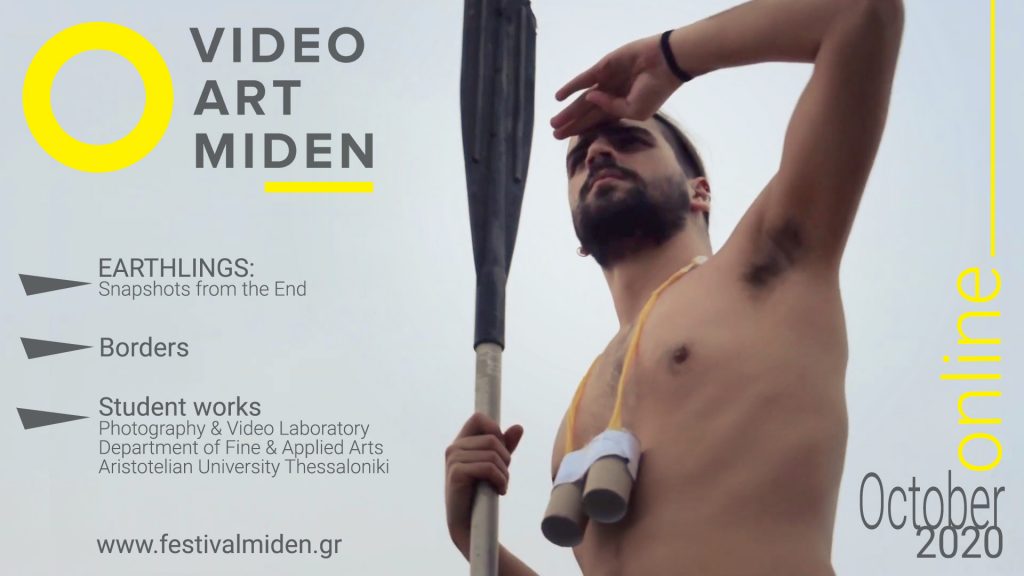
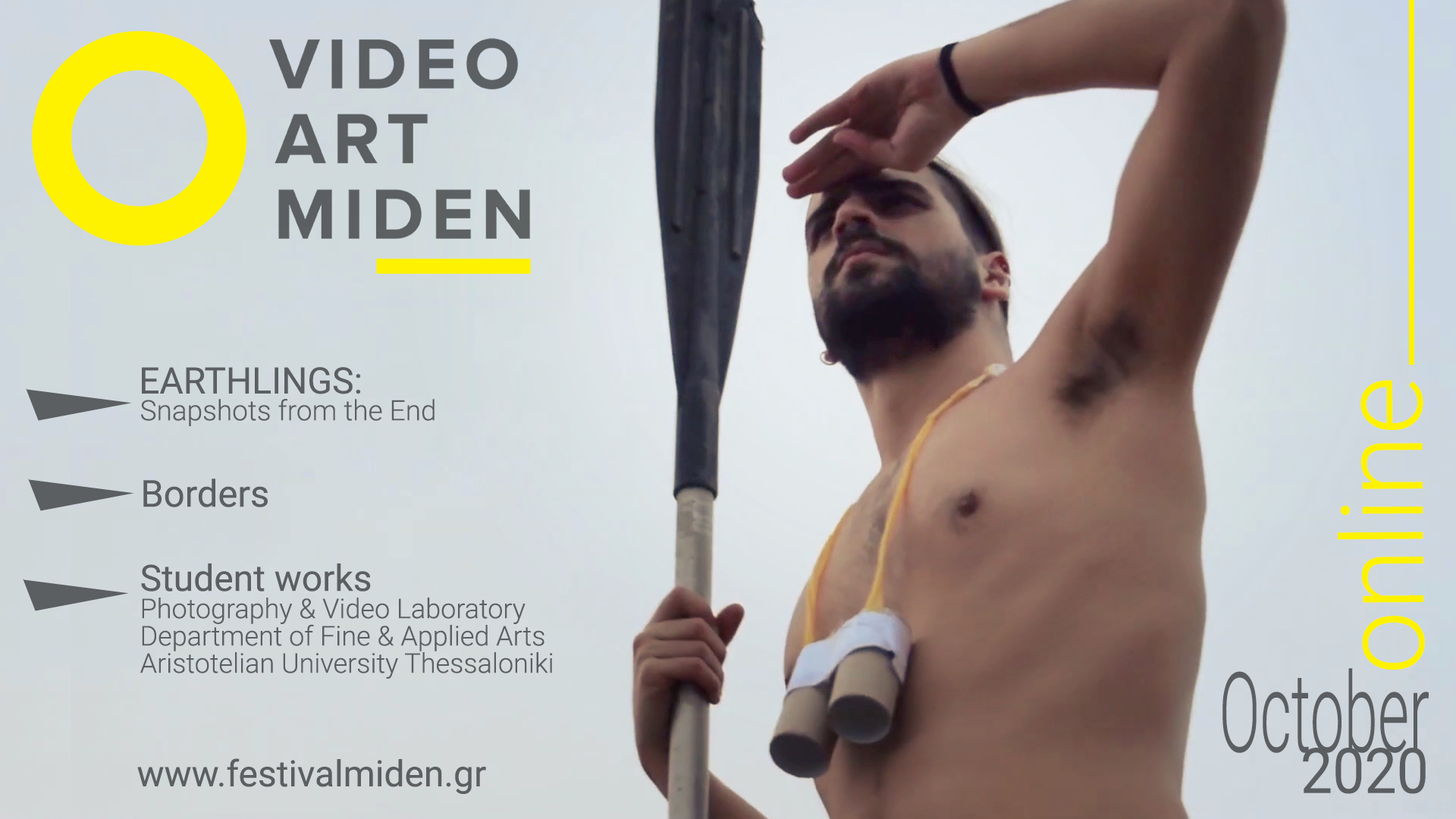
October 2020 is a month of collaborations for Video Art Miden: 3 online screening programs will be available from 1 to 31 of October on Video Art Miden’s youtube channel, 2 of them curated by invited collaborators, while one more thematic program will be screened in the frame of Balkan Can Kino Film Symposium & Festival, Athens (GR).
More specifically, in October, video art friends around the world will have the opportunity to watch online:
-a selection of video works that approach with sensitivity, in a poetic but also critical way, issues related to the environment and life in a holistic view, through a palimpsest of life forms on our planet (EARTHLINGS: Snapshots from the End), curated by 2 invited collaborators, Evi Stamou and Pietro Radin,
-a program with 9 student works from the Photography & Video Laboratory of the Department of Fine & Applied Arts, School of Fine Arts, Aristotelian University of Thessaloniki (AUTH), curated by professors Georgios Katsagelos and Stelios Dexis,
-a program that investigates the barriers and walls that rise dividing countries and populations in our era and their socio/psychological impact on humans today (Borders), curated by Olga & Gioula Papadopoulou.
In addition, Video Art Miden collaborates once more with Balkan Can Kino Film Symposium & Festival, which will take place in Athens from 9 to 18 of October 2020, presenting the video art program Past Present Continuous. The selection was curated by Olga & Gioula Papadopoulou especially for this year’s edition of the symposium, which focuses on the Balkan area, under the theme Balkans Today. The present of a wounded landscape.
The programs will remain open on Video Art Miden’s youtube channel from 1 to 31 of October 2020: https://www.youtube.com/channel/UC8ly7FIRWx2-fXyrAulY-DQ
More analytically:
EARTHLINGS: Snapshots from the End // Curated by Evi Stamou & Pietro Radin
An elegiac portrait of an ailing planet, a reluctant home for countless hopeful inhabitants (trees and spiders, crows and mollusk, goats and humans).
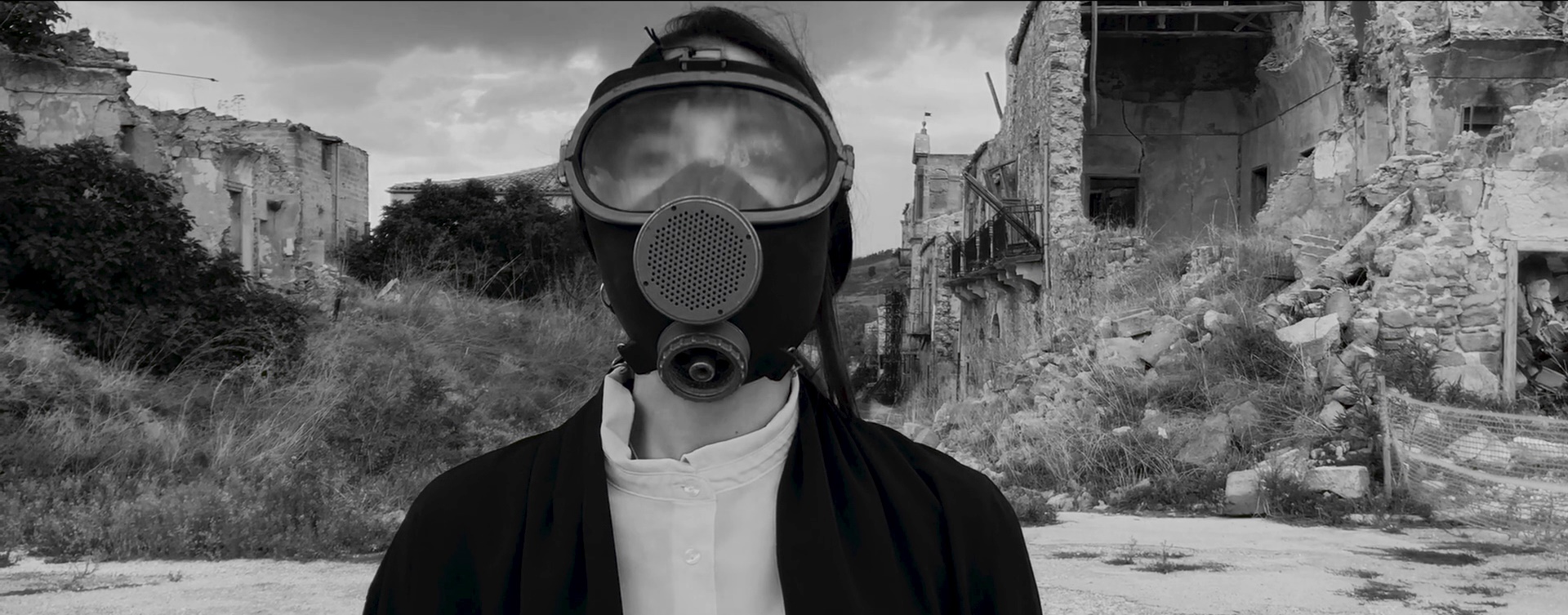
Kristian Xipolias, Ruina, Italy 2019, 3.13
Dante Albanesi, Sabbia fine estate, Italy 2019, 4.30
Isabelle Nouzha, Dystopian Patterns, Belgium/Lebanon 2019, 6.43
Shelly Silver, Score for Joanna Kotze, Italy/USA 2019, 4.16
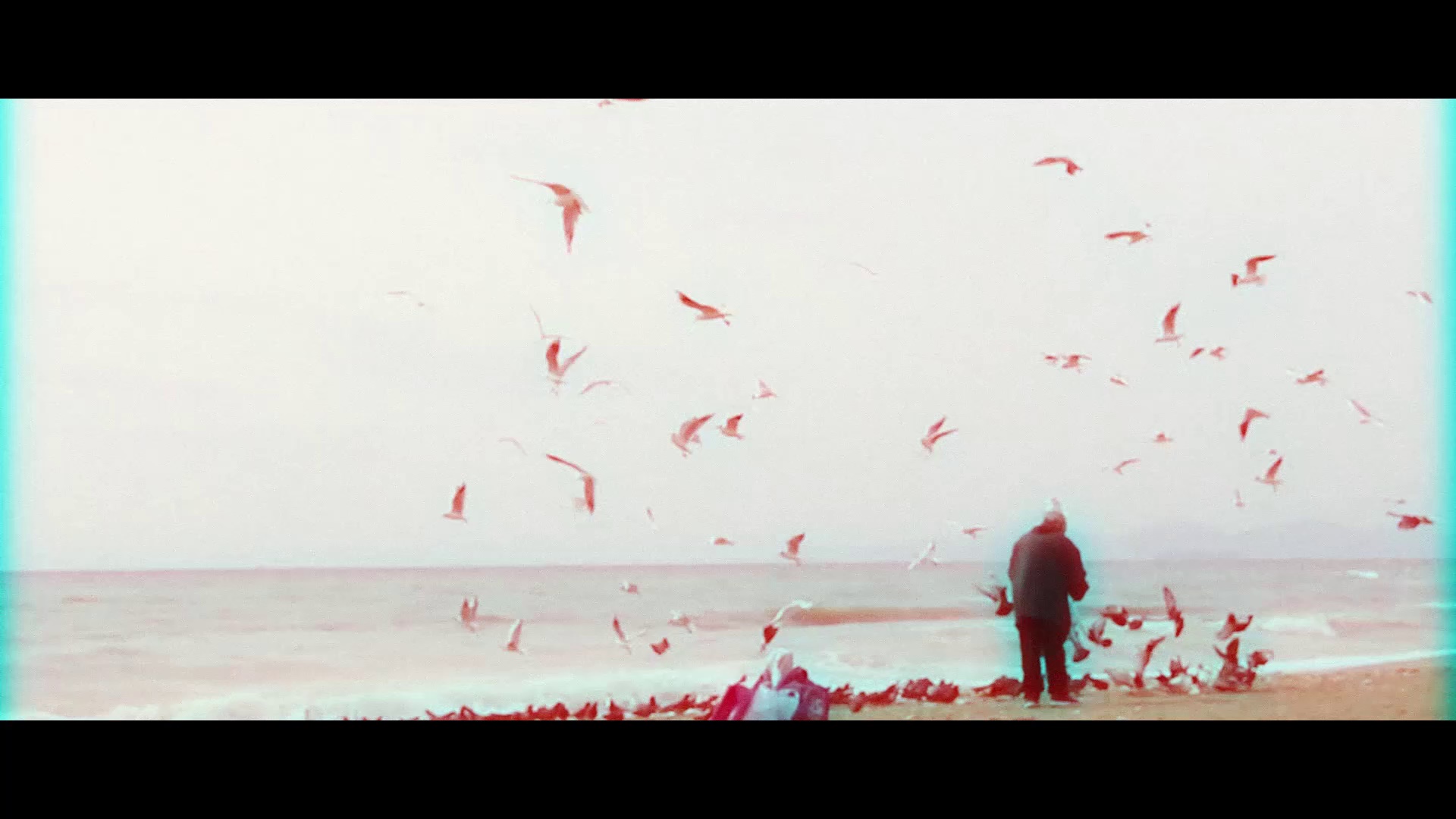
Alina Vasilchenko, The Crows (Urban Birds), Russia 2018, 3.25
Gabriele Rossi, Oneira Glyka, France/Greece 2018, 5.27
Maya Connors, Diary of an organism (newly translated), Germany 2019, 11.20
Przemek Węgrzyn, Scarcity, Poland 2019, 14.45
Shelly Silver, This Film, Germany/USA 2018, 6.52
Eleni Magklara, Stelios Papiemidoglou & Efi Roufagala, Imprint, Greece 2019, 3.11
________________
Student works – Photography & Video Laboratory
Department of Fine & Applied Arts, School of Fine Arts, Aristotelian University of Thessaloniki (AUTH)
Curated by Georgios Katsagelos & Stelios Dexis
A group of nine young artists, students of the Photography and Video Laboratory of the Department of Fine and Applied Arts, School of Fine Arts – Aristotle University of Thessaloniki, under the guidance of their two professors Georgios Katsagelos and Stelios Dexis, present their project “Travel”. Through an academic process, an “artistic osmosis” is taking place, almost automatically, when artists and teachers discuss, work and create for a long period together, in a shared space, in the same laboratory. Apart from the obvious differences between the individual works, the search for common places, common reflections and interactions is an interesting challenge.
The selection includes video projects and video installations of various plastic approaches. The works are fruits of the artistic research during an Academic year, while the common presentation of the works serves as a trigger for young artists to coordinate creatively with their teachers. The works deal with the concept of “travel”, sometimes as a sketch diary and sometimes as a unified autonomous project, through contemporary approaches both at the technical level and the forms of narration.
Participant students: Fani Arapi, Vasiliki Lolidou, Orestis Papaconstantinou, Costas Doulmantzis, Alexandros Tsakonas, Thomas Kaliaras, Charalambos Swartz, Fotis Kilelelis, Stefania Patrikiou
________________
Borders // Curated by Olga & Gioula Papadopoulou
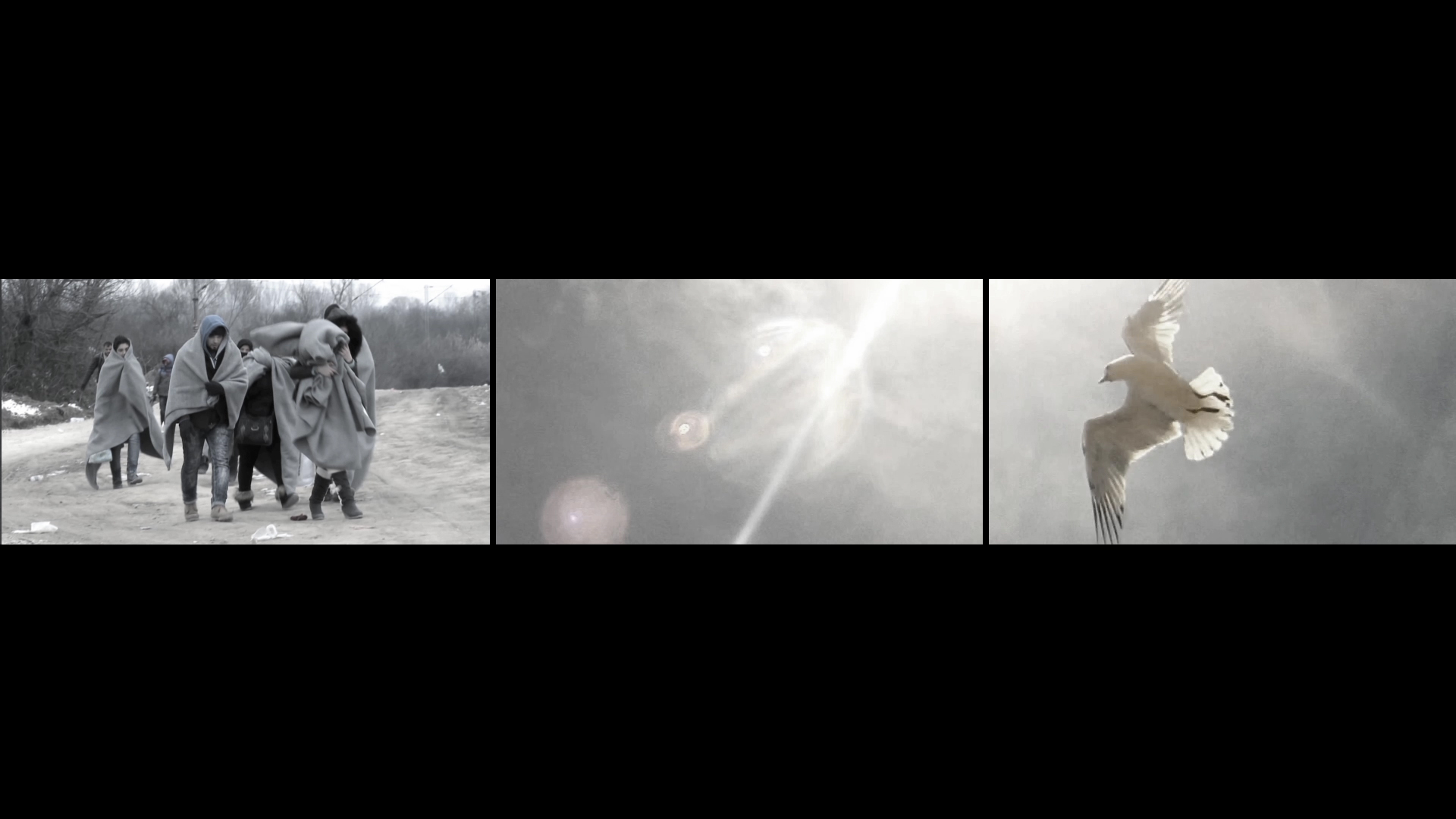
Have you ever felt displaced? Videoworks seeking to find a global understanding through topics of war, division, discrimination, immigration, identity, Home.
Cesare Saldicco, Autumn of the Nations, Italy 2019, 3.00
Alex Mendez Giner, Displaced, Venezuela-USA 2019, 13.40
Adriana Lopez Garibay, Soldier’s life, Mexico 2019, 5.07
Felice Hapetzeder, Image of a traitor, Sweden 2017, 8.52
Fran Orallo, Border, UK 2019, 3.47
Lisi Prada, Almost Invisible [Two Poems to Syria], Spain 2018, 10.00
Kim Collmer, Too big to see, Germany/Croatia 2019, 4.04
________________
Lastly, Video Art Miden participates in this year’s edition of Balkan Can Kino Film Symposium & Festival (http://balkan-can-kino.com/), which will take place in Athens from 9 to 18 of October 2020, with a selection curated especially for this year’s thematic of the symposium: Balkans Today. The present of a wounded landscape.
Past present continuous // Curated by Olga & Gioula Papadopoulou
The Balkans. A world that has suffered and endured consecutive wars and crises, a world constantly struggling to express its personality in adversity. How is the current landscape of the Balkans characterized by the specific (economic-social-political) conditions that occurred in the previous years? And how much do memories still influence, mark and even “scar” the way we think about the present?
The selection investigates the connections between the past and the present though works that make references to 7 Balkan countries: Slovenia, North Macedonia, Kosovo, Romania, Serbia, Bosnia and Herzegovina, Bulgaria.
Ana Čigon, Phoney Sights, Slovenia 2019, 21.49
Sophie Atkins, This Is Not Our Horse, North Macedonia 2019, 2.37
Alex Faoro & Helena Deda, Ditët e Luftës (Days of War), USA 2019, 3.18
Alexandra Bouge, The Trial, France 2019, 6.33
Wild Pear Arts, I Have a Song to Sing You (Imam pesmu da vam pevam), Serbia/UK, 2018, 5.40
Melina Peña, Ha Llegao la Hora (The Time has Come), Bosnia & Herzegovina 2018, 7.36
Silvia De Gennaro, Travel Notebooks: Kardzhali Bulgaria, Italy 2016, 2.12
Lea Jazbec, Self – portrait – Behind the reflection 01, Slovenia 2016, 8.13
More info on Video Art Miden’s website: www.festivalmiden.gr
Video Art Miden is an independent organization for the exploration and promotion of video art. Founded by an independent group of Greek artists in 2005, it has been one of the earliest specialized video-art festivals in Greece, setting as basic aims to stimulate the creation of original video art, to help spread it and develop relevant research.
Through collaborations and exchanges with major international festivals and organizations, it has been recognized as one of the most successful and interesting video art platforms internationally and as an important cultural exchange point for Greek and international video art. Miden screening programs have traveled in many cities of Greece and all over the world, and they are hosted by significant festivals, museums and institutions globally.
(*Miden means “zero” in Greek)
Art direction: Gioula Papadopoulou – Margarita Stavraki
Info: www.festivalmiden.gr || www.facebook.com/videoartmiden || https://www.instagram.com/videoart_miden/




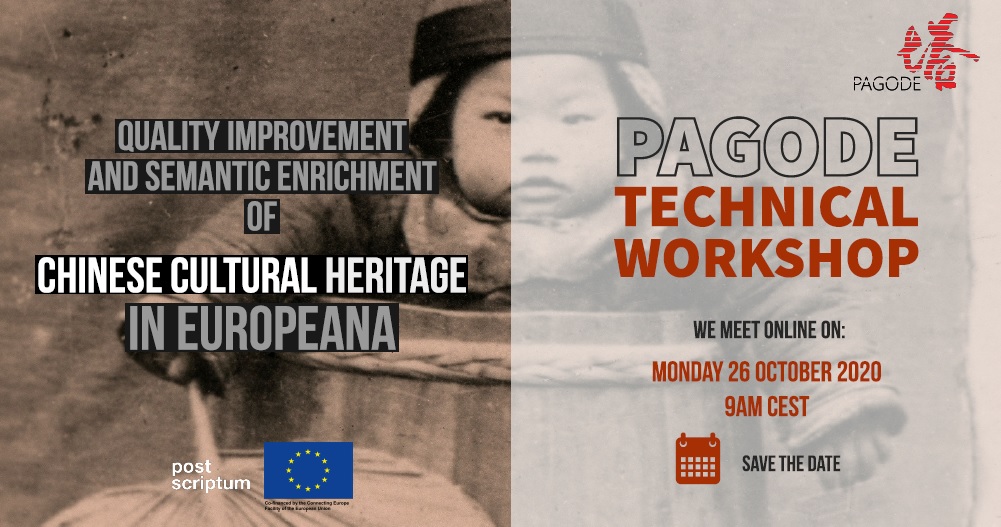 Originally planned as a project meeting in Athens focused on dataset enrichment, due to the covid-crisis this event was expanded and transformed in an online gathering, to discuss and share knowledge on metadata curation, vocabularies and thesauri, semantic enrichment, aggregation of data for publication in Europeana portal and the Europeana Publishing Framework, all this with a strong focus on building capacity inside Cultural Heritage Institutions.

 The conference aims to promote exchange and discussion between researchers and heritage professionals in the field of digital natural and cultural heritage.
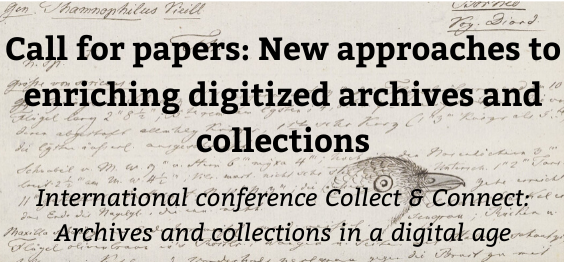 This conference welcomes papers that present, discuss, and reflect upon the technical, social, and institutional challenges that experts and researchers in the field of digital heritage encounter when enriching heterogeneous digitized collections with context.