Munch wasn't only a painter: a digital archive expands our knowledge about him
Text by Caterina Sbrana.
In August 2007 the Munch Museum set up a project related to Edvard Munch’s writings. The project was financed with funds from Arts Council Norway, the Fritt Ord (Freedom of Expression) Foundation, The Municipality of Oslo’s Kunstsamlingenes institutt for vitenskapelig forskning (KIVF), Ministry of Foreign Affairs, Tate Modern and The Municipality of Oslo via The Munch Museum.
A Digital Archive, which was the first phase of the project, was launched on 2011. The second phase provided for the translation of the texts of the famous Norwegian painter in English, Edvard Munch’s Writings in English (2011–2012). This phase concerned the translation of a selection of Munch’s writings equipped with commentaries and accompanied by supplementary articles and facsimiles of the originals.
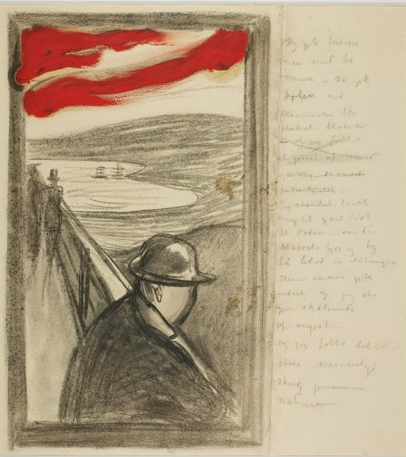
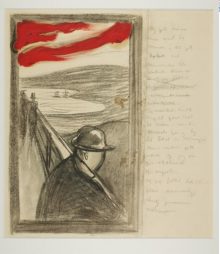
Drawing with literary sketch. “I was walking along/ the road”. Inventory number MM T 2367. Photo courtesy of the Munch Museum, https://www.emunch.no//HYBRIDNo-MM_T2367.xhtml
I surfed the website of the museum to discover the literary role of Munch. In the presentation of the English edition we read about the project: “The selection consists of 68 separate archive objects from the museum’s collection.[…] A major part of the selection consists of the extensive literary notes from the notebooks and loose sheets, written between 1889 and 1892. These contain numerous drafts of autobiographical notes in prose, in the form of fragments for a novel and short stories; a number of prose poems that have parallel motifs in Edvard Munch’s imagery; and a number of philosophical reflections related to art. A selection of autobiographical literary notes from around 1902–1906 has also been translated”. The aim of the digital archive of Munch’s writings is to help disseminate to a broader public “knowledge about Munch’s central position within the modernist movement”.
“Edvard Munch’s literary sketches, prose, poems and notes related to art represent a wealth of material that not only serves to shed light on Munch’s significant artistic oeuvre, they also have literary qualities in their own right. The lyrical prose texts related to his own pictures provide a rich opportunity for immersion into his parallel artistic experimentation in words and images. Well-known examples are the several literary and visual versions of the Scream motif. All the known literary versions are included in this selection”.
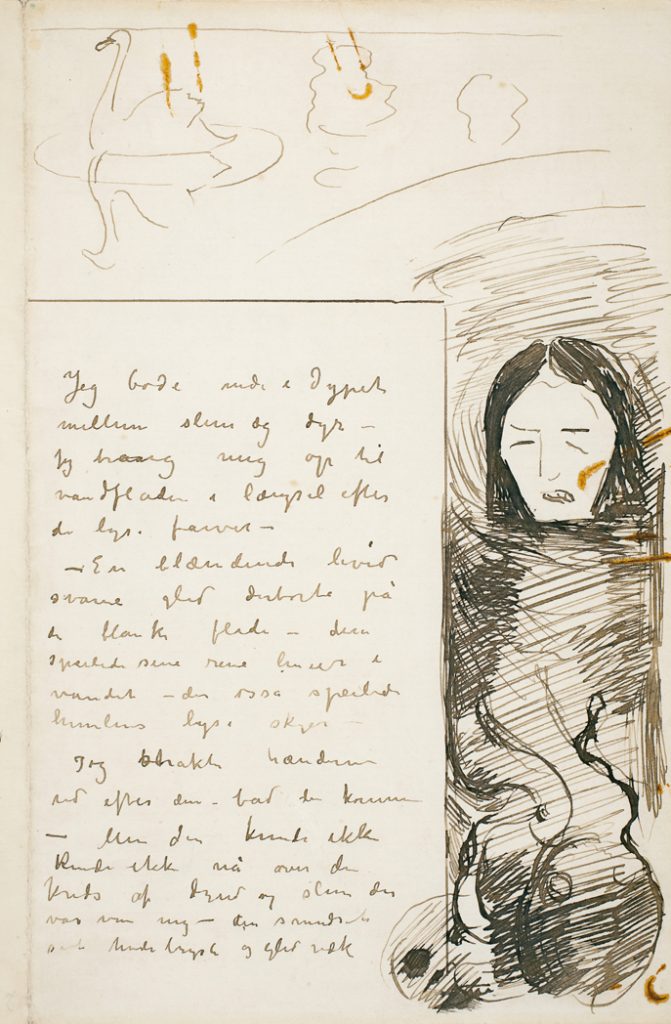
Drawing with literary sketch. “I lived down in the depths”; Inventory number MM T 2908; Photo courtesy of the Munch Museum, https://www.emunch.no//T/full/No-MM_T2908-01.jpg
The digital archive contains digital facsimiles and encoded transcriptions of the original manuscripts. The transcriptions are reproduced diplomatically. This means that Munch’s own orthography is reproduced as accurately as possible, so “that all misspellings, cross outs and the length of the lines will be shown as they were originally written. In order to make the material searchable, it is encoded according to name, place and date. In addition, the publication is accompanied by commentaries, by art history and literary research topics, as well as links to relevant works by the same artist.
The majority of Munch’s texts – the literary journals and letters – are an essential part of his rhetorical emphasis on the inseparable connection between life and art. The artist’s own childhood experiences, romances, friendships and intrigues are constantly referred to in his broad range of writings”.
The web site has been developed by the Munch Museum. It is divided into two main sections; the first is a Norwegian language archive of Edvard Munch’s writings, and the second, an English translation concerning the selection of Munch’s literary sketches and writings related to art of which I have spoken.
The icons on the website are colour-coded in purple, green, red and orange to make clear what type of material we are dealing with. The sections represent respectively: Munch’s writing, Munch’s correspondence, The English edition, About the archive.
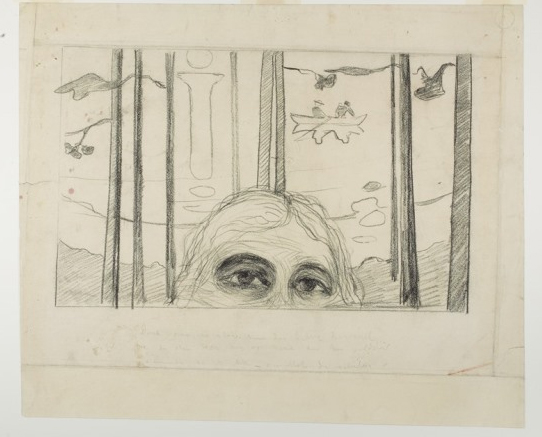
Drawing with literary sketch. “Your eyes are as large as half the sky”; Inventory number MM T 329; English translation of the poem by Francesca M. Nichols; Photo courtesy of the Munch Museum, https://www.emunch.no//TRANS_HYBRIDMM_T0329.xhtml.
The purple menu leads to the Norwegian archive of Munch’s own texts. The English translations are found in the red menu that also contains an introduction describing the edition, a list of comments (regarding excerpts, persons, institutions and places), articles and videos on relevant topics, as well as a search window that allows you to browse in the translated English texts. The orange menu contains guidelines (regarding transcriptions, encoding and photographic digitalisation), information about the digital archive as a whole, about the Munch Museum’s collection of Munch’s writings, and about the project behind the website, etc. All of the entries in the red and the orange menus are in English.
I was very impressed by the poems of Munch, known to the general public especially as a painter, and to browse the website is really an experience that I recommend to art lovers.
I believe that this project, from its first phase, is an excellent example of the promotion of digital culture through the creation of a digital cultural space, which through the Internet has a mass diffusion. The layout of the site is very simple but accurate in every detail and with a graphical interface that allows an easier visit. Personally I would call excellent my experience.
http://www.emunch.no/
https://www.emunch.no//english.xhtml
https://www.emunch.no//HYBRIDNo-MM_T2367.xhtml
https://www.emunch.no//TRANS_HYBRIDMM_T2367.xhtml
https://www.emunch.no//TRANS_HYBRIDMM_T0329.xhtml




 “Fabulamundi Playwriting Europe: Beyond Borders?” is a cooperation project among theatres, festivals and cultural organisations from 10 EU Countries (Italy, France, Germany, Spain, Romania, Austria, Belgium, UK, Poland and Czech Republic). The network aims to support and promote the contemporary playwriting across Europe, in order to reinforce and enhance the activities and strategies of the professionals and artists working in the sector and to provide the theatre authors and professionals with opportunities of networking, multicultural encounter and professional development.Funded twice by the European Commission before the current edition, “Fabulamundi Playwriting Europe” won the Creative Europe Call as cooperation project 2017 – 2020 and now intends to widen both its reach and impact in the theatre sector. The theme of this edition of Fabulamundi is “Beyond borders?”, a wide reflection about a relevant, challenging and dramatic urgency for Europe and European citizens. In these days characterized by the immigration emergency and by the rising of new walls, “Fabulamundi – Beyond borders?” intends to focus on the issue of overcoming borders, in order to provide a deep sight and understanding on contemporary matters.
 The aim of the conference is to make a broad review of the problems related to the protection, conservation, use and management of historic ruins. The key assumption of the conference is comprehensive discussing the contemporary principles and forms of maintaining historic ruins in the historical, theoretical and practical aspects. The conference also aims to present and critically analyse the most interesting examples of contemporary protection, management and use of historic ruins. The results of RUINS project and the experience gained during project implementation will also be presented during the conference.
 What social responsibility means for museums?
 Bavarlipe Roma Online University is an online educational platform where Roma and non-Roma can access knowledge about the Roma identity(ies), history(ies) and culture(s) thorough a collection of high-quality lectures delivered by leading Roma scholars on topics ranging from the Roma Holocaust to Roma cultural productions. In partnership with Central European University (CEU), this project is part of ERIAC’s Roma Cultural History Initiative financed by the German Federal Foreign Office (FFO).
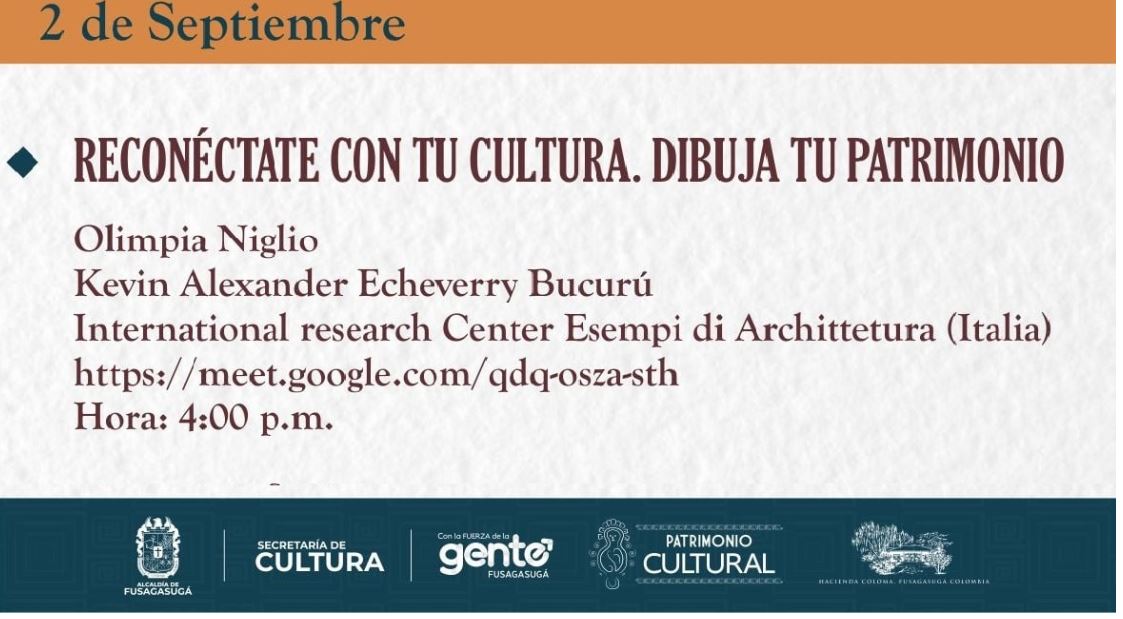 The online webinar in Lima, Peru, last 31th July, has been a success with many people from different countries of Asia, Africa, Europe, and America.