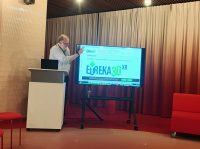
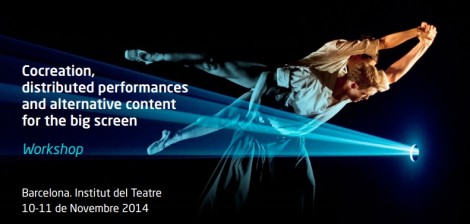
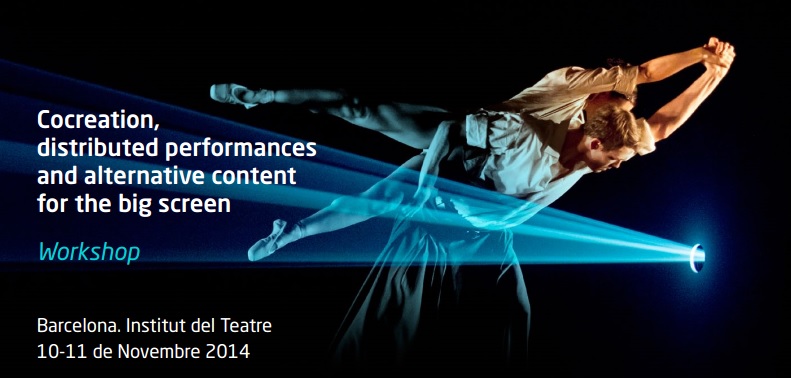
 This workshop, co-organised by the Foundation i2CAT, the Government of Catalonia and the Theatre Institute of Barcelona, examined the gradual adoption of technological environments in the performing arts and how the expanding of bandwidth have given rise to new forms of creative expression and space for experimentation and new business models for performing arts, reaching other spaces such as movie screens and cultural institutions with the distribution of high-definition content.
 During two days, international and local representatives, experts and creatives presented the technological tools and shared their experiences, focusing on the evolution of distributed environments, creative hubs and cultural broadcasting. The programme was developed considering the artists and technicians interested in co-creation. Representatives from different cultural and academic institutions in Europe (England, Italy, the Netherlands and Catalonia among others) met to share experiences, establish synergies and explore future collaborations.
Among the speakers who participated, the workshop included Robert Delamere, co-founder and creative director of Digital Theatre; Giovanni Cozzi, President at Rising Alternatives; Andy Lavender, University of Surrey; artist and performer Marcel·lí Antúnez and Sarah Whatley, dance professor and director of the Centre for Dance Research (C-Dare) at Coventry University in representation of the European project RICHES.
The RICHES project explores a looming tension derived from a lack of custodianship based on the traditional methods of archiving. There is the risk that digital CH may be mislaid or lost, yet at the same time more people assume the role of archivists and work with their own collections of cultural content, thus having a stake in how cultural content is made available; immediate access, re-use and reproducibility are more important to them than sustaining access to the more static/stable records of the past. Also the ease of transmission and reproduction brings increasing opportunities for content providers including cultural institutions to create new market opportunities. This new political economy in relation to digital records of CH is an important part of the Riches research project.
 The workshop was specially designed and focused on the changes occurring in performance-based CH as a result of novel possibilities made available by digital technologies and its main objective was to bring together researchers, professionals and practitioners to share their experiences and knowledge and experiment with low latency virtual and shared environments to conduct future remote performances. Thanks to the technology made available by i2CAT Foundation, participants in the workshop had the opportunity to reflect on how to distribute performance based cultural heritage content through ultra-fast wired networks and to evaluate what benefits could be brought for their dissemination and preservation. Thanks to dedicated training sessions on the usage of UHD technologies and advanced network infrastructures provided by partner i2CAT and afterwards, through the realisation of a set of experiments and co-creation sessions, these activities will bring higher level of knowledge and open a wider range of possibilities to accomplish with the main goals defined by RICHES project and also enhance cooperation with external entities in order to enrich and better spread the results obtained.
Check out the workshop’s program here.
 This workshop was organised within the framework of the European project SPECIFI that promotes the creation of a European Ring Creative Cities and Regions smart with the participation of European projects also Visionair, RICHES and eIeC. SPECIFI is funded under the CIP, Competitiveness and Innovation framework programme, which aims to promote the use of Future Internet infrastructures for the promotion of culture and creativity in the Smart Cities with the objective to capitalize the cultural and creative richness and diversity that emanates from European cities.
For further info:
Foundation i2CAT; Government of Catalonia; Theatre Institute of Barcelona; SPECIFI;
Visionair; eIeC
 Use the hashtag #richesEU to join the RICHES community on Twitter
Subscribe to the RICHES Project YouTube channel: www.youtube.com/richesEU




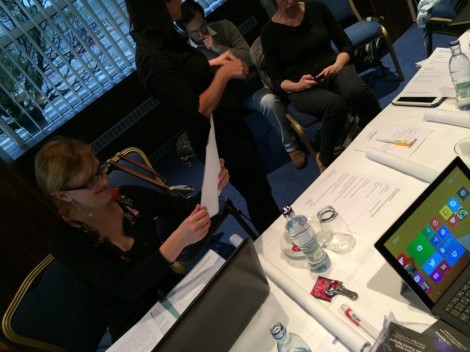
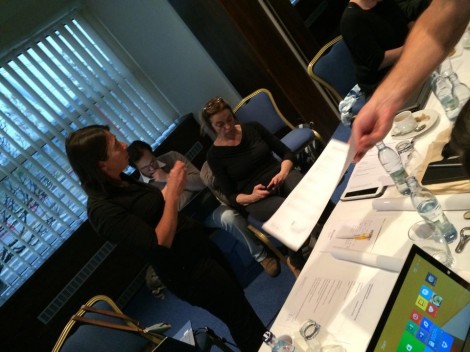 The 18 members who joined the association in Bratislava are honored with the status of Founding Members, and constituted the first General Assembly of the association.
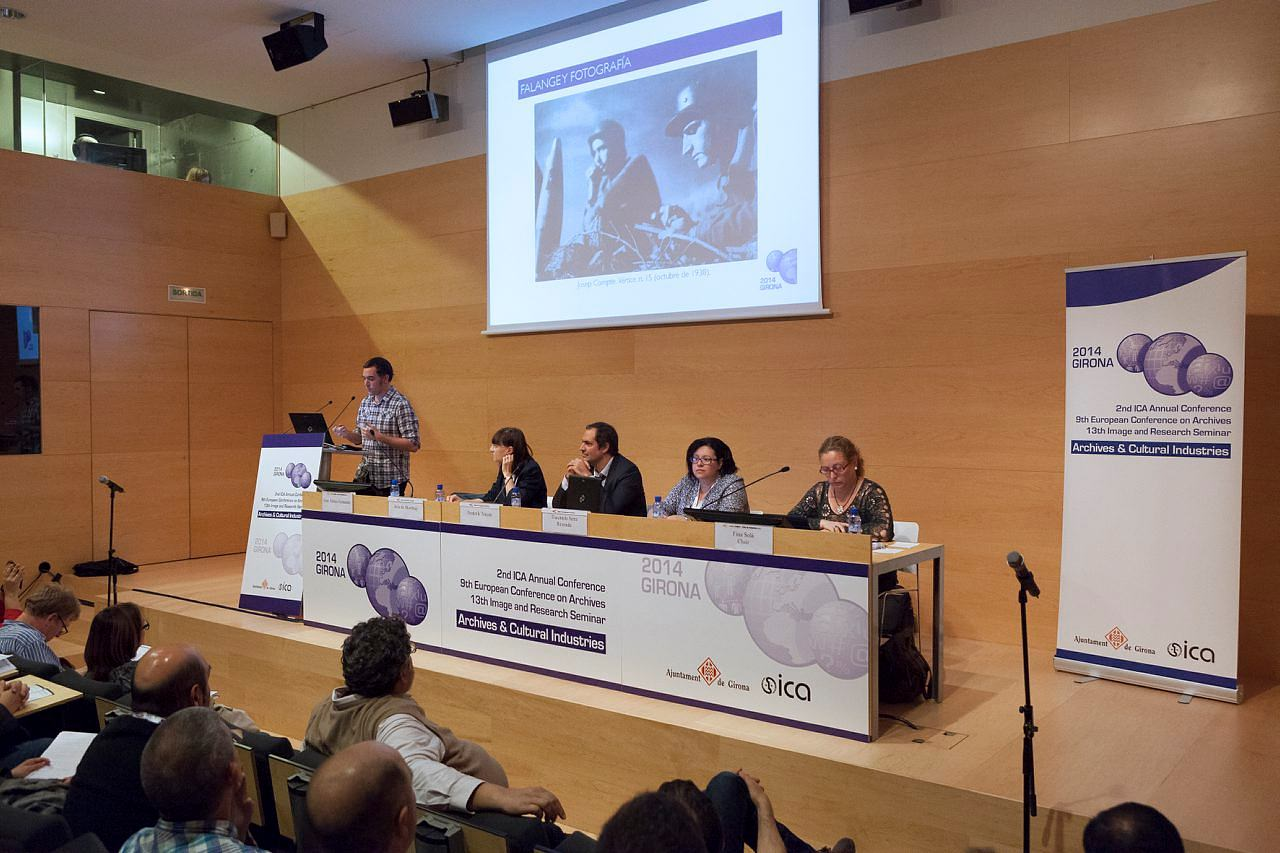



 The results of the

 ICOMOS is a global non-government organisation dedicated to the promotion of the application of theory, methodology, and scientific techniques to the conservation of the architectural and archaeological heritage. This year the