
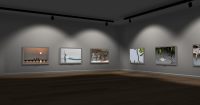
OpenVGal is an open-source 3D virtual gallery for people and institutions that already have digitized photographs or artwork images. It lets them show the work in a walkable room instead of a page of thumbnails. The exhibition is a folder … Continue reading
Join the European Heritage Hub to its upcoming Policy Talk, ‘INNOVATE. PROTECT. EMPOWER. How cultural heritage can make Public AI a reality’, taking place online on 29 September, from 16:00 to 18:00 CET. The Policy Talk will explore the vision … Continue reading
Topic: EU projects
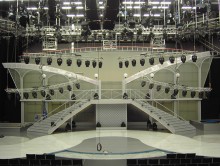
PREFORMA project has been invited to the final evaluation and user-test-workshop organised by the sister R&D-project DAVID (Digital AV Media Damage Prevention and Repair) in Vienna at the ORF-Centre on 28-29 April 2015. Continue reading
On 6-8 May 2015, Magnus Geber from Riksarkivet – Coordinator of the PREFORMA project – will attend the Nordic Archival Conference in Copenhagen. PREFORMA will be presented on the first day during a pre-meeting with e-archivists and a poster will be showcased during the conference. Continue reading
The Open Preservation Foundation and Digital Preservation Coalition, with support from the European Commission and the PREFORMA project, invite members to a briefing day on preserving PDF at Oxford University on Wednesday 15th July 2015. Carl Wilson will introduce the Vera PDF Project and Consortium. Continue reading

“From digitization to preservation, creative re-use of digital cultural content, and citizen participation” is the tile of the DH2015 Panel which will feature PREFORMA together with other EU projects, fostering a debate to understand the path towards a more advanced society, that makes use of the full potential of digital technologies to foster cultural and societal progress. Continue reading
PREFORMA project has been invited to disseminate its results and papers via the eChallenges e-2015 Conference & Exhibition organised in Vilnius, Lithuania from 25 – 27 November 2015 with the support of the European Commission. Continue reading

Content in Motion: Curating Europe’s Audiovisual Heritage is the second and final international conference organised by EUscreenXL. During two eventful days the EUscreen network will involve archivists, curators, broadcasters and researchers to discuss the benefits and challenges arising from the openness of archives and collections in the digital age. Continue reading
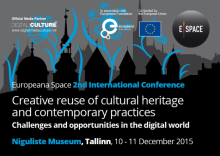
Creative reuse of cultural heritage and contemporary practices – hallenges and opportunities in the digital world is the second international conference of Europeana Space. A delegation of PREFORMA partners will attend the Conference, organized in Tallinn on 10-11 December 2015 by the Estonian Ministry of Culture, to discuss possible cooperation opportunities between the two projects. Continue reading
The aim of the AppHub project is to support the market outreach strategies of EU-supported open source by launching AppHub, the European open source market place. AppHub is a service platform that will help the market to seamlessly identify, position and implement the software outcomes of your projects. The main objective of the SQuAT Fest is to assist European open source project to bring their software into the AppHub European Open Source Marketplace. Continue reading
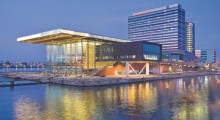
The 11th International Digital Curation Conference (IDCC16), “Visible data, invisible infrastructure”, will be held in Amsterdam at the Mövenpick Hotel Amsterdam City Centre. There will be a programme of workshops on Monday 22 February and Thursday 25 February and the main conference will run from Tuesday 23 to Wednesday 24 February 2016. Continue reading
PREFORMA has been invited to the third concertation meeting for all on-going PCP projects in DG Connect, organised by the European Commission in Brussels on 10 March 2015. During this event the EC wants to give the opportunity to the attendees to network and share experiences on common issues that they face while implementing PCPs. Continue reading