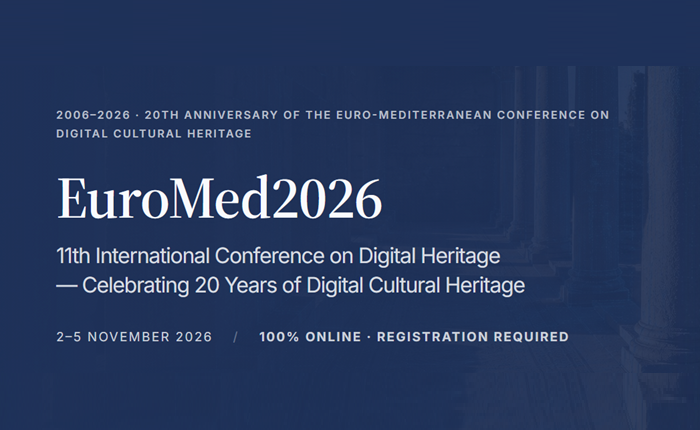

For two decades, EuroMed has provided an international forum where researchers, cultural heritage professionals, museums and memory institutions, technology experts, industry, educators and policymakers come together to exchange knowledge and shape the future of Digital Cultural Heritage. EuroMed2026 continues the … Continue reading

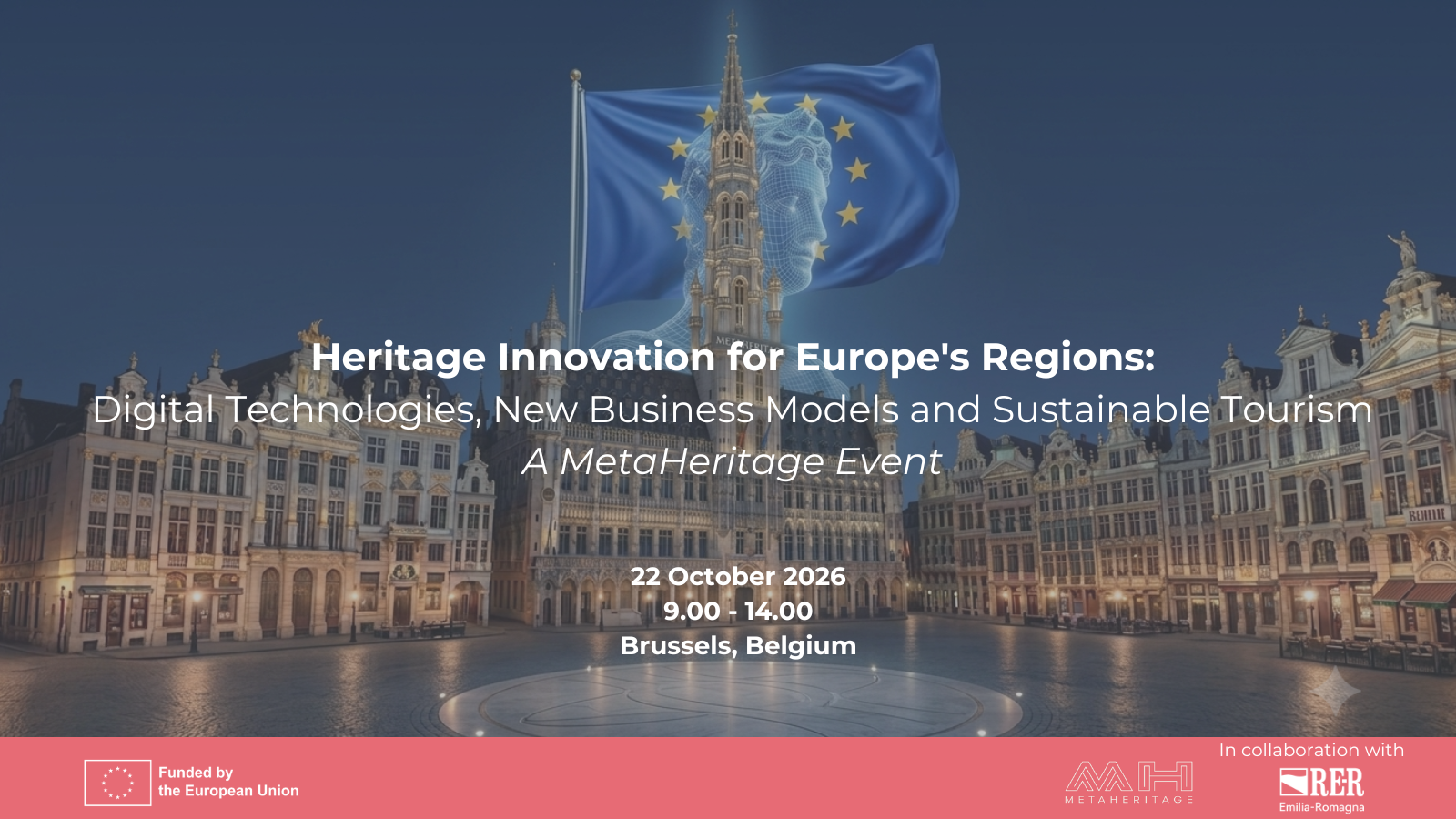
On October 22nd (9am-2pm)in Brussels, MetaHeritage will host its final event Under the title “Heritage Innovation for Europe’s Regions: Digital Technologies, New Business Models and Sustainable Tourism”, the event will bring together stakeholders from cultural heritage, digital innovation, tourism and … Continue reading
Topic: EU projects
Aim of the agreement is to promote and support scientific collaboration between the Archaeological research Infrastructures and DCH-RP partners in order to share knowledge in the sector of digital preservation of DCH and to cooperate to the dissemination of the projects’ results. Continue reading
PREFORMA has just released a first factsheet that can be downloaded from the website and that can used to raise awareness about the project and to disseminate the call for tender in order to attract new possible applicants. Continue reading

PREFORMA aims to ensure the establishment of a process of Open Dialogue between the memory institutions and the technology providers who develop the software. The memory institutions will define the functional requirements of the tender based on the outcome of the Open dialogue. Continue reading

The website contains all information relevant to the project, including objectives, partners, contact persons, activities, outcomes, events, publications, as well as information on the tender and how to join the network. The project has simultaneously released the tagline that will represent the project together with the logo: Future Memory Standards. Continue reading
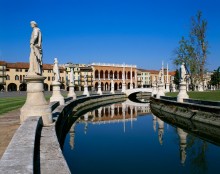
The University of Padova hosts the kick-off meeting of a new Pre-Commercial Procurement project co-funded by the European Commission under its FP7-ICT Programme to address the challenge of implementing good quality standardised file formats for preserving data content in the long term. The main objective of PREFORMA is to give memory institutions full control of the process of the conformity tests of files to be ingested into archives. Continue reading

Since Horizon 2020 foresees €140M of funding opportunities for new PCP and PPI projects that could offer a potential follow-up for new ideas emerging from the current PCP projects, the info day could be of concrete interest to all the project partners in the ongoing PCP projects. Continue reading

The University of Skovde will present PREFORMA during an event organised by OpenForum Academy network to raise an awareness of the project amongst participants and to highlight and discuss the opportunities for small and large companies to become involved in the tender. Continue reading

The first DiXiT camp took place in Cambridge/London from Sunday, 27 April 2014 – Friday, 2 May 2014. Its programme included the fifth MMSDA course, short for Medieval and Modern Manuscript Studies in the Digital Age. Continue reading
PREFORMA has been invited to a concertation meeting for ongoing PCP projects organised by the Innovation Unit of the European Commission. Three project representatives will attend the meeting to collect information about good practices and to bring up problems or questions. Continue reading
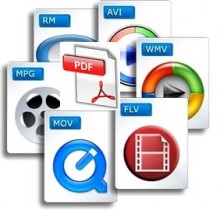
On March 5th, 2014 PREFORMA will organise a workshop in Brussels targeted to memory institutions to agree on the expected behavior and functionality of the tools to be developed in the coming years by the software suppliers that will be selected out of the procurement that will be launched by the project. Continue reading