
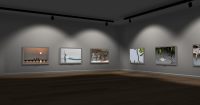
OpenVGal is an open-source 3D virtual gallery for people and institutions that already have digitized photographs or artwork images. It lets them show the work in a walkable room instead of a page of thumbnails. The exhibition is a folder … Continue reading
Join the European Heritage Hub to its upcoming Policy Talk, ‘INNOVATE. PROTECT. EMPOWER. How cultural heritage can make Public AI a reality’, taking place online on 29 September, from 16:00 to 18:00 CET. The Policy Talk will explore the vision … Continue reading
Topic: EU projects
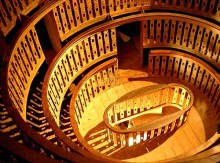
The AIUCD (Associazione Italiana per l’Informatica Umanistica e la Cultura Digitale) annual conference, devoted to any aspect of the digital humanities, was held in Padua on 11-12 December 2013. Continue reading
EUDAT is embarking on its third year with an even stronger focus on communities, services (both existing and new), training and collaboration. Continue reading
Following the successful workshops organised in Stockholm, Berlin and Padua, the PREFORMA project invites all the members of the digital preservation community to attend the PREFORMA International Conference – Shaping our future memory standards, which will be held in Tallinn … Continue reading
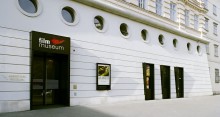
The PREFORMA project and MediaArea are pleased to announce initial details for a 2nd No Time to Wait symposium, hosted by the Österreichisches Filmmuseum – Austrian Film Museum. Members of audiovisual archiving, digital preservation, open media development, and open format standardization communities as well as curious onlookers are welcome to attend, discuss, and present on subjects pertaining to the intersection of open media, standardization, and audiovisual preservation. Continue reading
A Memorandum of Understanding has been signed between the two projects to promote and support technological and scientific collaboration across different e-Infrastructures established and operated in various continents, in order to define a path towards a global e-Infrastructure ecosystem. Continue reading
Analysis of the research tasks that were difficult or impossible with the IPSA website, but which CULTURA makes possible and easy. Continue reading
Text, illustrations, paintings and – more recently – photographs, video and audio recordings, much of them now digitised, recount many aspects of European history, from major international events to personal stories. Now, new technology is being brought to bear on these treasure troves of historical information, thanks to EU-funded researchers whose work promises to shed new light on the past. Continue reading
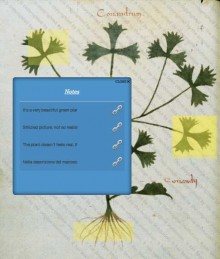
Interesting paper presented by a group of experts and researchers at the ACM Congress DocEng 2013 to introduce the main characteristics of the digital cultural collections that constitute the use cases presently in use in the CULTURA environment. Continue reading
A Memorandum of Understanding has been signed to formalise the fruitful cooperation started in the past months between the two projects funded by the European Commission. Continue reading
On 9-10 December, at the EBN (European Business & Innovation Centre Network) in Brussels, 10 partners from 6 EU countries and Turkey kicked-off RICHES, a new EC funded research project in the field of Socio-Economic Sciences and Humanities. RICHES investigates the change digital technologies are bringing to our society. Continue reading