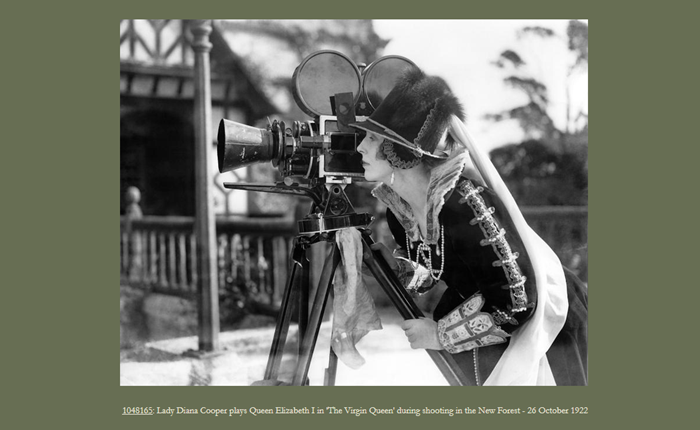

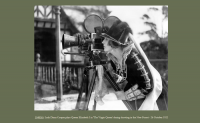
To mark the 2026 World Day for Audiovisual Heritage, prestigious British Archive TopFoto has organised an online event, “Topfoto: Past, Present and Future of Press Photography” online on Octber 27th. The event will explore how press photographs move from newsroom … Continue reading
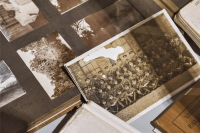
In the context of small support project CHERISH, Photoconsortium along with CEPIC, developed their first online survey to collect a wide feedback on existing digital challenges in EU for the image professionals. The survey takes approximately 15 minutes to complete, … Continue reading
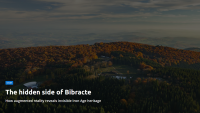
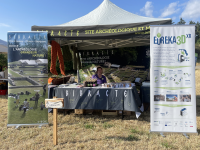
What if the visible remains of a place are only a tiny part of its story? With this blogpost, written by EUreka3D-XR’s partner Bibracte EPCC, you can discover how augmented reality, combined with complementary digital resources, reveals the many hidden … Continue reading
Area: digital heritage
CREA is an European Network of Summer Academies with the aim to strengthen entrepreneurship in innovative sectors by using ICT and Creativity as levers. Objective is to select and support talented students, who have a real interest in becoming entrepreneurs. In CREA, students come in … Continue reading

Digital Past is a two day conference which showcases innovative digital technologies and techniques for data capture, interpretation and dissemination of the heritage of Wales, the UK and beyond. The conference aims to promote learning, discussion and debate around a … Continue reading
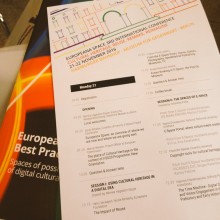
After the nice success of previous events in Venice and in Tallinn, E-Space Third International Conference took place in November 2016 in Berlin, hosted by partner SPK at the Hamburger Bahnhof Museum of Contemporary Art. The conference themes spread from the … Continue reading
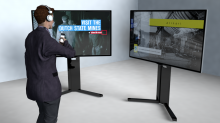
A strong group of E-Space partners from different Pilots is at work for developing an integrated outcome for creative reuse of digital cultural heritage: the Pop-Up Museum. Most of the action at the moment is in the hands of partners … Continue reading

The Orphan Works Directive, adopted in 2012, set out to foster digitisation and unlock Europe’s cultural heritage for education, research and other cultural purposes, but how does it work in practice? The conference « Digitisation of heritage and orphan works » was a joint … Continue reading
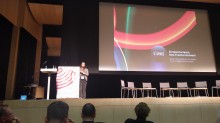
The Europeana Network Association Annual General Meeting (AGM) is an annual key event for Europeana and its network. It provides the opportunity for Europeana and its partners for all to share, discuss and develop specific areas of mutual interest. This … Continue reading
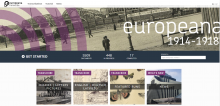
Europeana launches Transcribe Europeana 1914-1918 — an online crowdsourcing campaign to unlock important testimonies of the First World War for future generations by transcribing handwritten texts that are otherwise difficult to read and cannot be searched or translated automatically online. … Continue reading
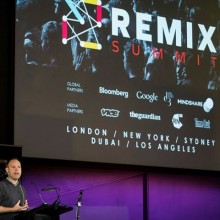
We’re delighted to announce that the 7 winning teams from E-Space Incubation process will be attending the supercool REMIX Summit in London (January 2017), which will give them a great opportunity to network with creative leaders, institutions, brands, potential collaborators … Continue reading
REMIX EXPLORES THE INTERSECTION BETWEEN CULTURE, TECHNOLOGY AND ENTREPRENEURSHIP. REMIX Global Summits bring together pioneers from different industries to explore the future of culture, creative cities and the creative economy. They are a forum where creative leaders from different sectors … Continue reading
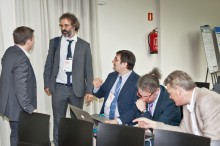
Cloud Forward 2016 conference on the future of cloud computing offered to SMEs, projects, researchers and institutions the opportunity to talk to other companies or institutions about new opportunities for collaboration and innovative R&D ideas. These meetings were be organised both … Continue reading