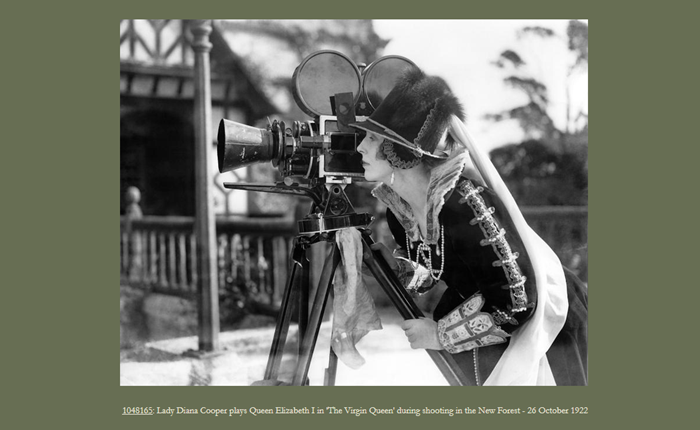

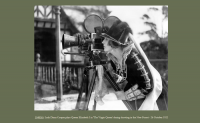
To mark the 2026 World Day for Audiovisual Heritage, prestigious British Archive TopFoto has organised an online event, “Topfoto: Past, Present and Future of Press Photography” online on Octber 27th. The event will explore how press photographs move from newsroom … Continue reading
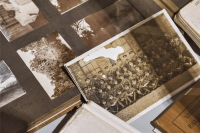
In the context of small support project CHERISH, Photoconsortium along with CEPIC, developed their first online survey to collect a wide feedback on existing digital challenges in EU for the image professionals. The survey takes approximately 15 minutes to complete, … Continue reading

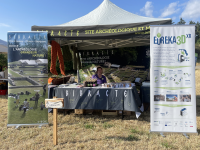
What if the visible remains of a place are only a tiny part of its story? With this blogpost, written by EUreka3D-XR’s partner Bibracte EPCC, you can discover how augmented reality, combined with complementary digital resources, reveals the many hidden … Continue reading
Area: digital heritage
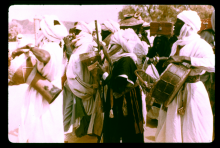
blog by Europeana Sounds appeared on Europeana on 19 December 2016. The Music Collections of this month is focused on anthropology and its links with sounds and music studies, in France and in the world. Ethnomusicologists seek to understand what is music and … Continue reading
The PREFORMA project works on one of the main challenges memory institutions are facing nowadays: the long-term preservation of digital data. This issue is also important for LIBER’s community. They’re therefore collaborating with PREFORMA to encourage memory institutions to answer a PREFORMA survey on this topic. Your cooperation is greatly appreciated, and will help to shape future memory standards. Continue reading

The latest version of veraPDF, the industry-supported open source, file-format validator for all parts and conformance levels of PDF/A, is now available to download on the PREFORMA Open Source Portal. This is the final version before version 1.0, which is expected to be released on January 9th 2017 making it an effective release candidate. New features include the schematron based policy checker and a fully functional greenfield implementation. Please help us improve the software by downloading and testing it. Continue reading
Challenges and Practices of Copyright and Licensing of Digital Cultural Heritage are the main topics of this event organised by the Co:OP project, funded by the Creative Europe programme of the European Union aims to strengthen and promote the co-operation between institutions preserving our common cultural heritage and the general public. Continue reading
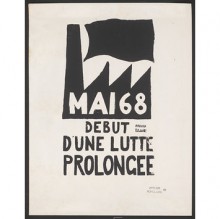
The Media Studies Commission of the International Federation of Television Archives announces its forthcoming international seminar to take place in Paris, on March 20th, 2017. The one-day seminar is dedicated to the media coverage of different political and social events that … Continue reading
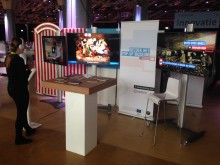
Cultuur in Beeld (Culture in Focus) is an annual seminar organized by the Dutch Ministry of Instruction, Science and Culture, addressing the most relevant themes for the cultural sector. The 2016 edition in Rotterdam, on 7 December, was focused on … Continue reading
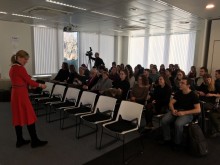
by Frederik Temmermans, imec On the 29th of November 2016, Europeana Space organised a seminar entitled “The Ghent Altarpiece in 100 Billion Pixels” at the imec offices in Brussels. During the seminar, the Europeana Space educational demonstrator “Photographic investigation of … Continue reading
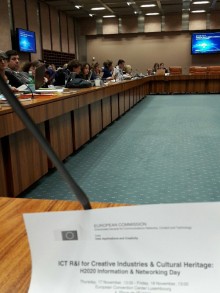
This event, organised by the European Commission on 17 November, addressed potential applicants for the first Calls under Horizon 2020 in the fields of ICT research & innovation supporting the Cultural and Creative Industries and Cultural Heritage. The plenary session … Continue reading
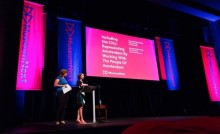
MuseumNext is a global conference series on the future of museums, taking place in the world’s cultural capitals since 2009. The conference is a catalyst for innovation, transformation and collaboration in museums, galleries and heritage sites, with more than 900 … Continue reading
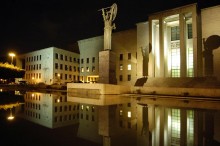
Digilab and DiXiT network (http://dixit.uni-koeln.de/) organize a one day workshop on the educational application and social impact of digital scholarly editions. The workshop will take place on Tuesday, January 24, 2017, in conjunction with the AIUCD 2017 Conference and the 3rd EADH Day (aiucd2017.aiucd.it) at … Continue reading