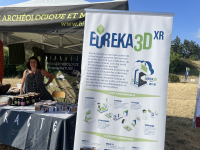

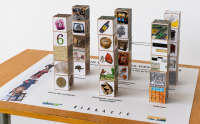
Developed by project partner Bibracte in the context of EUreka3D-XR, two Open Educational Resources (OER) on XR technologies and cultural heritage: “On the Shoulders of the Celts – How yesterday’s inventions have made today’s digital world possible“, a step-by-step guidance … Continue reading
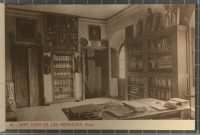
Paper for the 19th Image and Research Conference in Girona, 19-20 November 2026. Abstract Historical photographic archives contain considerably more information than the comparatively small number of images traditionally selected for digitisation and publication. United Archives is therefore developing a … Continue reading
Starting today, it is possible to explore every single object that has been ingested on Europeana through EUreka3D-XR project. Produced by project coordinator Photoconsortium, two new galleries are now available on Europeana: one where all the 3D digitised, reconstructed and … Continue reading
Area: digital heritage
This event was aimed at anyone interested in epigraphy (digital or non-digital) as well as to the establishment and diffusion of general best current practices for digital editions. It covered many aspects of digital technology applied to inscriptions, from content to management and networking. It was composed of 3 workshops (Harmonization and interoperability of Inscriptions, Translations of Inscriptions, Intellectual Property Rights) and a photographic workshop on shooting high quality images for online publication and research. Continue reading
Navigation may not be very simple when dealing with wide digital collections, and researchers often are forced into a laborious and time-consuming process of decrypting texts and correlating names, concepts and dates to create an understandable overall picture. CULTURA project provides a ICT based solution that allows more effective and easier research and nattarive. Continue reading
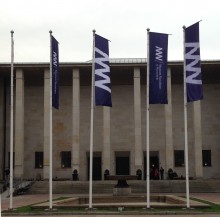
Organized by the Archeology of Photography Foundation, the National Museum in Warsaw and the national Institute of Museology and Collections protection, the seminar included a panel of international speakers. “Bringing together an array of internationally renowned speakers, the conference provided ample platform for debate and creative comparison”, said the organizers. Continue reading
The event was divided in two sessions; the first one was dedicated to the policy, highlighting the decisions by Italian Government and Parliament related to the central role of culture for the economic recovery in Italy, and also in Europe. The second session was dedicated to the digital content Aggregators and to the research infrastructures in the sector of SSH (Social Science and Humanities) and cultural heritage, to share objectives and to develop a common, operative roadmap for digitization. Continue reading
DiXiT offers a coordinated training and research programme for 12 early stage researchers and 5 experienced researchers in the multi-disciplinary skills, technologies, theories, and methods of digital scholarly editing. The consortium is composed by important universities as full partners, coordinated by University of Cologne, plus associated partners that provide valuable scientists in charge. Continue reading
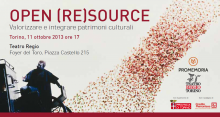
A round table on the theme “OPEN (RE)SOURCE, valorizing e integrating the cultural heritage” has been held in Turin, organized by the heritage agency Promemoria in collaboration with Teatro Regio Torino. The event saw the participation and speeches by many … Continue reading
The Learning Objects, developed in the frame of Linked Heritage, range from Europeana to aggregation, metadata standards, linked data, terminology, etc.) and address an identified shortage of awareness of these important topics. Continue reading

Different organisations and different languages use different terms to describe similar concepts. Incompatible terminologies impede effective searching by end users and are also an obstacle for web services that rely on consistent metadata. Linked Heritage aimed to address this challenge by standardising terminologies. Continue reading

Linked Heritage demonstrated the publication of Linked Data to the digital cultural heritage community, including the establishment of a linked data server which delivers our metadata as linked data triples. To identify the most effective way for the cultural heritage sector to create, manage and apply permanent identifiers. Continue reading
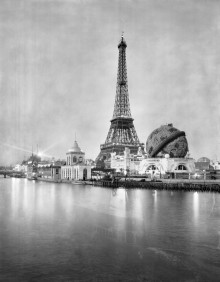
A valuable workshop organized in the framework of EuropeanaPhotography took place in Paris on 14th-15th November 2013. The workshop was one day and half including presentations and round table discussion, focusing on IPR issues related to digital content and to the … Continue reading