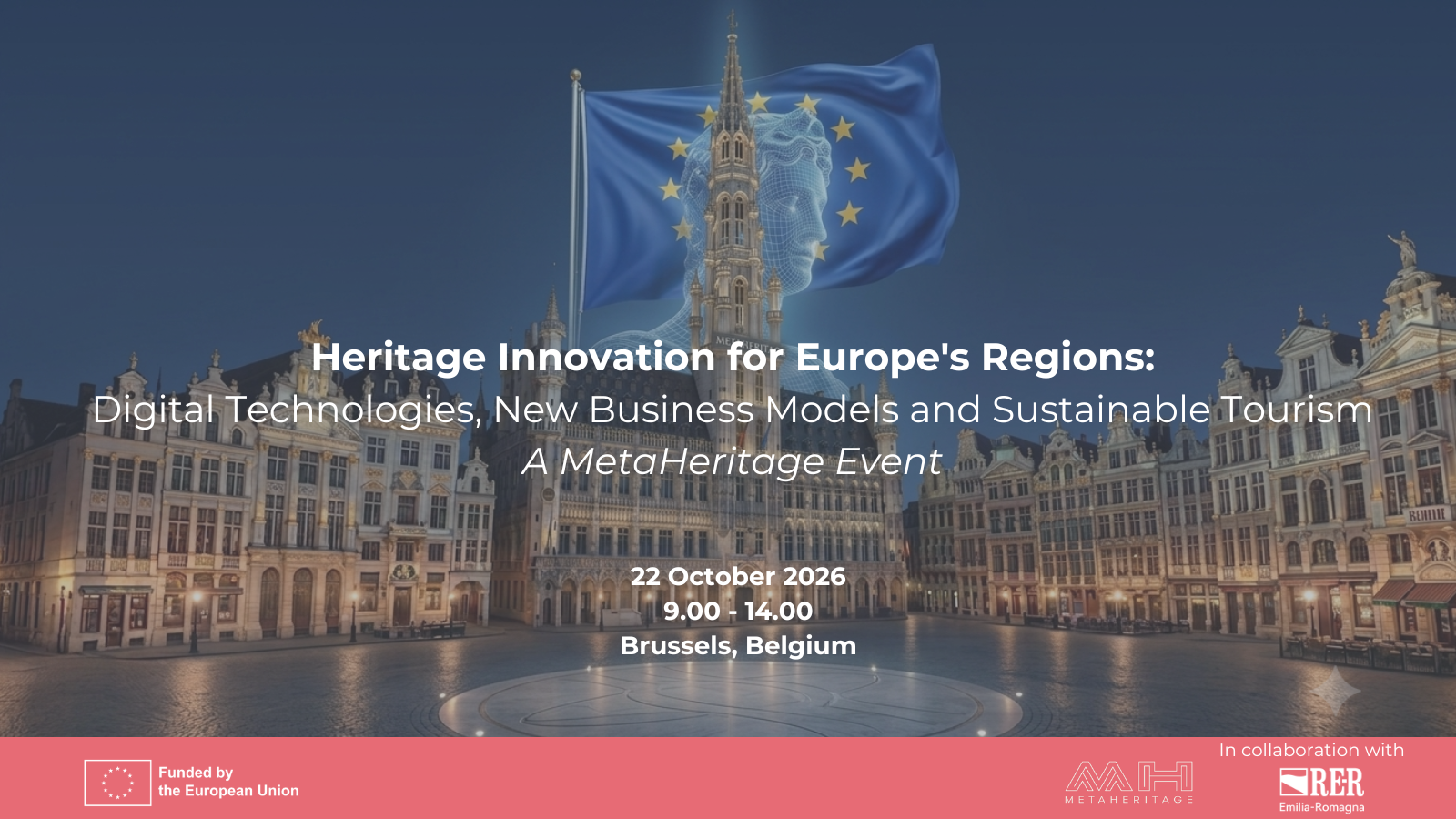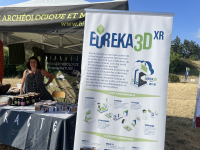

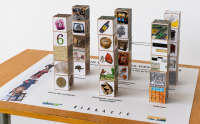
Developed by project partner Bibracte in the context of EUreka3D-XR, two Open Educational Resources (OER) on XR technologies and cultural heritage: “On the Shoulders of the Celts – How yesterday’s inventions have made today’s digital world possible“, a step-by-step guidance … Continue reading
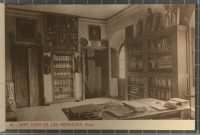
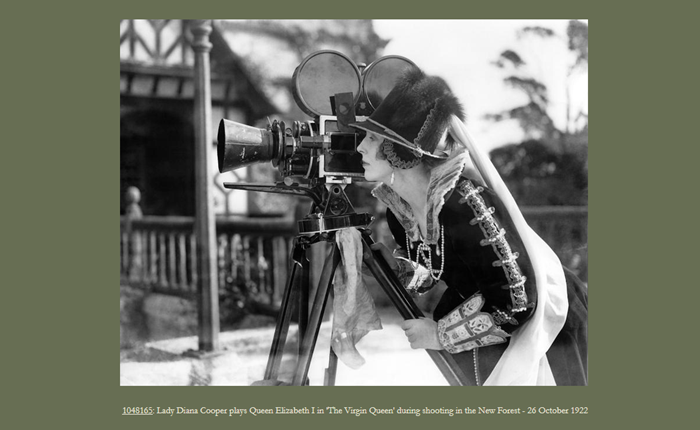
Paper for the 19th Image and Research Conference in Girona, 19-20 November 2026. Abstract Historical photographic archives contain considerably more information than the comparatively small number of images traditionally selected for digitisation and publication. United Archives is therefore developing a … Continue reading
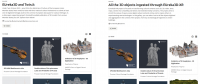
Starting today, it is possible to explore every single object that has been ingested on Europeana through EUreka3D-XR project. Produced by project coordinator Photoconsortium, two new galleries are now available on Europeana: one where all the 3D digitised, reconstructed and … Continue reading
Area: digital heritage
«EVA 2013 Moscow, Information society, culture, education»: the theme of this edition was «Libraries and museums in digital environment: dialogue and cooperation». EuropeanaPhotography was presented at the conference with a good speech, and distribution of flyers. Moreover, possible cooperation with local Institutions was deeply discussed. Several people asked questions, mainly about how their Institution can join the project and how Russian organizations can be involved. Continue reading
This survey provides an analysis of how IP is perceived at EU citizen level. It is launched at a time when IP has never been so present in the day-to-day lives of European citizens. Intellectual property rights cover everything from the food people eat, to the clothes they wear, the cars they drive and the music they listen to. And through the explosion in digital content and technology over the past decade, people are now closer to IP than ever before.” Continue reading
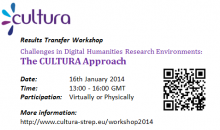
Supporting researchers in exploring and examining digitised artefacts presents many challenges in terms of understanding each researcher’s needs, performing appropriate manipulation of and uplift from content, and in presenting a suite of useful research tools to facilitate exploration. This virtual/physical workshop will use CULTURA as a case study to drive discussion by presenting demonstrations and results from the project. The outputs of this workshop will be captured and placed online. Continue reading

Equalia was presented as poster in the context of the CULTURA project and its digital libraries 1641 Depositions and IPSA Collection. An explanation of the CULTURA project and Equalia was given to the whole conference audience in a poster presentation session and in conversations with individual participants in the poster exhibition area. Continue reading
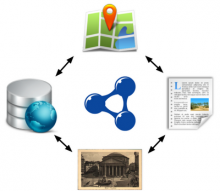
EAGLE (the Europeana network of Ancient Greek and Latin Epigraphy) joins Pelagios, a collective projects which aims to help introduce Linked Open Data goodness into online resources that refer to places in the historic past. By joining Pelagios, EAGLE will be able to connect with other major online projects about the Ancient World and make its data accessible to other aggregator and LOD projects. Continue reading
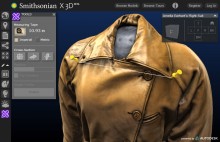
The Smithsonian’s Digitization Program Office has developed 3D models from its holdings, and a selection of models is available online. The Smithsonian x3D Explorer allows users to interact with the digital objects in a web browser, to access, view and manipulate these objects, and eventually to print them with a in-house 3D printer, as the raw 3D data from the objects will be made available for downloading for personal and non-commercial use. Continue reading
The EUDAT 2nd conference held on 28-30 Oct 2013 in Rome, was the ideal setting to showcase these services and outline the roll out phase as well as to offer hands-on training. Discussions on the new set of EUDAT services were also a feature of the conference with semantic annotation, dynamic data & workflows addressed, a natural follow on to the Working Group discussions that were held in Barcelona in Sept. 2013. Continue reading
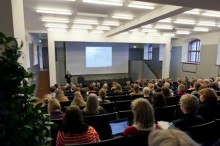
The project coordinator prof. Fred Truyen and his assistant Sofie Taes were invited for a lecture at the National Museum of Finland in Helsinki, during the Photo Archive Days. Finland is not represented (yet!) in the EuropeanaPhotography consortium but the event was useful to start a dialogue and relationships with representatives from the Finnish archives and museums. Continue reading
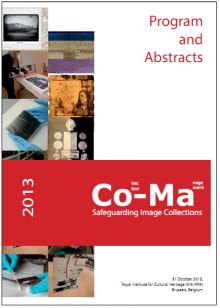
The 31st of October 2013, Brussels’ IRPA (Royal Institute for Cultural Heritage) hosted a 1-day conference on issues in the management of photographic collections: CO-MA. A small exhibition of IRPA’s photographic collection accompanied the conference. Continue reading

The AIUCD (Associazione Italiana per l’Informatica Umanistica e la Cultura Digitale) annual conference, devoted to any aspect of the digital humanities, was held in Padua on 11-12 December 2013. Continue reading