

Time Machine Connect 2026 (September 30, Aarhus) brings together the Time Machine Organisation (TMO) and EIT Culture & Creativity communities in Aarhus to explore how cultural heritage data, digital technologies and creative expertise can come together to create new opportunities … Continue reading
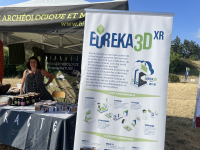
This Gallic archaeology festival takes place every year at the Gergovie oppidum, the very place where the Gauls famously resisted the Roman invaders. Around 300 people visited the Bibracte stand, where they could discover the EUreka3D-XR project. Nearly 150 visitors … Continue reading

EUreka3D-XR project’s partner Bibracte has organized an onsite workshop focused on the AR Tour Experience tool developed within the project: Bibracte is inviting heritage, tourism or education professionals that want to enrich the experience of their audiences with immersive technologies. … Continue reading
Area: digital heritage

A Memorandum of Understanding has been signed between the two projects to enable and promote greater re-use of cultural heritage resources by creative industries, starting from the open source tools developed in the framework of PREFORMA PCP and of Europeana Creative. Continue reading
WACREN is organizing its 2nd Annual Conference on 12-13 March 2015 in Abuja, hosted by the Nigerian Research and Education Network (NgREN). The main theme of the conference is Enabling Virtual Research and Education Communities. Continue reading

Coventry University Centre for Dance Research (C-DaRE, http://c-dare.co.uk/) held the 5th edition of the Digital Echoes Symposium. Digital Echoes Symposium 2015: Intangible and Performance-based Cultural Heritage 13 February 2015, Institute for Creative Enterprise, Coventry University Convenors: Sarah Whatley, Rosamaria Cisneros, Amalia Sabiescu Digital … Continue reading
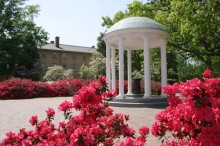
The International Conference on Digital Preservation (iPRES) is a series of conferences on digital preservation. Since 2004, iPRES conferences have been held on three continents. iPRES 2015 will be held in Chapel Hill, North Carolina, USA on November 2-6, 2015. It will be held at the William and Ida Friday Center for Continuing Education. Continue reading

The RDA Fifth Plenary is taking place in San Diego, US from 9th – 11th March 2015 and is open to RDA members and the public, particularly individuals that share the core values of creating the building blocks of common data infrastructures that can bridge disciplinary activities under a community-driven and non-profit model. Continue reading
The EuropeanaPhotography project ended 31st of January 2015. To mark the occasion, we organized a two-day conference in Leuven on Thursday 29 and Friday 30th of January, under the theme “The Impact of Digitization on Photographic Heritage: Memories Reframed“. Continue reading
Use and Re-Use of Digital Cultural Heritage Assets – Interoperability, Repositories and Shared infrastructures was the fifth in a series of international events planned by EAGLE BPN. The event, organised by The Cyprus Institute, in collaboration with Heidelberg University and Sapienza, University of Rome, featured presentations and hands-on workshops regarding themes of the EAGLE project. Continue reading
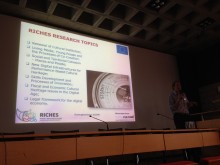
Neil Forbes, RICHES Project Coordinator, presented the project during the Final Conference of Europeana Photography, which took place in Leuven on 29-30 January 2015, hosted by CS Digital (KU Leuven) and the Lieven Gevaert Centre for Photography in Campus Library Arenberg. Continue reading
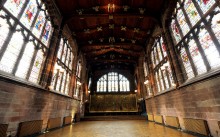
Speakers: Sarah Whatley (Coventry University, project’s coordinator), Charlotte Waelde (University of Exeter), Prodromos Tsiavos (Postscriptum), Frederik Temmermans, Peter Schelkens, Ann Dooms (iMinds). A workshop focused on IPR that considers content rights in a non traditional way. Rather than only focussing on different … Continue reading

The Europeana TV Pilot (interactive television) of Europeana Space has made significant progress on the realization of two scenarios to experiment with. Both scenarios are generating prototypes, and the pilot is getting ready for a big Hackathon event in Amsterdam on 8-9-10 May. Continue reading