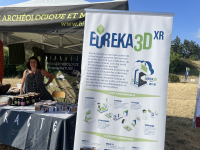

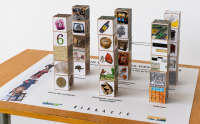
Developed by project partner Bibracte in the context of EUreka3D-XR, two Open Educational Resources (OER) on XR technologies and cultural heritage: “On the Shoulders of the Celts – How yesterday’s inventions have made today’s digital world possible“, a step-by-step guidance … Continue reading
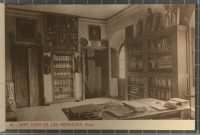
Paper for the 19th Image and Research Conference in Girona, 19-20 November 2026. Abstract Historical photographic archives contain considerably more information than the comparatively small number of images traditionally selected for digitisation and publication. United Archives is therefore developing a … Continue reading
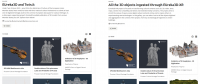
Starting today, it is possible to explore every single object that has been ingested on Europeana through EUreka3D-XR project. Produced by project coordinator Photoconsortium, two new galleries are now available on Europeana: one where all the 3D digitised, reconstructed and … Continue reading
Area: digital heritage
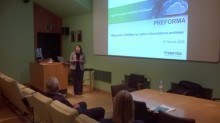
On March 6th 2015, the six suppliers who are currently working in the first design phase of the PREFORMA PCP project presented to the PREFORMA Consortium and to the external experts of the Evaluation Committee the results of their work. Stay tuned on our Open Source Portal! Continue reading
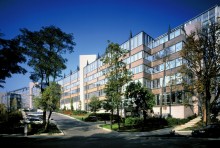
Antonella Fresa, Technical Coordinator of PREFORMA, attended the second concertation meeting for on-going PCP projects in DG Connect, organised by the European Commission in Brussels on the 5th of March 2015. Presentations and minutes of the meeting are now available for download. Continue reading
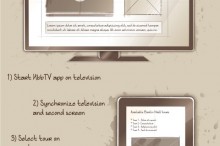
On 25-26th of February 2015, the EuropeanaTV team organized a workshop at Rundfunk Berlin-Brandenburg (RBB) in Potsdam to work out a SmartTV app. It had to use RBB content about the Berlin wall together with related materials from Europeana. This workshop is part of the work realized in the TV pilot of Europeana Space project. Continue reading
The Select Committee was appointed by the House of Lords on 12 June 2014 “to consider and report on information and communications technology, competitiveness and skills in the United Kingdom”. Computer technology brings “huge opportunities for the UK, but also significant risks”, the Committee warns. The internet should be viewed as a utility service, alongside water and electricity, it says. But without action, the UK may fall behind in the new digital era. Continue reading
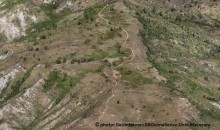
The workshop “Aerial photogrammetry surveys with drones” was held in Tirana, Albania, at the National Museum, on 13 March 2015. It presented examples of aerial photogrammetry surveys conducted by means of drones in the Albanian Drino Valley, Valona Region, in the Hellenistic sites of Hadrianopolis, Jergucat, Frashtan and Antigonea. Continue reading

This edition brings you news of an innovative partnership with PRACE, the Partnership for Advanced Computing in Europe, which gives researchers access to world-class data infrastructure and storage. Kimmo Koski calls for trust between researchers and technology providers, our roving reporter catches up with Carl Johan Håkansson to find out more about B2SHARE and we explore Augusto Burgueño’s vision for e-infrastructures in Europe. Continue reading

In the 21st century the world faces epochal changes which affect every part of society, including the arenas in which Cultural Heritage is made, held, collected, curated, exhibited, or simply exists. The RICHES project is preparing a publication about these changes, and has opened a call for contributions to the book. Continue reading
it is a portal for the people all over Israel and the globe. It enables Israel to be a leading member of the global community for digital culture and heritage, integrated with Europeana and functions a common platform for other cultural branches once they are moving toward the digital era. Continue reading
Personalized Access to Cultural Heritage (PATCH 2015) @ IUI Conference call for papers deadline January 16th 2015 http://patch2015.wordpress.com/ 8th International Workshop on Personalized Access to Cultural Heritage (PATCH 2015) is co-located with the ACM Intelligent User Interfaces 2015 Conference in … Continue reading
A Memorandum of Understanding has been signed between the two projects to enable and promote greater re-use of cultural heritage resources by creative industries, starting from the open source tools developed in the framework of PREFORMA PCP and of Europeana Creative. Continue reading