

Europeana Photography review meeting: eye inside

by Valentina Bachi

On March 5th 2013, the Central University Library in Leuven hosted the first review meeting of EuropeanaPhotography project. Digitalmeetsculture.net editor, Valentina Bachi, was present to the whole event with both the roles of speaker and of correspondent.

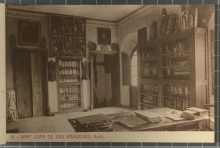
the Spoelbergh Room at the University Library in Leuven

Review meetings are always a delicate appointment, as they represent a moment for exchanging views with the European Commission, and also have the aim to verify the status and the progress of an EC-funded project. For EuropeanaPhotography project time has come for the first review. The WP leaders met in Leuven a day before the event, for the general rehearsal of the presentations, after very busy weeks of preparation.

The Project Coordinator prof. Fred Truyen (Institute for Cultural Studies, Faculty of Arts) warmly welcomed the presents in the Spoelbergh Room at the University Library, where the 2 days were planned to take place.

a view of the Leuven béguinage

A lovely social dinner followed the rehearsal meeting at the Faculty Club, in the suggestive framework of the béguinage, a collection of small buildings were the Beguines, religious women who sought to serve God without retiring from the world, used to live.

The day after, everybody was ready to meet the EC Project Officer and the reviewers. The new director of the University Library, professor Stefan Gradmann, was present to the review opening, and gave his best wishes for the successful meeting.

dr. Wojtek Sylwestrzak, dr. Makx Dekkers, dr. Krzysztof Nichczynski.

Dr. Krzysztof Nichczynski, the Project Officer and dr. Makx Dekkers and dr. Wojtek Sylwestrzak, the reviewers, showed since the beginning a very vivid interest in the project’s achievements and a sharp preparation about the project planning, thus encouraging a stimulating discussion with the WP leaders.

Professor Truyen, in his role of leader for Content and Themes work-package, had the possibility to illustrate the richness and value of the photographic collections that are going to be provided in Europeana thanks to this project. Furthermore, the eye-catching result of over 150.000 images already digitized was underlined by David Iglesias Frank of CRDI.

Particular attention was given to the presentations of the technical partners, Nikos Simou from NTUA and Nacha Van Steen from KMKG, about the MINT tool and the EuropeanaPhotography Vocabulary – which are indeed the main result of their joint work. The tool is now ready for allowing the content providers to map and enrich the digitized images.

Nice and valuable discussion was carried on about IPR issue and sustainability, which will feed progress during year 2. As for dissemination work package, digitalmeetsculture.net showcase supported the webpresence of EuropeanaPhotography beside the official website, and the many dissemination activities by all the consortium were appreciated.

The final evaluation of the review was extremely positive. Dr. Antonella Fresa, the technical coordinator, commented: “We are very happy to see that all the comments were given in the light of ameliorating the quality of our project, whose results have been in fact assessed as good results”.

EuropeanaPhotography review meeting

Next appointment for the EuropeanaPhotography project is the plenary meeting in Athens on 13-14-15 March 2013, where special guest will be an Europeana representative, Mrs. Julia Fallon, who will speak about the Rights Labeling Campaign.


Poland’s presence in Europeana is growing

A conference was held in Torun to discuss about the Polish stategy for digitization and about the collections that are currently available, or will be soon available, in Europeana.

Article by Justyna Walkowska, sourcePSNC Digital Libraries Team‘ blog

Toruń, AD 1641

The Polish Collections in Europeana conference was organized in the medieval city of Toruń on October 18-19, 2012 by the International Centre for Information Management Systems and Services ICIMSS.

The opening speech, The Decision to Digitise, was given by Eleanor Kenny of the Europeana Foundation. The remaining presentations, delivered in Polish, may be divided into the following four categories:

  • Presentation of Europeana-related projects
  • National IT infrastructure for cultural heritage resources
  • The support of Ministry of Culture and National Heritage for digitization projects
  • Problems and needs of Polish cultural heritage institutions

Two presentations were given by representatives of The Ministry of Culture and National Heritage: The Digitization Strategy of The Ministry of Culture and National Heritage (Anna Duńczyk-Szulc) and The Project of a Ministerial Portal Dedicated to Cultural Heritage Resources Digitization (Agata Bratek). The portal is to be launched at the beginning of 2013.

A number of Europeana-related projects were presented, including:

  • Europeana Photography (Europeana Photography – Documentation of the First Century of Photography, Marta Miskowiec, Museum of History of Photography MHF in Cracow, Piotr Kożurno, ICIMSS)
  • Athena (Athena and Athena Plus – Projects Encouraging Museums to Cooperate with Europeana, Maria Śliwińska, ICIMSS)
  • Judaica Europeana (Judaica Europeana – Digitizing Jewish Cultural Heritage in Europe, Edyta Kurek, Jewish Historical Institute, Warsaw)
  • APEX (Polish Archives’ Participation in the APEX Project, Anna Matejak, Head Office of State Archives, Warsaw)

Representatives of a number of big Polish institutions presented their current activities, including those related to Europeana:

  • National Institute of Museology and Collections Protection (National Institute of Museology and Collections Protection, Its Activities and Plans Concerning Museum Objects Digitization, Anna Kuśmidrowicz, Monika Jędralska)
  • National Audiovisual Institute (National Audiovisual Institute’s Digitization Support: Europeana Awareness Project Case Study, Jarosław Czuba)
  • The National Library of Poland (The National Library’s Participation in the Ongoing Europeana Projects, Katarzyna Ślaska)

Poznań Supecomputing and Networking Center prepared a presentation entitled The Digital Libraries Deferation: Supporting Institutions of Culture in Making Their Resources Available Online, Metadata Aggregation for Europeana (Marcin Werla, Justyna Walkowska), which is available here (in Polish). In the presentation we describe the role of the Polish Digital Libraries Federation in the Polish digital heritage resources environment and in the context of the Polish IT infrastracture for researchers and science. We also present our cooperation with Europeana, including a number of projects we have been involved or will be involved in near future.

The problems section was opened by a presentation prepared by prof. Folga-Januszewska, Problems Concerning the Delivery of Polish Museums Collections to Europeana. The representatives of smaller institutions were interested in obtaining information on digitization projects funding.

A very important issue was Europeana’s new Data Exchange Agreement. A set of materials and opinions on this subject in the context of the Polish law are available here. The agreement, based on Creative Commons 0, is quite problematic in Polish law. It is not possible to waive copyright in Poland, and licenses can only be granted for enumerated fields of exploitation. The current ministerial directive is to send to Europeana only those metadata records or parts of records which are not copyrighted. This means, for example, excluding the conservation-restoration description of an object’s state. A very good news for all European readers is that the deputy director Katarzyna Ślaska announced that the National Library of Poland has decided to sign the agreement.

Another recurring subject was the need to translate (by a group of GLAM experts) the documentation of the most popular metadata description formats into Polish, so that they are unambiguous and used consistently by institutions.

The conference was open for general public, and there were a few people intested in publishing their private collections online. One of those people was Piotr Grzywacz from Tuchola, running the private Hunting Signals Museum.


DCH-RP Second Plenary Meeting in Venice

photo by Maciej Brzeźniak

In the wonderful scenario of Venice, the Renaissance building of the Biblioteca Marciana hosted the Second Plenary Meeting of the DCH-RP project.

DCH-RP (Digital Cultural Heritage Roadmap for Preservation) is a coordination action supported by EC FP7 e-Infrastructures Programme, launched last October to look at best practice for preservation standards in use.

The project aim to harmonize data storage and preservation policies in the digital cultural heritage sector; to progress a dialogue and integration among institutions, e-Infrastructures, research and private organisations; to identify models for the governance, maintenance and sustainability of the integrated  infrastructure for digital preservation of cultural content.

It involves 13 partners from 8 different European countries and will move to external partners from Europe and other countries.

DCH-RP is part of a wider process, which started 10 years ago among cultural institutions with the projects DC-NET and INDICATE, two pioneer projects in the DCH e-Infrastructures area which identified the implementation of a preservation infrastructure for DCH as the first priority in this sector.

photo by Maciej Brzeźniak

The two-days discussion, held in a positive spirit of collaboration,  covered both the impacts already achieved by previous projects and those foreseen in the future to be obtained by DCH-RP.
The first step in the discussion is to measure the impact delivered by DC-NET and INDICATE .

To this regard, each CH partner has presented the situation in its respective country with a special focus on:

1. Amount of the investments committed by national authorities on the DCH e-infrastructure within national programmes and projects;
2. The influence obtained by the partner in the national programming, directly, or through other institutions;
3. The role of the partner in the national projects, directly, or through other institutions.

The discussion, supported by partner’s presentations, was very useful to provide a clear situation on the European DCH’s sector.

The references were focused on the real increase of investment for a DCH e-infrastructure, the concrete use of the existing e-infrastructures to activate innovative services that did not exist before, the implementations of new components of e- infrastructures.

The meeting continued with the discussion on the project’s activities, where each partner presented its achievements and plans for the next months. (find below all the presentations of the partners)
The next project meeting will take place in September 2013 in Stockholm, hosted by the Swedish Royal Archives.

 More information on DCH-RP project Official Site


Linked Heritage Fifth Plenary meeting in Italy

Photo by Piotr Kozurno

On 6, 7 and 8 March, Padua hosted a plenary meeting between the partners of Linked Heritage, the project founded by the European Union in order to increase the quantity and quality of the content provided to Europeana – the great European digital library – from the public and private sectors.

The three days event has been hosted at the Emeroteca Cà Borin, the newspaper library that collects about 600 printed journals on open shelves.

The Plenary was opened with the national workshop “Il patrimonio culturale digitale verso Europeana e CulturaItalia: aspetti tecnici e metodologia”, addressed to librarians, museum curators, archivists, and experts in the field of culture. The meeting, in addition to focusing on the key issues of the project, was an opportunity to describe the experience of CulturaItalia as a national aggregator.

There were also two trainings: one concerning MINT, a new open-source web application to facilitate the dataflow to Europeana, and the other concerning a set of learning objects made ​​in order to facilitate the understanding and the dissemination of the key concepts of the Digital Library.

The second-day meeting was divided into two sessions: in the morning there were two different technical meetings devoted to the individual working groups; the afternoon session was dedicated to the first part of the plenary meeting including the “State of the art of the project” (presentation by the project coordinator Dr. Rossella Caffo) and the status of the Work Packages. At the end of the presentations, the partners had the opportunity to visit some very interesting hystorical places of Padova (as the “Teatro Anatomico” and the “Cattedra di Galileo”) before completing the day with a relaxing Social Dinner.

The last day meeting was opened with the presentation of Dr. Antonella Fresa (Technical Coordinator) on the Status of the activities and the planning of the last months of the project (the project will close at the end of September). WP leaders completed the exposition on the Status of their Work Packages and the Plenary meeting was closed in the afternoon with the last Working Group. All the preminent topics have been addressed: interoperability, workflow, open data, multilingualism, e-learning, dissemination with depth and useful discussions and in a a spirit of true and profitable collaboration.

A complete report of the meeting coming soon…


Una mostra di Rudy Pessina

Associazione Culturale Imago

Via Bovio, 10 – 56100 – Pisa

Tel. 328 66 10 814

imagopisa@tiscali.it

www.imagopisa.it


Digital Humanities 2013

Digital Humanities is the annual international conference of the following organizations:

The Alliance of Digital Humanities Organizations, which includes the Association for Computers in the Humanities, the Association for Literary and Linguistic Computing, the Society for Digital Humanities/Société pour l’étude des médias interactifs, and centerNet, is an umbrella organisation whose goals are to promote and support digital research and teaching across arts and humanities disciplines, drawing together humanists engaged in digital and computer-assisted research, teaching, creation, dissemination, and beyond, in all areas reflected by its diverse membership.

The Digital Humanities conference in 2013 will be hosted by the Center for Digital Research in the Humanities at the University of Nebraska-Lincoln.

Lincoln Nebraska is located on the Great Plains in the center of the United States.

Call for papers:

The Alliance of Digital Humanities Organizations (ADHO) invites submissions of abstracts for its annual conference, on any aspect of the digital humanities. This includes but is not limited to:

  • humanities research enabled through digital media, data mining, software studies, or information design and modeling;
  • computer applications in literary, linguistic, cultural, and historical studies, including electronic literature, public humanities, and interdisciplinary aspects of modern scholarship;
  • the digital arts, architecture, music, film, theatre, new media, digital games, and related areas;
  • the creation and curation of humanities digital resources;
  • social, institutional, global, multilingual, and multicultural aspects of digital humanities
  • and the role of digital humanities in pedagogy and academic curricula.

CulturaCultura project, a 36 months EU project funded under Seventh Framework Programme, has answered to the Call, submitting an abstract. The abstract called “An Evaluation of the Involvement of General Users in a Cultural Heritage Collection” by Agosti, Benfante, Manfioletti, Orio, Ponchia has been accepted.

Cultura project will attend the International Conference presenting the following papers and posters:

  • An Evaluation of the Involvement of General Users in a Cultural Heritage Collection” by Agosti, Benfante, Manfioletti, Orio and Ponchia
  • “Normalisation in Historical Text Collections” by Lawless, Hampson, Mitankin and Gerdjikov (Poster)
  • “The FAST-CAT: Empowering Cultural Heritage Annotations” by Munnelly, Hampson, Ferro and Conlan (Full Paper)
  • “CULTURA: Supporting Professional Humanities Researchers” by Sweetnam, Bailey, O’Siochru and Conlan (Short Paper, Abstract)

Linked Documents (PDF):


More information on the DH2013:

http://dh2013.unl.edu/about/

Registration will open on March 1, 2013.

Pratical information to reach Lincoln (NE) will be available soon…


Scanning Technologies for Heritage

by our referent from Jordan, Marwan Asmar

Theaters scalped in new 3D digital scanning and modelling technologies is at the heart of preservation, conservation and protection of ancient structures. It is using digital technology to preserve culture and heritage.

This latest publication, written and prepared by the academic staff of the Dipartimento di Storia Disegno e Restauro dell’Architettura (DiSDRA) of La Sapienza Università di Roma, is a great addition to new technology scanning using 2D and 3D modelling with a special focus on the Merida theaters.

Whilst, it’s part of the ATHENA Project to sustain ancient theaters, and as the introduction emphasises, there is a much tangible quality about what is sure to become a work of reference on the use of new technologies for documentation.

The book, which is made in a glossy format combines broad sections, documentation results and history and analysis of ancient theaters to draw out the best in exploring new technologies on theatre upkeep.

There is for instance theoretical and practical chapters, giving it a strong case in integrated representation whilst examining the importance of historical drawings, numerical models, 2D profiling. There is also focus on point cloud digital modelling, critical surveying, data communication and 3D scanning whilst contextualizing the analysis within historical and archaeological paradigms.

The volume, which is both in Italian and English is rich in graphics, top quality photos, theatre plans surveys and line and water colour drawings, exploring details, facades, angles and angles of the Merida theatre structures.

There is a plethora of types of plans and sections in black and white as well as colour, giving the text a fabric texture feel for the specialist as well as those who want to learn about the theater structure. They are designed to show the importance of scanning in the preservation of heritage.

There is an extensive bibliography to show the scientific balance of work that meanders between technology and heritage while highlighting works on history and archaeological studies, proportional and geometric analysis, archaeological representation, 3D laser scanning, and photo-modelling.

The book is a rich addition to the field of heritage that is looking to be invaluable to the study of preserving heritage.

La Documentazione Dei Teatri Antichi Del Meditterraneo, Le Attivita Del Progetto ATHENA A Merida (Documentation of Mediterranean Ancient Theaters, ATHENA’s Activities in Merida), Carlo Bianchini et al, Rome: Gangemi Editore, PP 206.


International Symposium on Grids and Clouds (ISGC) 2013

The International Symposium on Grids and Clouds (ISGC) 2013 will be held at Academia Sinica in the wonderful scenario of Taipei from 17-22 March 2013, with co-located events and workshops. The conference is hosted by the Academia Sinica Grid Computing Centre (ASGC).

For more than a decade, ISGC has been tracking the advances in distributed computing across the Asia Pacific region and leading the development of regional e-Science activities and collaborations around the world. With the continuous support and dedication from the delegates, ISGC has provided the primary international distributed computing platform where distinguished researchers and collaboration partners from around the world share their knowledge and experiences.

The theme of ISGC 2013 is Collaborative Simulation, Modelling and Data Analytics in Grids and Clouds.

The global e-science movement is bringing with it fundamental changes in the way we produce, manage, understand and exploit data within worldwide collaborations. At its heart is the complex large-scale data analytics that takes place around the large data sets generated from simulations, modelling and physical instruments.

ISGC 2013 will bring together from the Asia-Pacific region and around the world, researchers that are developing applications to produce these large-scale data sets and the data analytics tools to extract the knowledge from the generated data, and the e-infrastructure providers that integrate the distributed computing, storage and network resources to support these multidisciplinary research collaborations. The meeting will feature workshops, tutorials, keynotes and technical sessions to further support the development of a global e-infrastructure for collaborative Simulation, Modelling and Data Analytics.

Topics of discussion include Physics (including HEP) and Engineering Applications, Biomedicine & Life Sciences Applications, Earth & Environmental Science & Biodiversity, Humanities & Social Sciences Applications, Infrastructure & Operations Management, Middleware & Interoperability, Infrastructure Clouds & Virtualisation, Business Models & Sustainability, Data Management, Managing Distributed Computing Systems, High Performance & Technical Computing (HPTC), and Big Data Analytics.

ISGC sincerely invites and encourages anyone who is interested in grids and clouds to participate in this grand event. For abstract submission and detailed information on the topics, please visit the Call for Paper page.

In this light, the DCH-RP project submitted an abstract and will attend the meeting. Please find the attached abstract “The DCH-RP Project” by R. Barbera, A. Fresa (PDF, 63 kb).


Mobilising Heritage Through 4 EU Projects

by our referent from Jordan, Marwan Asmar

It’s all for the love of culture, using the latest multimedia technologies to preserve cultural heritage across a dynamic area of the world that links Europe, the Mediterranean, north African and on to the Fertile Crescent countries that include Jordan, Lebanon and Syria.

With the holding of the Euromed Heritage press conference in Amman at Grand Hyatt Hotel in Amman, on 10 December 2012, culture and technology for preservation of heritage and protection take the high-seat.

Minister Fayez on a lighthearted note

Jordan’s Minister of Tourism and Antiquities and Minister of Environment Nayef Hmeidi Al-Fayez launched the event in collaboration with European Delegation in Amman to disseminate the results and actions of 4 EU-supported projects in Jordan and the Euromed countries in a blustering force.

Under the spotlight were the projects of ATHENA (Ancient Theaters Enhancement for New Actualities), Med-Mem (Sharing our Mediterranean Audio-Visual Heritage), Medliher (Safeguarding Mediterranean Living Heritage,) and Youth in Lebanon and Jordan Promote Cultural Heritage, (Foundations for a Strong Future projects).

Minister Al Fayez was upbeat telling the gathering which included managers and staff from the projects, media personalities from the press, radio and terrestrial and satellite channels, from archaeological institutions in Jordan and civil society organizations, he is very pleased about these important projects both for Jordan and the Euromed countries together.

“It gives me a great sense of pride to be able to talk to you about these Euromed Heritage projects that link heritage, culture and history with the needs of the modern world. Their success is bearing fruit because of their diversity as they connect different institutions of society and contribute to the economy, culture, heritage and the arts,” the Minister stressed.

“All four projects…are powerful landmarks to build on because they touch “tangible” aspects of our lives, revolving around a structure of actions in the field of cultural heritage for a better environment and sustainable human and economic development,” he continued.

Minister Fayez who takes a keen interest in putting Jordan on the map as a powerful tourist destination said it was remarkable to see how the notion of cultural heritage has been dealt with, tackling different aspects from forging mechanisms for safeguarding heritage, reinforcing institutional capacities and civic institutions, to extensive multi-media archiving, as well as bringing the youths and local communities and getting them involved to support culture and heritage.

He paid tribute to the international organizations, authorities and academic institutions and universities that have been on these projects in the countries of Algeria, Italy, Spain, Tunisia, France, Lebanon, Egypt and Syria and said he was particularly pleased Jordan is leading the ATHENA Project under the Department of Antiquities and is coordinating with all partners.

ATHENA Project Manager Nizar Al Adarbeh

It was a full program of dissemination through power-point presentations. Nizar Al Adarbeh, Manager of the ATHENA Project in the Department of Antiquities spoke on behalf of Christian Dabdoub Nasser, team leader in the Regional Monitoring and Support Unit in Brussels responsible for the projects under the Euromed Heritage IV Program.

“We are disseminating presently the results and achievements of four projects out of 12 regional projects under the Euromed Heritage IV Program which took effect from late 2008 and is ending in early 2013 at a total budget of 17 million euros,” he said.

“The Euromed program, started in 1998 with total spending of 57 million till 2007, shows the commitment of the European Union to the Euromed area that includes Algeria, Palestinian Authority, Jordan, Lebanon, Morocco, Tunisia and other countries in the region,” Al Adarbeh added.

EU First Councillor Mingasson

Representative of the EU mission in Amman and First Councillor Ms Irene Mingasson and expressing the European Union’s view when she said the Mediterranean has a rich cultural legacy that provides a vital link to promote coexistence, international relations and dialogue.

Khaled Al Abdallat said the Med-Mem is a 14–television network from Jordan, Italy, Algeria, Morocco and France that had collected a massive 4000 videos in support of Euro-Mediterranean and can be viewed free at the online archive of www.medmem.eu site.

The Safeguarding Mediterranean Living Heritage, Medliher, involved protecting heritage through strengthening the institutional organizations on the local, national and international levels and raising their capacities and creating the avenues to safeguard cultural heritage.

Robert Maroney of Mercy Corp with Jordan Museum invitee Dr Khaireh Amr

The Youth in Lebanon and Jordan Promote Cultural Heritage project about instilling culture and heritage amongst youths in both countries was presented by Mercy Corp in Amman Director Robert Marony whose organization represents the through the Foundations for a Strong Future. The project also involved developing programs for these young members of society to make sure they identify and develop pride in their cultural heritage.

The last presentation was on the ATHENA Project for the Ancient Theaters Enhancement for New Actualities. Nizar Al Adarbeh spoke about the successes and moves to sustain ancient theaters and make people and local community more aware of the need to sustain these structures by safeguarding them from long-terms risks.

“The ATHENA Project achieved a great deal of work actions on the research, documentation and digital scanning levels of ancient theaters across the Euromed region and this included networking with the partner countries of Jordan, Tunisia, Italy, Algeria and Spain, and this involved regional meetings in Amman and Tunis to ensure a smoother work process,” he added.

Such cooperation with the different partner institutions, interacting with archaeologists, academics, archivists, media workers, television professionals and skilled digital surveyors ensured the success of these projects.

Much banners were hoisted around the hall that highlighted different ancient sites in Jordan as well as laser scans while two banners of Alladin’s Magical Journey to Ancient Theaters displayed to signal the children’s book written by award-winning writer Mohammad Al Thaher.

Al Thaher book signs for UNESCO representative in Amman

At the end of the press conference there was a book signing ceremony of Alladin’s tale that was distributed amongst the audience. The children’s book is to be disseminated across many public schools in Jordan which is seen as a way to ensure the sustenance of ancient theaters among young people for future generations.

This is because of the importance of the each with Alladin flying from one theater to the next carrying messages for the respect of ancient theaters.

Another book on the stand was Crossing Viewpoints: Living Heritage in the Mediterranean, a latest publication of the Euromed Heritage Program in cooperation with the Adverbum and Jarouss Press to stress the importance of cultural heritage in the region.