

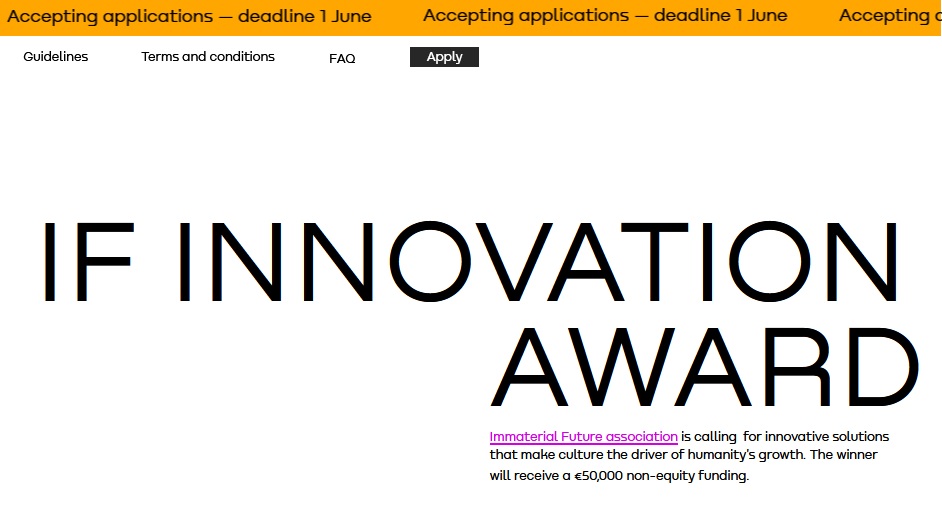
April 19–June 1, 2021
Immaterial Future association is calling for innovative solutions that contribute to unleash the full power of culture. The winner will receive €50,000 non-equity funding to be awarded during the ceremony at viennacontemporary art fair in September, 2021 in Vienna, Austria.
The open call welcomes projects that leverage technology to develop:
- new business models that enable self-sustainable cultural production and distribution;
- distribution models that allow wide access to cultural experiences without losing authenticity.
Applying projects can be run by a startup company, academic entity, for-profit or non-profit organization. For more information on eligibility criteria and application guidelines, visit
https://immaterialfuture.org/award/
The application deadline is Tuesday, June 1, 2021, at 11:59pm CET.
Six selected finalists will be invited to the Forum in Vienna to showcase their projects to potential partners and investors with a specific interest in culture and technology. The best submission will be selected after the showcase.
The Award ceremony will take place in Vienna, September 7, 2021, during the Immaterial Future Forum. The Forum itself is a parallel event to viennacontemporary art fair.
Dmitry Aksenov, Chairman of the Board of Immaterial Future: “We believe that culture has an intrinsic capability to support itself and to boost other spheres of human activity such as business, politics, science and technology”.
Pierre-François Marteau, Board Secretary of Immaterial Future: “Culture has the potential to reach far more people than it does today, and to change their lives for the better. Technology can play a major role in unlocking this potential”.
Contact email for any enquiries: opencall@immaterialfuture.org
About Immaterial Future association
Immaterial Future (IF), a Vienna-based non-profit association, is established in 2021 to shift our world’s growth model towards intangible production and consumption, with culture as main vector of change. It aims to leverage culture’s huge untapped potential to positively impact every single human, breaking away from its elitist confines and becoming more accessible to all.
For more details please visit https://immaterialfuture.org

 Craft Hub is a European project co-funded by the Creative Europe Programme focused on Craft in the context of cultural heritage and its continuing relevance in contemporary practice.
 HERILAND is a pan-European research and training network on cultural heritage in relation to Spatial Planning and Design. It is funded by the

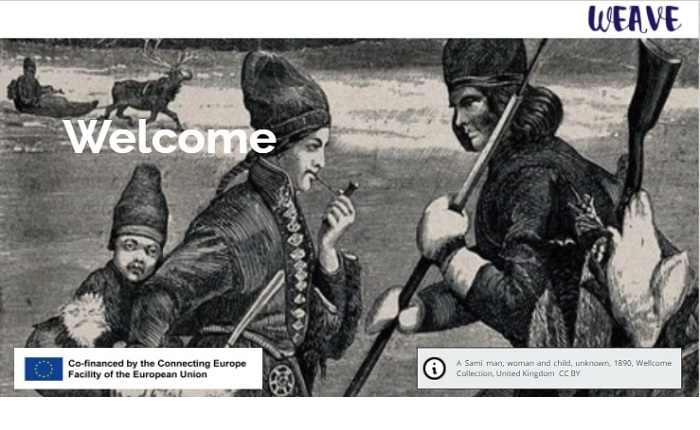
 WEAVE will contribute to preserving for future generations the richness of the European identity and its cultural plurality. In particular, the project will aggregate over 5,000 new high-quality records to Europeana related to the rich and invaluable cultural heritage of minority cultural communities, and showcase these collections in a set of engaging editorials and a virtual exhibition. The project will carry out several capacity building activities to develop a closer connection between cultural heritage institutions (CHIs), minority cultural communities and Europeana.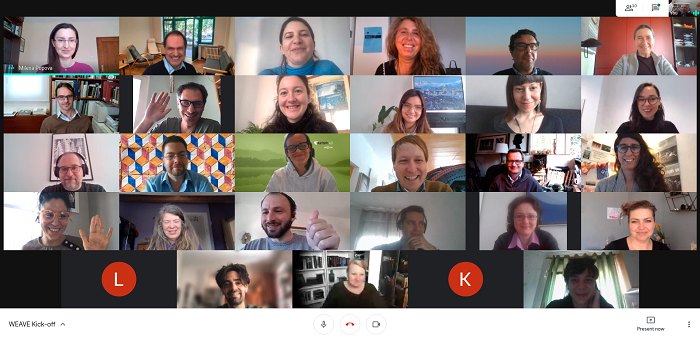

 SoPHIA – Social Platform for Holistic Impact Heritage Assessment aims to promote collective reflection within the cultural and political sector in Europe on the impact assessment and quality of interventions in historical environment and cultural heritage at urban level.