
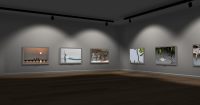
OpenVGal is an open-source 3D virtual gallery for people and institutions that already have digitized photographs or artwork images. It lets them show the work in a walkable room instead of a page of thumbnails. The exhibition is a folder … Continue reading
Join the European Heritage Hub to its upcoming Policy Talk, ‘INNOVATE. PROTECT. EMPOWER. How cultural heritage can make Public AI a reality’, taking place online on 29 September, from 16:00 to 18:00 CET. The Policy Talk will explore the vision … Continue reading
Topic: interactivity
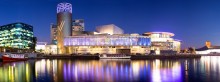
DCDC15 (DCDC as Discovering Collections Discovering Communities), being held at Greater Manchester on 12-13 October 2015, will look at the varied and innovative ways in which archives, museums, libraries and academia can engage with audiences in the digital age, for a more appealing user experience, the enrichment of heritage collections and new collaboration and business opportunities. Continue reading
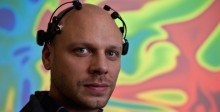
Could neurophysiological and BCI (Brain Computer Interface) tools already control our mind? And could we vice versa already build an individual virtual reality using BCI systems, able to fulfill all users’ desires? And what exactly users actually desire from them? These will be the frame questions of the Friday 24 symposium with dr Aleksander Väljamäe (NGM lab), Pavel Smetana (CIANT) and artist Ivor Diosi. Continue reading
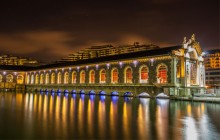
‘What’s next?’ for the museum sector? The Europe’s major conference on the future of Museums call for papers is out. The 2015 edition of MuseumNext will take place in the Swiss city of Geneva between April 19–21. Updates and latest news about the event at Facebook, Twitter and Linkedin. Continue reading
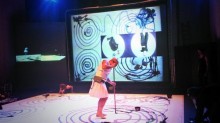
The impact of the distributed performance, as new forms of Cultural Heritage expression, is studied in the framework of the RICHES project. “ULTRAORBISM” opens new doors for experimental and creative formats using advanced visual environments in the field of telematics and distributed events. The potential utilities of the results are very rich from a technical point of view and also from an artistic perspective, and the excellent results of this experience present a very optimistic future in the development of co-creation environments in Europe and the use of ICT in the fields of culture and the arts. Continue reading
The E-Space project’s technical workshop took place in Brussels, on the 23rd of March 2015, at the iMinds – Vrije Universiteit Brussel (VUB) offices; the event, aimed at presenting E-Space’s architecture and implementation choices for the development of its technical structure, was open to the public and attended by over 50 experts from all over Europe. Thanks to this workshop, the E-Space Consortium was able to collect from the attendees a great many feedbacks and inputs, useful to complete the development of the E-Space’s Technical Space. Furthermore, the event gave evidence of the numerous and fruitful possibilities of integration between the services offered by the Europeana Labs and E-Space’s Technical Space. Continue reading
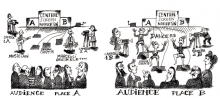
Ultraorbism was an interactive distributed action between two networked connected spaces in two cities: Barcelona and Falmouth. The story was a linear interpretation of the first of the two books of True Story by Lucian of Samosata (a Syrian writer who lived in the second century AD), who tells an impossible journey on which everything is invented, with references to the mythology and literature of the era. Ultraorbism, a project directed by Marcel•lí Antúnez Roca, is part of the European project SPECIFI and case study of the RICHES European project’s research area. Continue reading
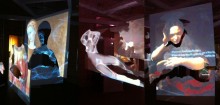
Ballade of Women is an interactive installation that explores perspectives on women’s rights. Through the lens of the personal experience of three women, the exhibition offers an interactive narration on three fundamental themes: emancipation, self-determination and violence. In the installation, representations of three paintings are fragmented and float in the space; set on rotating spindles, these fragments resist attempts by the viewer to capture them as a whole. Thus, the screens only provide a complete view of the paintings at selected times and from specific view-points in the room… Continue reading
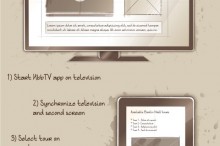
On 25-26th of February 2015, the EuropeanaTV team organized a workshop at Rundfunk Berlin-Brandenburg (RBB) in Potsdam to work out a SmartTV app. It had to use RBB content about the Berlin wall together with related materials from Europeana. This workshop is part of the work realized in the TV pilot of Europeana Space project. Continue reading
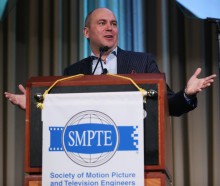
Society of Motion Picture and Television Engineers organises the SMPTE Forum 2015 “Entertainment Technology in the Internet Age: A European Perspective”, being held on 7-8 May 2015, at the Fraunhofer-Forum in Berlin. Factors as wide as EU policy, net neutrality, copyright and mining “big data” are shaping the possibilities in the complex European market and redefining how the industry engages its audience. The SMPTE Forum 2015 will examine these topics Continue reading
A Memorandum of Understanding has been signed between the two projects to enable and promote greater re-use of cultural heritage resources by creative industries, starting from the open source tools developed in the framework of PREFORMA PCP and of Europeana Creative. Continue reading