

OpenVGal is an open-source 3D virtual gallery for people and institutions that already have digitized photographs or artwork images. It lets them show the work in a walkable room instead of a page of thumbnails. The exhibition is a folder … Continue reading

Join the European Heritage Hub to its upcoming Policy Talk, ‘INNOVATE. PROTECT. EMPOWER. How cultural heritage can make Public AI a reality’, taking place online on 29 September, from 16:00 to 18:00 CET. The Policy Talk will explore the vision … Continue reading
Topic: computer animation
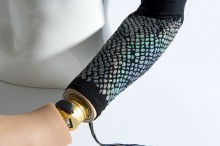
Ars Electronica Linz was selected to conduct the competition to determine the first two recipients of an award launched this year by the European Commission that is as prestigious as it is highly endowed. The STARTS Prize, each accompanied … Continue reading
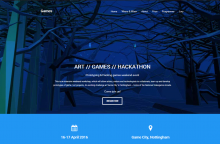
The ART // GAMES // HACKATHON was an intensive weekend workshop, which will allow artists, coders and technologists to collaborate, team up and develop prototypes of game art projects. This exciting event took place at Game City in Nottingham – home of the … Continue reading
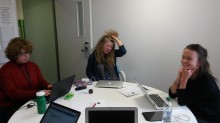
by Rosemary Cisneros, Coventry University The Europeana Space Games Pilot held its first user tests Wednesday, January 27th 2016 at Coventry University. Participants met at the Institute for Creative Enterprise (ICE), a building that brings together researchers, graduates, businesses and enterprise to support … Continue reading

teamLab, founded in 2001, is a collaborative creative group that brings together professionals from various fields of practice in the digital society: artists, programmers, engineers, CG animators, mathematicians, architects, web and print graphic designers and editors. Referring to themselves as “ultra-technologists” their aim is to achieve a balance between art, science, technology and creativity. teamLab ultratechnologists believe that digital technology can expand art and that digital art can create new relationships between people; they work for an interactive relationship between people and art and for children experiencing shared and co-creative spaces. Continue reading
Founded in 2005, Gamelab is a non-profit organization devoted to create quality events where international professionals, researchers, academics, entrepreneurs and investors from the digital entertainment space get inspired and share innovative ideas and projects. Gamelab events connect, empower and inspire … Continue reading
Last month EBN welcomed ADDICT – Creative Industries Portugal, the Creative Industries Agency in Portugal. ADDICT is a non-profit association created in 2008. It currently gathers around 100 members and is recognised by the Ministry for Economy as the coordinator of the Creative Industries Cluster in Portugal. ADDICT’s mission is to foster a favourable environment for culture and creative economy to thrive, advocating the sector interests and acting as platform for knowledge and innovation. Continue reading

In Pisa, a 3-days event including an opening workshop, where videogames veterans, people with decades of expertise in the field, as well as young students who just started a BSc in Computer Science or Arts (or any other faculty of course) met and accepted the challenge of creating a videogame in 48 hours. Continue reading
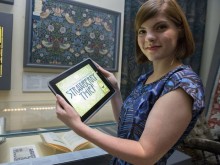
“This project at the V&A has opened my eyes up to the possibilities of what games design can show. I am keen to look at more work by other famous British artists and designers and see what kinds of games can arise!” says the game designer Sophia George in the V&A blog. Continue reading
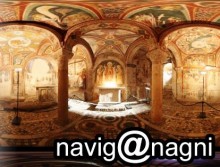
The project “Navig@nagni” was born in 2009 to let the world know the artistic trasures of the “City of Popes” through the web. This has been by scanning the major historical and artistic sites with a laser scanner which, in addition to a perfect 3D modeling, has allowed a scan hundreds of equirectangular pictures, using a special software developed by Massimo Iachetta, head of the ICT department of the City of Anagni. Continue reading
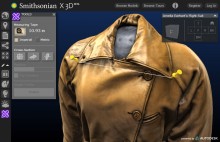
The Smithsonian’s Digitization Program Office has developed 3D models from its holdings, and a selection of models is available online. The Smithsonian x3D Explorer allows users to interact with the digital objects in a web browser, to access, view and manipulate these objects, and eventually to print them with a in-house 3D printer, as the raw 3D data from the objects will be made available for downloading for personal and non-commercial use. Continue reading