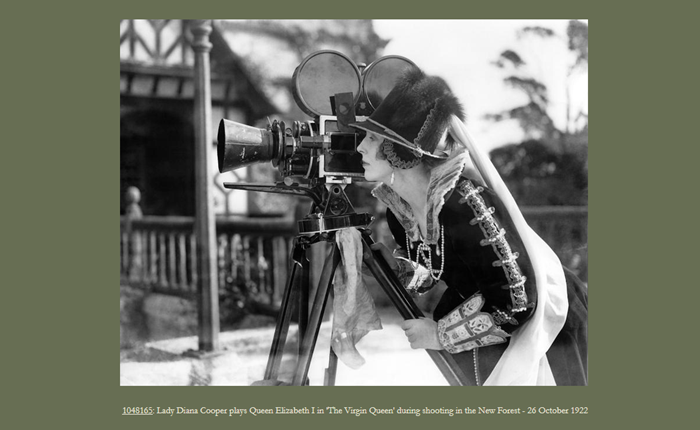

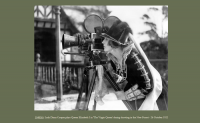
To mark the 2026 World Day for Audiovisual Heritage, prestigious British Archive TopFoto has organised an online event, “Topfoto: Past, Present and Future of Press Photography” online on Octber 27th. The event will explore how press photographs move from newsroom … Continue reading
In the context of small support project CHERISH, Photoconsortium along with CEPIC, developed their first online survey to collect a wide feedback on existing digital challenges in EU for the image professionals. The survey takes approximately 15 minutes to complete, … Continue reading

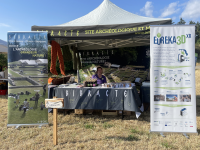
What if the visible remains of a place are only a tiny part of its story? With this blogpost, written by EUreka3D-XR’s partner Bibracte EPCC, you can discover how augmented reality, combined with complementary digital resources, reveals the many hidden … Continue reading
Area: digital heritage
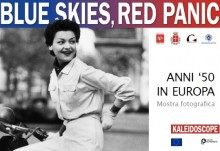
Through the images from some of the most important european photographic archives, this exhibition showcase the era of the 1950s of a nascent Europe, balacing between east and west, freedom and repression, terror and euphoria. The Pisa display is the first of a series, as the exhibition is coinceived to be travelling across Europe. Continue reading

Much like scents, flavours and music, photographs are powerful triggers of memory. So what better medium to recall a past as recent and as visually recognizable as early postwar Europe…? For about a year, the consortium involved in the EU-funded … Continue reading
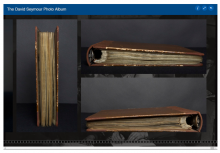
text by Caterina Sbrana. “General View of Rogiano Gravina. Rogiano Gravina is located around forty kilometers north of Cosenza, in the center of a very poor agricultural district. It counts close to 6,000 in habitants, and it is the most … Continue reading
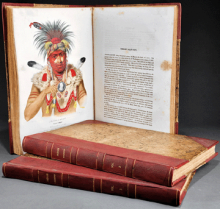
text by Caterina Sbrana. img. Public Domain via Wikipedia “History of the Indian Tribes of North America” is a three-volume collection of Native American biographies and portraits originally published in the United States from 1838 to 1844, by Thomas McKenney … Continue reading

Europeana 2019 from Sebastiaan ter Burg on Vimeo. Europeana 2019 was held at the historic National Library of Portugal, Lisbon, whose vast and diversified heritage covers almost ten centuries of Portuguese history and culture. Europeana 2019 sold out in record … Continue reading

The next Preservation and Archiving Special Interest Group (PASIG) meeting will take place in Madrid on 19-21 May 2020. The Biblioteca Digital Memoria de Madrid, Centro Cultural Conde Duque is the event host. The PASIG Steering Committee is pleased to connect with … Continue reading

Following strong interest and some excellent applications from archives and other memory institutions over the last three years, the TWA Digitisation Grant has relaunched in 2019. We are very pleased to be increasing the fund this year and now grants … Continue reading

A special session at the 12th International Conference on Agents and Artificial Intelligence (ICAART) is called on: Artificial Intelligence and Digital Heritage: Challenges and Opportunities – ARTIDIGH 2020 This special session welcomes papers that reflect upon, discuss and present the … Continue reading
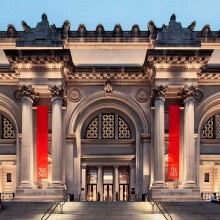
Text by Caterina Sbrana. Dear readers, I once again speak about New York and in particular about the Met, the Metropolitan Museum of Art, which digitized a large number of historical documents in the last two years and made them … Continue reading
In its 16th edition, the iPRES conference will bring together scientists, students, researchers, archivists, librarians, providers, and other experts to share recent developments and innovative projects in a wide variety of topics in digital preservation from strategy to implementation, and … Continue reading