On 9-10 December, launched the new project for transmitting and benefiting from Cultural Heritage in Europe
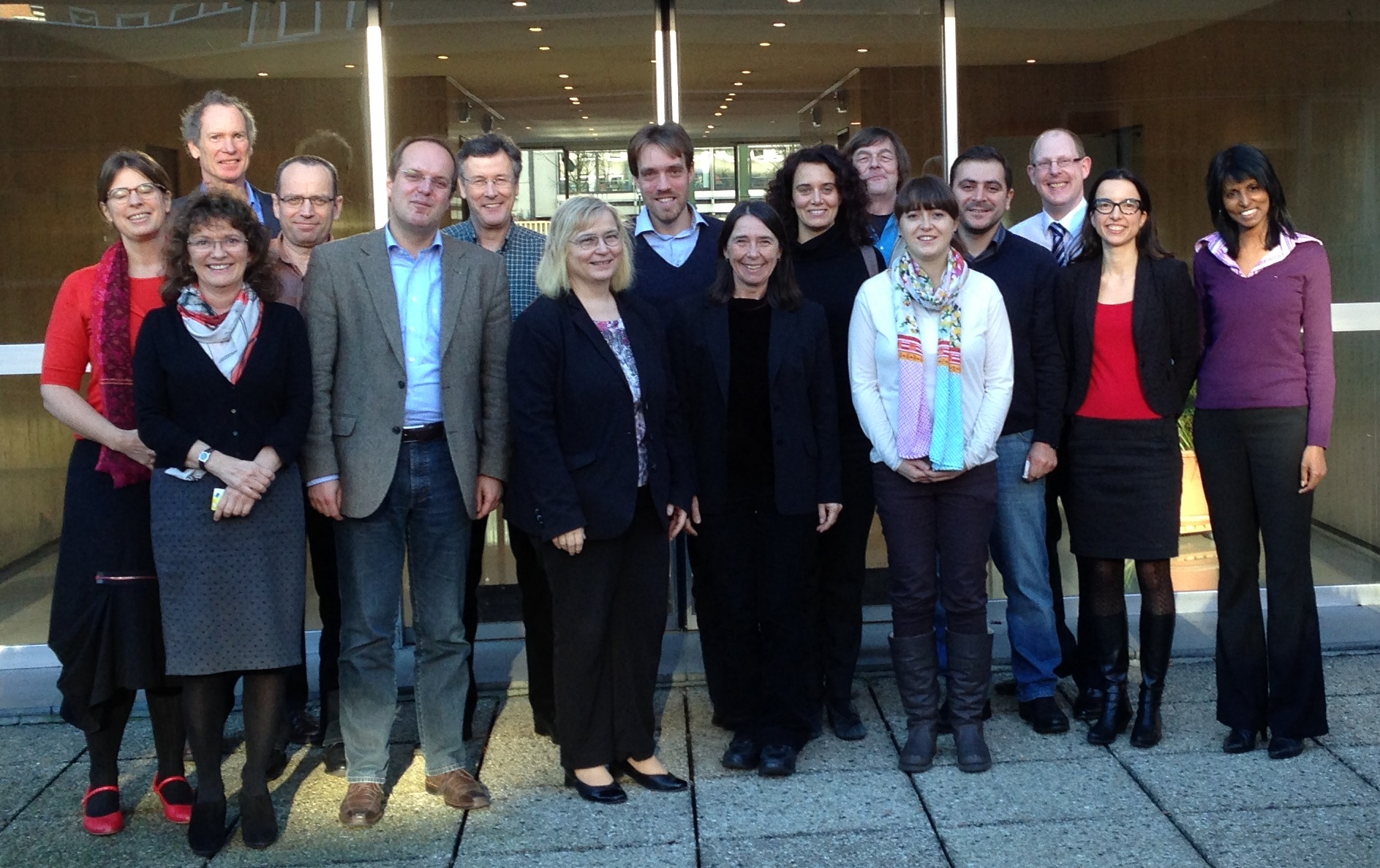
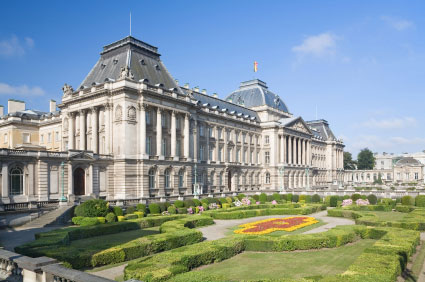 On 9-10 December, at the EBN (European Business & Innovation Centre Network) in Brussels, 10 partners from 6 EU countries and Turkey kicked-off RICHES, a new EC funded research project in the field of Socio-Economic Sciences and Humanities.
RICHES (Renewal, Innovation & Change: Heritage and European Society) is a project about change: about the change digital technologies are bringing to our society, decentring culture and cultural heritage away from institutional structures towards the individual and so offering to the EU citizens a great opportunity to use their heritage as a drive for social and economic development.
Digital technologies now permeate all of society, compelling us to rethink how we do everything and to ask questions: how can CH institutions renew and remake themselves? How should an increasingly diverse society use our CH? How may the move from analogue to digital represent a shift from traditional hierarchies of CH to more fluid, decentred practices? How, then, can the EU citizen, alone or as part of a community, play a vital co-creative role? What are the limitations of new technologies in representing and promoting CH? How can CH become closer to its audiences of innovators, skilled makers, curators, artists, economic actors? How can CH be a force in the new EU economy?
RICHES will research answers to these questions through the work of the ten partners, ten groups composed of experts from cultural institutions, public and national administrations, SMEs, humanities and social science academies. This interdisciplinary team will research the context of change in which European CH is transmitted, its implications for future CH practices and the frameworks – cultural, legal, financial, educational, technical – to be put in place for the benefit of all audiences and communities, in the digital age.
RICHES will employ traditional and innovative research methods and tools and a rich dissemination programme including two major international conferences will insure the project has maximum outreach and impact.
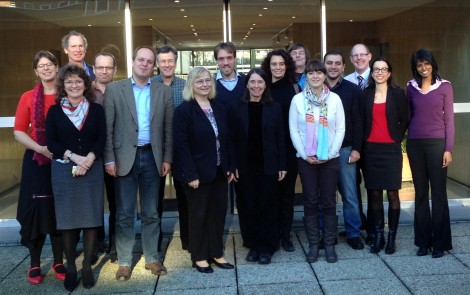
The RICHES Consortium
In Brussels, the partners met to start the actualisation of their workplan, exchanging ideas and new cues for the next future. Particular aim of the project is making CH lively, living and most of all lived by the EU citizens; during the meeting it was stressed the importance of involving the citizens, through the support of digital technologies, to co-create CH together with the public and private cultural institutions; of inviting people to play with CH and to feel part of it. For this purpose, three experimental co-creation sessions will be run by the partners next year in the Netherlands. The “participatory CH”, put in place with this kind of experiments, is expected to have a strong societal impact.
Other important point among RICHES goals, highlighted during the meeting, is improving the value of traditional craft skills by inserting them, through the help of digital technologies, in new (industrial) contexts, in order to exploit their high potential for economic development. Through the innovation of digital technologies, traditional CH will be moreover revamped and made more and more captivating. This is expected to bring a great benefit to the heritage institutions and to incentivize cultural tourism, representing another big opportunity for Europe.
Each partner presented to the others his company and his role within the project; during the two working days, there was also occasion for a pleasant visit of Brussels city and for convivial exchanges.
RICHES partners are:
•the University of Coventry, UK – PROJECT COORDINATOR;
•I2Cat (‘Internet & digital Innovation in Catalonia’), Spain;
•Hansestadt Rostock (representing the municipality of the city of Rostock; in particular the Department of Culture and Monument Preservation Rostock and the Museum of Cultural History Rostock will be involved in RICHES), Germany;
•WAAG Society (Institute for art, science and technology) of Amsterdam, The Netherlands;
•the University of Southern Denmark (SDU), Denmark;
•Stiftung Preussischer Kulturbesitz (SPK), Germany. It is a network of German cultural institutions, including the National Museum in Berlin, the State Library, the Secret State Archive, the Ibero-American Institute, the Institute for Music Research;
•the University of Exeter, UK;
•Promoter Srl , Italy – Project’s Dissemination Manager;
•the Turkish Ministry of Culture and Tourism (KYGM), participating in RICHES in particular with the contribution of its General Directorate of Libraries and Publications, Turkey;
•Stichting Rijksmuseum voor Volkenkunde (NME, the National Museum of Ethnology of Leiden), The Netherlands.
Beyond the RICHES partners, three important guests from the EC took part in the meeting:
- Zoltan Krasnai, EC Project Officer, presenting “EU Research and Innovation on Cultural Heritage in Horizon 2020“
- Thomas Jaeger, DG Communication Networks, Content & Technology, presenting “Research and Innovation Actions for Creative and Cultural Industries”
- Claire-Lyse Chambron, DG-EAC Unit E.1 – Culture Policy and Intercultural Dialogue
and from the MeLa FP7 Project:
- Gennaro Postiglione, presenting “MeLa, European Museums in an age of migrations”
Download the Agenda of the meeting (PDF, 250 Kb)
 RICHES on Twitter: #richesEU




 After the successful workshops and networking sessions jointly organised by DCH-RP and EUDAT (in Manchester at the EGI Community Forum, in Rome during the EUDAT Conference and at ICT 2013 in Vilnius), the two projects decides to formalise their cooperation by signing a Memorandum of Understanding.
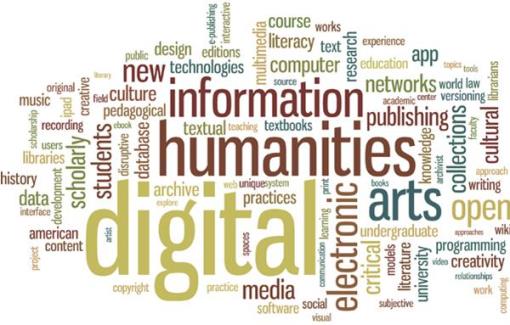 Digital Humanities Awards are a new set of annual awards given in recognition of talent and expertise in the digital humanities community and are nominated and voted for entirely by the public. These awards are intended to help put interesting DH resources in the spotlight and engage DH users (and general public) in the work of the community. Awards are not specific to geography, language, conference, organization or field of humanities that they benefit and there is no financial prize associated with these community awards, just the honour of having won and an icon for your website.
 The DH Awards 2013 are overseen by an international Nominations Committee consisting of:


 This
This 
 EAGLE is a Best-Practice Network (BPN), co-funded through the
  PELAGIOS stands for “Pelagios: Enable Linked Ancient Geodata In Open Systems”. It is a collective of projects connected by a shared vision – most eloquently described in
 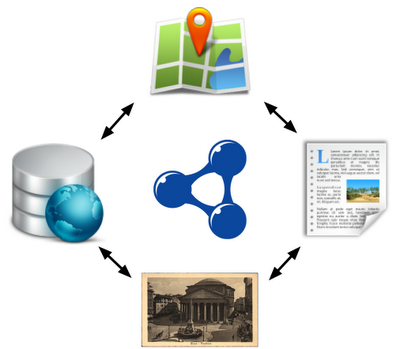 By joining Pelagios, EAGLE will be able to connect with other major online projects about the Ancient World and make its data accessible to other aggregator and LOD projects to increase the quality, usability and accessibility of data provided by the BPN. Moreover, working with the Pelagios team, EAGLE looks forward to taking linked ancient world data one step further in terms of networking and interoperability and to helping facilitate research in all disciplines of the field, digital or otherwise.