


 Registration is open for the next PASIG (Preservation and Archiving Special Interest Group) conference in Prague: http://pasig.schk.sk/wordpress/registration.
Please note that the early bird rate of 200€ is available until the end of January. The cost from the 1st February onwards will be 250€.
This is a great opportunity for organisations setting up preservation repositories to collaborate and work directly with leaders in the field. The PASIG is focused on:
- addressing practical preservation questions;
- hearing about best practices and new technologies from global experts;
- investigating the convergence of on-premise architectures and the Cloud;
- how to set up, initiate, and audit the metrics of a preservation project;
- key global project updates; and
- solution provider and end customer collaboration.
 PASIG is a highly collaborative and interactive forum and generally attracts a large contingent of new participants.
A veraPDF workshop will be organised in the morning of the first day and the PREFORMA project will be presented on the second day the conference by Emanuel Lorrain from PACKED vzw.
Session Overviews include:
- Digital Preservation Bootcamp
- Training in concepts, issues, tools, strategies & approaches for Digital Preservation and Archiving.
- Open Preservation Foundation Workshop: veraPDF – definitive, open source PDF/A validation for digital preservationists
- PKX / Practitioners Knowledge Exchange: Case Studies in Preservation & Archiving Architectures and Operations
- Lightning Talks
- The Frontiers of Preservation
- Discussions on the recent developments and challenges facing those who are tackling digital preservation.
- Industry Collaboration and Solution Vendor Presentations
- Project Updates and Digital Preservation Community Developments
- Hardening Existing Systems with Preservation Capabilities
Agenda
The full agenda is published on the PASIG 2016 website: http://pasig.schk.sk/wordpress/agenda. A list of local hotels is also available.
Sponsors
We would like to thank the sponsors: Arkivum, Cray, The Digital Preservation Network, Ex Libris, Oracle, Preservica, P&A Consult, and T-Systems.
A list of participating organisations is published on the website: http://pasig.schk.sk/wordpress/participating-organisations.
We look forward to seeing you in Prague!


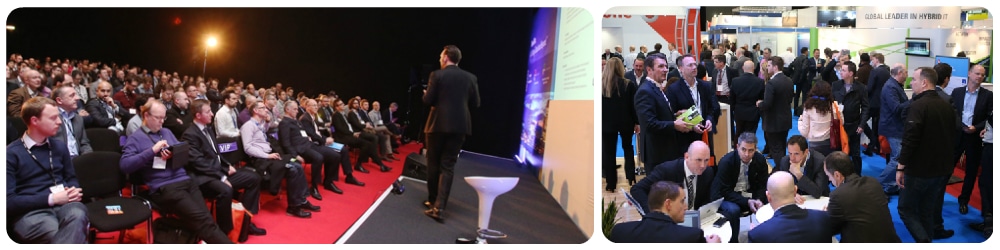


 The IS&T Archiving Conference brings together an international community of imaging experts and technicians as well as curators, managers, and researchers from libraries, archives, museums, records management repositories, information technology institutions, and commercial enterprises to explore and discuss the field of digitization of cultural heritage and archiving.

 Special Topic: Migration and Emulation






 The ICA Congress 2016 will be held in Seoul, Republic of Korea. The Congress is a unique opportunity to update your professional knowledge, to compare experiences with colleagues in Korea and other parts of the world, and to meet colleagues and develop new projects. The programme includes more than 200 contributions from well over 300 speakers, many of whom are experts in their chosen fields; some of whom are new professionals building their career and all of whom are passionate about archives.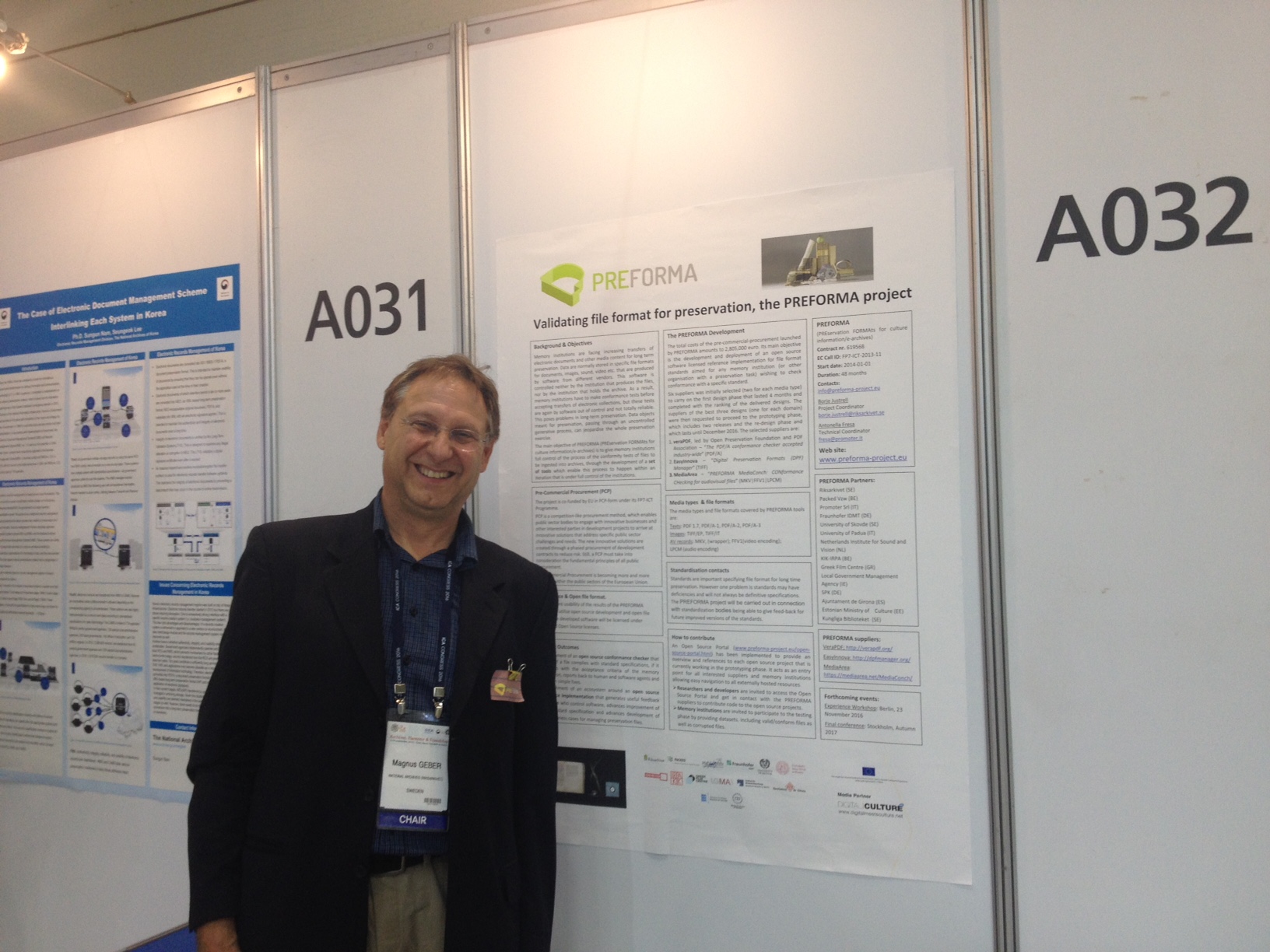

 The
The