A short article by Bitr. Professor Björn Lundell (Ph.D.), University of Skövde
Long-term sustainability through Open Source software implementations of open file formats
Skövde 24 June, 2014
Bitr. Professor Björn Lundell (Ph.D.), University of Skövde (bjorn.lundell@his.se)
Download PDF
Understanding fundamental challenges relating to lock-in effects and use of different file formats for long-term maintenance of digital assets is an essential component to the success of any memory institution. Research results show that maintenance and support contracts for proprietary licensed software are typically provided for (up to) 10 years. Hence, digital assets (files) outlive proprietary software in any long-term maintenance scenario. Consequently, it is clear that tools used for the initial creation of files will not be available during the complete life-cycle for systems used by memory institutions. Many organisations therefore seek to adopt open file formats and Open Source software (OSS) solutions as a strategy for minimising risks for losing control of their digital assets.
The European Commission published an official communication (COM(2013) 455 final) on 25 June 2013, which recognises the importance of open standards for addressing lock-in. Besides addressing lock-in by making better use of standards in procurement, the associated press release (IP/13/602) reports that open standards would save public sector €1 billion a year. Further, specific countries have developed policies and guidelines for use of open standards when procuring software solutions in order to address digital preservation and lock-in. For example, the U.K. Government undertook a comprehensive review of the evidence for how open standards contribute to achieve a level playing field for open source and proprietary software. Based on this, the U.K. Government provides a detailed policy with motivations and principles for use of open standards. Further, a recent report from the Swedish governmental agency responsible for public sector procurement stresses the importance of using open standards in public procurement (Dnr. 96-40-2013). The report stresses different lock-in effects and highlights the importance of considering long-term digital preservation before adoption, and in so doing addresses migration, interoperability, and lockin challenges.
An open file format is an open standard (see EIFv1 and SOU 2009:86) which can be used as a basis for implementation in a software system that is provided under different proprietary and open source software licenses. In general, open file formats are suitable for use in a scenario when longterm preservation is important, whereas closed file formats (for example, MXF and JPEG2000) are provided under conditions which make such formats inappropriate for use in such scenarios. Hence, for this reason the PREFORMA project utilises open file formats instead of closed file formats. Closed file formats are typically controlled by specific companies or industry consortia and it is not uncommon that there are many patents which impact on the conditions for implementation of such closed formats (e.g. MXF and JPEG2000) in software. For this reason, it is essential to carefully analyse conditions for use of such file formats before implementation in a software system.
In order to minimise risks for memory institutions and for long-term sustainability and flexibility reasons, PREFORMA will use two specific Open Source software licenses. All developed software will be provided on an open platform (e.g. GitHub or equivalent) under the two specific licenses: “GPLv3 or later” and “MPLv2 or later”. As considerations concerning legal and licensing conditions for implementation of different file formats in software solutions under specific Open Source licenses may impose specific questions which require legal expertise the PREFORMA project provides contact information for seven legal experts on Open Source, which all have been informally briefed concerning the PREFORMA challenges. However, it should be noted that PREFORMA is neutral with respect to the legal contacts and has no formal relationship with any of these legal experts. Hence, any legal advise concerning issues related to PREFORMA can, of course, be sought from any legal expert.
For information, we provide the following contacts to legal experts in several European countries (in alphabetical order): Malcolm Bain (id law partners, Spain); Amanda Brock (Origin Ltd., U.K.); Martin von Haller Groenbaeks (Bird & Bird, Denmark); Till Jaeger (JBB Rechtsanwälte, Germany); Andrew Katz (Moorcrofts LLP, U.K.); Carlo Piana (Array, Italy); Martin von Willebrand (HH Partners Attorneys at Law Ltd., Finland).
Since memory institutions have requirements for very long life-cycles of digital assets it is necessary to establish sustainable communities related to each Open Source software (OSS) solution in which open file formats are implemented. Previous research shows complex relationships (with mutual influences) between a technical specification of a file format and its implementation in software. For this reason it is important to establish effective processes for promotion of quality in both evolving versions of a technical specification of a file format and also in evolved versions of a software solution in which the specification is implemented. Previous research shows that technical specifications of file formats and their implementation in software are inherently incorrect, vague, and incomplete. Hence, over time, a long-term process needs to be established which contributes to improved quality in both file formats and software. For this reason, an important R&D dimension for PREFORMA is to contribute to such a long-term goal.
For memory institutions, it is essential to ensure that conditions for use of specific file formats allow implementation in software which provide full control of digital assets through preservation in open file formats and sustainable Open Source software. Finally, if an organisation is interested in using a specific file format for implementation in software in the context of PREFORMA and if there are specific questions related to licensing and legal issues, we would like to suggest contacting legal expertise. The above mentioned legal experts are all briefed about the objective for PREFORMA and we would welcome further feedback from other legal experts interested in the project.
Contact: Björn Lundell (bjorn.lundell@his.se)
For further information about PREFORMA, please see: http://www.preforma-project.eu
Some references:
EIF: European Interoperability Framework for Pan-European eGovernment Services, European Commission, Version 1.0, http://ec.europa.eu/idabc/servlets/Docd552.pdf?id=19529
European Commission: Communication from the Commission to the European Parliament, the Council, the European Economic and Social Committee and the Committee of the Regions Against lock-in: building open ICT systems by making better use of standards in public procurement, COM(2013) 455 final, European Commission, Brussels, 25 June 2013. http://ec.europa.eu/information_society/newsroom/cf/dae/document.cfm?doc_id=2327
European Commission: Press Release, Digital Agenda: Open standards would save public sector €1 billion a year, Brussels, 25 June 2013 http://europa.eu/rapid/press-release_IP-13-602_en.htm
Kammarkollegiet: Programvaror och tjänster 2013, Statens Inköpscentral vid Kammarkollegiet, Dnr. 96-40-2013, 5 February 2014, https://www.avropa.se/upload/F%c3%b6rstudie%20Programvaror%20och%20tj%c3%a4nster%202013.pdf
SOU 2009:86: Strategi för myndigheternas arbete med e-förvaltning, Statens Offentliga Utredningar, SOU 2009:86, E-delegationen, 19 November 2009, ISBN 978-91-38-23302-3 , http://www.regeringen.se/download/1dc00905.pdf?major=1&minor=133813&cn=attachmentPublDuplicator_0_attachment
U.K. Government: Open Standards principles: For software interoperability, data and document formats in government IT specifications, 1 November 2012, https://www.gov.uk/government/uploads/system/uploads/attachment_data/file/78892/Open-Standards-Principles-FINAL.pdf
U.K. Government: Open Standards in Government IT: A Review of the Evidence, 1 November 2012, https://www.gov.uk/government/uploads/system/uploads/attachment_data/file/78891/Review-ofthe-Evidence_CIPPM.pdf






 After the success of last year’s workshop, we are delighted to announce the return of this training event organised by APARSEN and presented in collaboration with TIMBUS.
 The course is the second iteration of what will become a yearly event to be presented from 2015 by the Virtual Centre of Excellence developed out of APARSEN. It will bring together those at the forefront of digital preservation research and training, and it is intended for managers and staff already working in digital preservation. It assumes a working knowledge of existing standards like the Open Archival Information System (OAIS) as well as an understanding of how issues of preservation apply to their own institution.





 Collective Amnesia is a collaborative project between the Fundació Joan Miró and Tricentenari BCN. It is part of Preventive Archaeology, an exhibition program at Espai 13, the Fundació’s project room for emerging artists.
 RICHES on Twitter: #richesEU


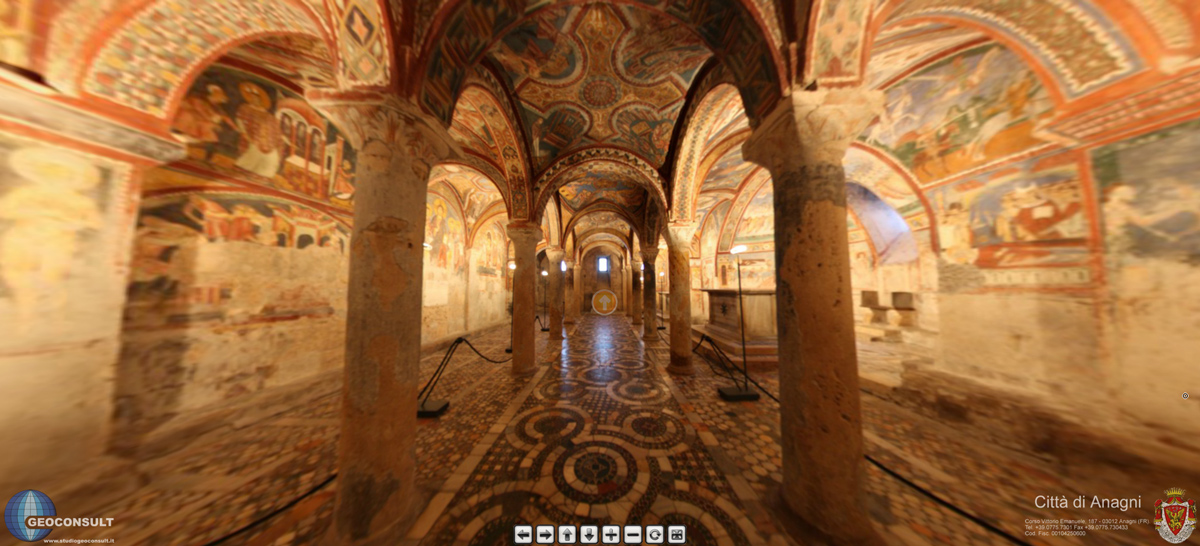



 The URLA 2014 Congress’ main theme will be Management of Cultural Heritage and Cultural Memory Institutions.