Neelie Kroes: «Culture feeds the soul, but it is also a business opportunity»
On 2 October 2014, the European Commission published two reports, coinciding with the international conference The reuse of digital cultural content in education, tourism and leisure: an opportunity for cultural institutions and creative industries, an investment for the future, held in Rome, at the National Central Library, on occasion of the Italian Presidency of the EU. The conference aimed at urging cultural institutions in Europe to put more cultural heritage online, with the government support.
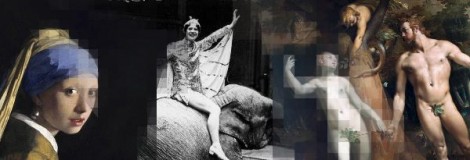 One report looks at how to digitise, make accessible and preserve culture online, the second report explains how European film heritage can be rescued from rotting cans. Digitised cultural material is a great common and free resource for developing cultural and educational content, documentaries, tourism applications, games, animations and design tools. This can help creative industries to grow beyond their current share of 4% of EU’s GDP.
Europeana, the EU’s digital museum, library and archive already includes 33 million objects from hundreds of Europe’s best museums and libraries, making it the largest and most significant digital cultural collection in the world. Most recently, the Thyssen-Bornemisza Museum in Madrid agreed to make their masterpieces accessible through Europeana.
European Commission Vice-President Neelie Kroes said: «Culture feeds the soul, but it is also a business opportunity. Just look at the Rijksmuseum example: its RijksStudio application lets you play around with 150,000 masterpieces with no restrictions. Beautiful things happen when you combine culture and digital technology.
Or take Europeana – the best cultural collection that no-one has heard of. It could be 10 times bigger, have better partners, and be marketed globally as a symbol of what makes Europe great. This is the digital cultural challenge and opportunity.»
The international conference in Rome also focused on the reuse of the digitised material.
The first report shows that digitisation remains a challenge, with only a fraction of Europe’s collections digitised so far (around 12% on average for libraries and less than 3% for films). The second identifies barriers to film digitisation and online access, such as lack of funding (for every €97 invested by the public sector in the creation of new films, only €3 go to the preservation and digitisation of these films) and the high cost and complexity of copyright clearance.
Good examples in the digital culture field include:
- the Polish National Audiovisual Institute, which operates a multimedia portal for sharing cultural resources and producing new content from them
- the Finnish National Gallery, which offers and app-developer support tool
- in the Netherlands, Koninklijke Bibliotheek‘s and University Library‘s database, which permits free reuse of digital books including for commercial purposes
- the Danish Film Institute, which offers an open film streaming platform. Within the first two months after its launch, it attracted almost 200,000 users
- the Sound Collection partnership between the French BNF, Believe Digital and Memnon Archiving Services, which offers 200.000 records in the Médiathèque Numérique
- innovative sharing and reuse models for digital heritage, such as the Monuments of Poland app;
- Digisam, which coordinates the digitisation of the many heritage institutions in Sweden.
 The Commission will continue to monitor progress in this area through periodic reports and by chairing the Member States Expert Group on digitisation and digital preservation and the EU Expert Group on Film Heritage. It will also monitor correct transposition of the Orphan Works Directive (transposition deadline 29/10/2014) to bring online books, press articles, films that are still protected by copyright but whose authors or other right holders are not known or cannot be located or contacted.
The Commission encourages a more widespread and systematic use of the European Structural and Investment Funds to co-finance digitisation activities as part of projects having an impact on the regional economy.
The newly published document on Film heritage is the fourth report on implementation of the 2005 Recommendation on film heritage and the competitiveness of related industrial activities. It is based on replies of the Member States to a Commission questionnaire circulated in September 2013. The analysis shows how European film heritage risks missing the digital train.
In November 2013, the Commission also adopted revised criteria for assessing member states’ support schemes in favour of films and other audio visual works (Cinema Communication on State Aid). Since then, the Commission is asking Member States to provide information on the deposit of financed films and on mechanisms that facilitate their use for public interest by film heritage institutions every time that a new State aid scheme is notified.
For further info visit:
http://cordis.europa.eu/fp7/ict/creativity
http://www.iccu.sbn.it/opencms/opencms/en/archivionovita/2014/novita_0001.html
http://europa.eu/rapid/press-release_IP-14-1076_en.htm





 The open source semantic annotation tool Pundit is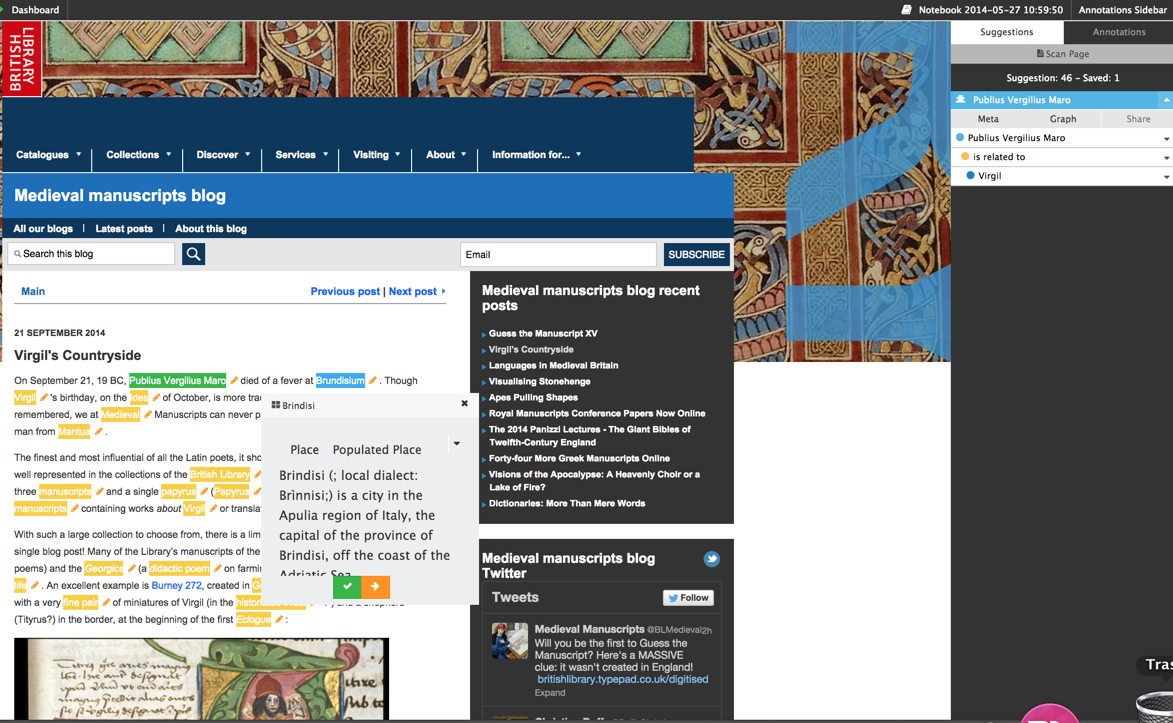
 At present, Net7 is a partner in two European-related projects (DM2E and Europeana Sounds), three ERC-funded projects (EUROCORR and ERC AdG 2011 – LookingAtWords) and in a Dissemination project (StoM – SemLib to Market). Since 2014 Net7 is also associate partner of the