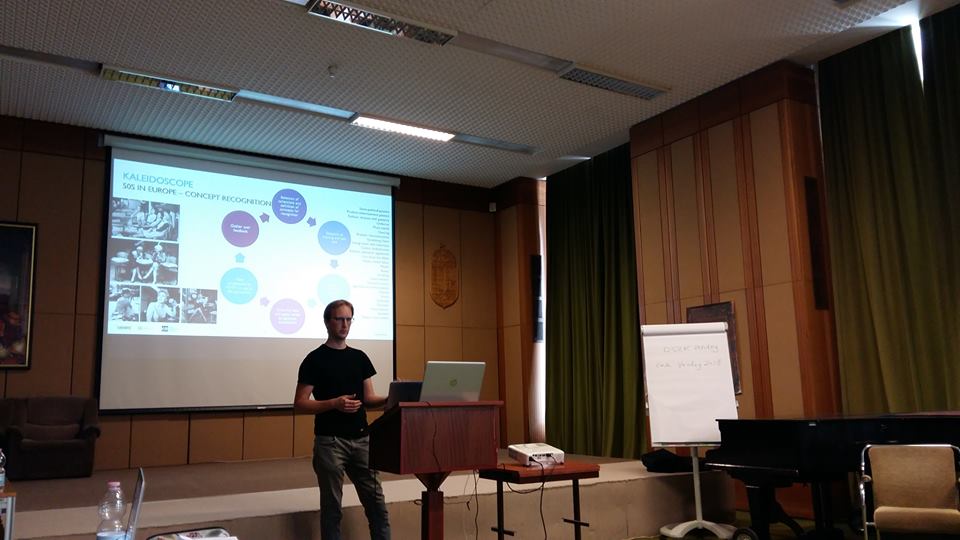


Daring participation! The REACH project workshop on Institutional Heritage is just started!

Cattura.1PNGFour international workshops on different aspects of participation will be held in the frame of REACH. The first one is being  running  right now in Berlin.
During the two days event around 20-25  experts will meet and discuss many aspects of all kinds of possibilities for participation in the institutional care for cultural heritage.

Mostly targeted to cultural institutions and public administrations, the workshop addresses the following themes:

  • Core functions and activities to be faced by cultural heritage institutions
  • Who can and should be involved in which area of work?
  • How can citizens get involved for mutual benefit?
  • What actions are necessary for lasting participation?
  • Best practice examples

Get more information here.


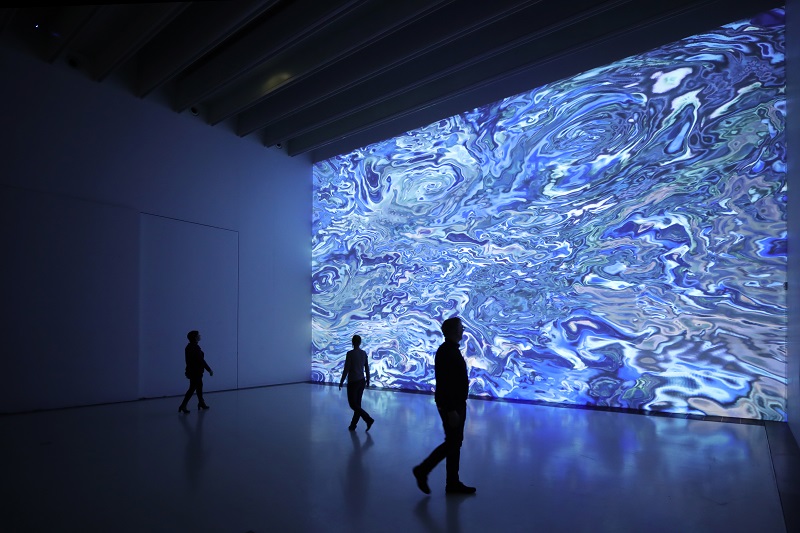
Taipei Biennial 2018: Post-Nature — A Museum as an Ecosystem

The Taipei Biennial is the most important exhibition for promoting contemporary art held by the Taipei Fine Arts Museum. In 1998, after more than a decade of changes in the format, and in order to adapt to the ‘biennial’ trend, and to promote Taiwan’s contemporary art internationally, the Taipei Fine Arts Museum began to invite internationally-renowned curators to cooperate with curators from Taiwan. Since then, the Taipei Biennial has introduced new artistic ideas from around the world that act as a driver of dialogue between Taiwan and other cultures, becoming a primary symbol of Taiwan’s contemporary art development and international artistic exchange.

taipei

The 2018 edition is co-curated by Mali Wu and Francesco Manacorda, and focuses on the interconnectivity of ecosystemic structures formed between humans and nature and aims to serve as a platform for social experimentation, generating new interdisciplinary possibilities for long-lasting, community-driven, bottom-up synergies. This Biennial aims to investigate how museum as an institution exists as, and within, a social, cultural, economic and political ecosystem.

Taipei Biennal website: https://www.taipeibiennial.org/?lang=EN

Article appeared on Hyperallergic: https://hyperallergic.com/471444/taipei-biennial-2018-post-nature-museum-ecosystem-tfam/


Modernising Cultural and Creative Industries within the EU

creative ind

Cultural and Creative sectors occupy a significant place in today’s European economy, by contributing to innovation, investment, digital modernisation and cultural tourism. The Cultural and Creative Industries (CCIs) generate indeed around €509 billion per year, representing 5.3% of the EU’s total GDP and employ 12 million full-time jobs, which constitutes 7.5% of the EU’s employment and the third largest employer sector in the EU (European Commission, 2018). More than the economic value added to the EU’s GDP, cultural and creative sectors promote the European culture within and beyond the EU’s borders. In a political context characterised by the questioning of the European project, cultural and creative sectors have the potential to strengthen the European identities, cultural diversity and values; favour the critical thinking and build bridge between art, culture, business and technology in order to bring the European citizens closer.

In the last years, the EU has developed various projects in the framework of the 2015-18 Work Plan for Culture and the 2020 Horizon programmes to finance and support Cultural and Creative Industries. However, market fragmentation, insufficient access to finance and uncertainties in salaries conditions continue to undermine the cultural participation and development. In response to the Council’s invitation to do more in the cultural sector, in May 2018 the European Commission adopted a proposal for a New European Agenda for Culture. The New Agenda aims to harness the power of culture and cultural diversity for social cohesion; bolster the common European identity; support jobs and growth in cultural and creative sectors and to strengthen international cultural relations.

With the evolution of globalisation and digitalisation in modern life, the New European Agenda for Culture embraces the innovation in cultural and creative sectors. This goes with the adaptation of education and training to address the technological and business skills deficit and bring about evolution in the cultural sector. Moreover, it is currently assessed that there is a need for continuous assessment to ensure that the regulatory framework complies with intellectual property rights, consumer protection, online distribution and the establishment and operation of business rules in a digital era.

This timely symposium will evaluate recent initiatives and policy developments in the field of Cultural and Creative Industries from the EU to tackle the emerging challenges to the sector. Participants will exchange views, perspectives and good practices on the possible strategies to tackle these challenges, and will debate the role of CCIs in national politics, education, international communication and social inclusion.

Delegates will:

  • Find out about the European initiatives to boost the CCIs sector, such as the New Agenda for Culture of 2018.
  • Discuss the CCIs’ role in creating social cohesion and mutual identity within the EU
  • Explore ways to adapt to the changes in the creative and cultural sectors in a global and digital era
  • Identify ways to get access to the European market for companies operating in the CCIs
  • Analyse methods to tackle current challenges in the cultural sectors such as artists’ mobility and contract stability
  • Learn from good practices of other members states aimed at supporting the creative and cultural sectors based on cultural exchanges

To view our brochure, including the full event programme, click here.

20% early registration discount off the standard delegate rates (subject to type of organisation and terms and conditions) for bookings received by the 28th December 2018

Website and registration: https://www.publicpolicyexchange.co.uk/events/JB06-PPE2?ss=bk&tg=bp1


Ancient Egypt and New Technology

egypt

The Egyptology program in the Department of Near Eastern Languages and Cultures at Indiana University –Bloomington and the Indiana University Virtual World Heritage Laboratory, invite Egyptologists and digital humanists with interest in Egyptology to a conference in Bloomington on 29-31 March, 2019. This will be the first conference of its type held in North America.

Ancient Egypt and New Technology: The Present and Future of Computer Visualization, Virtual Reality and other Digital Humanities in Egyptology

School of Informatics, Computing, and Engineering
700 N Woodlawn Ave, Bloomington, IN 47408

Keynote speakers: https://www.indiana.edu/~iucweb/egyptology/confirmed-workshop-participantskeynote-speakers/

Call for papers open until 31/12/2018: http://www.digitalmeetsculture.net/article/ancient-egypt-and-new-technology/

Website: https://www.indiana.edu/~iucweb/egyptology/


Ancient Egypt and New Technology

egypt

The Egyptology program in the Department of Near Eastern Languages and Cultures at Indiana University –Bloomington and the Indiana University Virtual World Heritage Laboratory, invite Egyptologists and digital humanists with interest in Egyptology to a conference in Bloomington on 29-30 March, 2019. This will be the first conference of its type held in North America. Proposals for twenty minute presentations and posters are welcome from both professional scholars and advanced graduate students.

Deadline for abstracts: December 31, 2018

For more details:
https://www.indiana.edu/~iucweb/egyptology/call-for-papers/

Ancient Egypt and New Technology: The Present and Future of Computer Visualization, Virtual Reality and other Digital Humanities in Egyptology

An international conference to be held 29-30 March 2019 at Indiana University –Bloomington

To take stock of most recent developments in Egyptology and the digital humanities, and to consider future directions for the application of new technologies in Egyptology, the Egyptology program in the Department of Near Eastern Languages and Cultures at Indiana University –Bloomington and the Indiana University Virtual World Heritage Laboratory, invite Egyptologists and digital humanists with interest in Egyptology to submit proposals for presentantions which deal with current or projected work in such areas as:

  • 3D modeling
  • Field applications
  • Virtual and enhanced reality
  • Game technology
  • New technology, pedagogy and public outreach
  • Problems of documentation, and organization and preservation of metadata and paradata
  • Database projects
  • Lexicographic and other reference projects
  • Computational and corpus linguistics
  • E-publication
  • Sustainability

Participants in this conference will also be invited to submit their papers for inclusion in a peer-reviewed volume, which is currently planned to appear in the series Harvard Egyptological Studies.


Public consultation on the #FutureofEurope

EU leaders are committed to a Europe that brings real results in issues that matter most to people. See how you can get involved in helping to shape the future of the European Union.

Ahead of a dedicated EU Summit in Sibiu, Romania, and the European elections in 2019, national leaders agreed on a Leaders’ Agenda on pressing issues and challenges where solutions are needed.

You can contribute to the online consultation drafted by citizens themselves, read and react to the White Paper on the Future of Europe, attend Citizens’ Dialogues organised by the European Commission or participate in other debates organised in your country.

consultations-future-europe-web

Go to the ONLINE CONSULTATION


REACH at the Fair of European Innovators in Cultural Heritage

IMG-20181115-WA0021
The Fair  of European Innovators in Cultural Heritage was a key event of 2018 European Year of Cultural Heritage.
The Fair focused on innovation and innovators, showcased the latest innovations in cultural heritage, discussing how innovation and creativity can benefit both the society and the market; the aim is to invest in people ‘who will make the change’ and support a cultural heritage innovation ecosystem.
The two-days event provided a programme of plenary and breakout sessions, round tables, pitches from innovators, Horizon 2020 projects’ clustering and a B2B corner.
Participants had the opportunity to join the ‘Community of Innovators in Cultural Heritage‘ and its platform to engage with innovation providers, users and investors.
IMG-20181116-WA0000REACH project contributed to the event by the participation of the network coordinator Dr. Antonella Fresa. The 15th of November she participated   in the break-out session titled “Shared Management of Cultural Heritage-Intangible heritage and community cohesion” as Dedicated discussant. Introductory presentation of this break out session was made by Dr. Erminia Sciacchitano (Chief Scientific Advisor of the European Year of Cultural Heritage, Directorate General for Education and Culture, European Commission) who mentioned REACH as an example of good practice. In the occasion dissemination materials of REACH were distributed to the participants.

The Fair of European Innovators in Cultural Heritage

heritage_aliveHeld in November 2018 in Brussels, the Fair was a wonderful occasion to see how the EU is promoting research & innovation in cultural heritage, fostering creativity and new connections across countries. The event showcased the latest innovations in cultural heritage, discussing why they are developed and how they can benefit both the society and the market. Participants had the opportunity to join the ‘Community of Innovators in Cultural Heritage‘ and its platform to engage with innovation providers, users and investors.

The event promoted stronger ties between R&I, policies and arts, contributing to an open cultural heritage innovation ecosystem in Europe and beyond. brussels

Essential questions which were driving the event:

  • Who are the innovators and ‘change-makers’ in the cultural heritage domain?
  • What do they need in order to work better?
  • How to promote an open innovation ecosystem on cultural heritage?
  • Where is innovation produced?

Website: http://www.fairofinnovatorsinculturalheritage.eu/


Euromed 2018 proceedings are now available

springer1The 21 full papers, 47 project papers, and 29 short papers presented at the 7th International Conference on Digital Heritage, EuroMed 2018, held in Nicosia, Cyprus, in October/November 2018 were carefully reviewed and selected from 537 submissions.

The papers are organized in topical sections on 3D Digitalization, Reconstruction, Modeling, and HBIM; Innovative Technologies in Digital Cultural Heritage; Digital Cultural Heritage –Smart Technologies; The New Era of Museums and Exhibitions; Digital Cultural Heritage Infrastructure; Non Destructive Techniques in Cultural Heritage Conservation; E-Humanities; Reconstructing the Past; Visualization, VR and AR Methods and Applications; Digital Applications for Materials Preservation in Cultural Heritage; and Digital Cultural Heritage Learning and Experiences.

The book is available in two volumes and as an eBook at Springer:

Digital Heritage. Progress in Cultural Heritage: Documentation, Preservation, and Protection.
7th International Conference, EuroMed 2018, Nicosia, Cyprus, October 29–November 3, 2018, Proceedings.
Editors: Ioannides, M., Fink, E., Brumana, R., Patias, P., Doulamis, A., Martins, J., Wallace, M. (Eds.)


Moving towards Smart Cities: Tackling Urban Challenges Using Technology-Based Solutions

6th marchSustainable development of urban areas is a key challenge. The on-going process of urbanisation is only expected to further increase in the future, raising new environmental and human challenges. Currently, 74% of the European Union’s population lives in cities, as they constitute the main poles of human and economic activity (UN, 2018). The large urban areas are hubs for innovation, education and concentrate 53% of the EU GDP, but remain centres of inequalities and greenhouse gas emissions (Eurostat 2016). However, the development of user-friendly and efficient information and communication technology (ICT) leads the way to the creation of sustainable, resilient and responsive cities.

In 2012, the European Commission introduced the European Innovation Partnership on Smart Cities and Communities (EIP-SCC), a first step to bring together industry leaders, researchers and the civil society. This umbrella project offers sustainable integrated solutions to address new urban challenges. A digital platform, the “marketplace”, was launched to support smart city projects with up to €1 billion of investment by 2020. Following this year’s EIP-SCC General Assembly, a matchmaking place will be created to put promoters in contact with investments’ partners and to further increase the exchange of best practice. Additionally, since 2016, the “Urban Agenda for the EU” has been gathering stakeholders working on improving the quality of life in urban areas. 12 Partnerships were identified to tackle concrete priority themes. Contributors offer policy recommendations and action plans to improve urban mobility, land use and housing. The integrated approach is also supported by the Horizon 2020 funding scheme for competitiveness and growth.

If the democratization of ICT opens new possibilities, achieving sustainability and efficiency requires nonetheless a holistic problem-solving approach. The technology deficit of a part of the population, the questions of privacy and the growing inequalities in urban areas remain impediments to the radical step change that smart cities represent. A conducive policy framework and a cohesive action from relevant actors are necessary to improve urban life and harness the potential of ICT.

This international symposium offers an invaluable opportunity for key stakeholders to assess the development and implementation of smart cities in the EU and to discuss how citizens will benefit from them. The event will discuss the economic impact of recent digital tools and how to take advantage of them to tackle unemployment and improve services. Furthermore, the event will enable delegates to analyse the importance of data collection to bring sustainability in cities.

Delegates will:

  • Discuss the concept of Smart City and its practical implementation in the EU
  • Reflect on the opportunities and challenges posed by the development of ICT
  • Explore the implementation of sustainable technologies for transportation and housing
  • Determine ways to modernise urban economy via platforms and Big Data
  • Develop understanding o the importance of digital tools in energy consumption
  • Learn how to further include citizens in their city’s decisions making process
  • Analyse existing smart-city projects and share best practice

To view the brochure, including the full event programme, click here.

A 20% early registration discount off the standard delegate rates (subject to type of organisation and terms and conditions) is offered for bookings received by the 25th January 2019, please book online.