
Join the European Heritage Hub to its upcoming Policy Talk, ‘INNOVATE. PROTECT. EMPOWER. How cultural heritage can make Public AI a reality’, taking place online on 29 September, from 16:00 to 18:00 CET. The Policy Talk will explore the vision … Continue reading
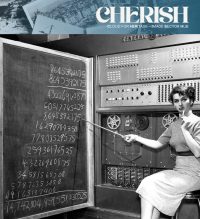
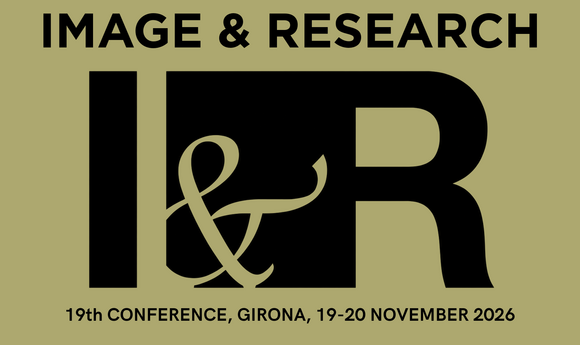
As cultural heritage increasingly moves into digital environments, professionals and organisations working with images and photographic collections face a range of challenges — from digitisation and data management to interoperability, access, reuse and the adoption of new technologies. In the context … Continue reading
Topic: museum & library information systems
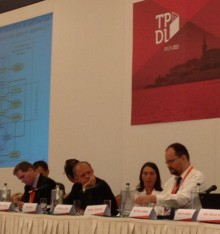
The International Conference on Theory and Practice of Digital Libraries (TPDL) constitutes a leading scientific forum on digital libraries that brings together researchers, developers, content providers and users in the field of digital libraries. TPDL 2013, the 17th edition of the conference, has organized by University of Malta and it was held in Valletta, Malta on September 22-26, 2013. Continue reading
The goal of this workshop was to provide researchers and practitioners in the fields of Digital Libraries, e-Science, and e-Research, with a forum where they can constructively explore foundational, organizational and systemic challenges in contexts having publishing, interlinking, preservation, discovery, access, and reuse of publications and datasets as focal points. Continue reading
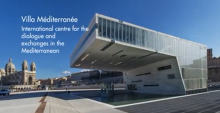
The event is very wide. For this reason, to provide an effective way for participants to explore such a rich and diverse program, Digital Heritage 2013 built an interactive schedule featuring social networking, a personal agenda builder, dynamic attendee directories, and more. Users can view the schedule in list, grid, and other forms as well as on mobile devices. Continue reading
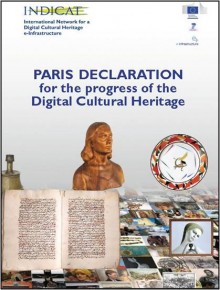
The shared vision of the INDICATE network is that in ten years’ time, access and use of digital cultural heritage will be available to all and that collaboration with the e-Infrastructures community will facilitate realisation of this vision. Continue reading

Ciaran Clissmann presented CULTURA as one of the projects working on innovative technologies to enable new opportunities
to preserve and access digital cultural heritage content. Continue reading
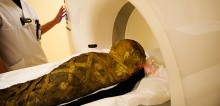
Medelhavsmuseet – the Museum of Mediterranean and Near Eastern Antiquities in Stockholm will digitally place human mummies on a virtual autopsy table. The work is taking place in advance of a new exhibition on Egypt, which is due to open in 2014. It will be possible to zoom into very high resolution to see details like carving marks on a sarcophagus, and the true colors of the mummy. The 3D model also allows to “unwrap” a mummy by peeling off virtual layers of the wrapping to explore the mummy itself and the artifacts that were buried with the body. Continue reading
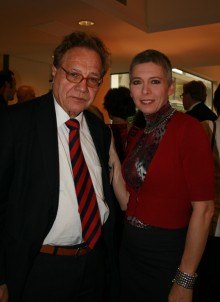
Florence hosted an international event that includes a Conference, Workshops, Meetings & an Exhibition. The Electronic Information, the Visual Arts and Beyond (EVA Conferences) are a series of international interdisciplinary conferences mainly in Europe, but also elsewhere in the world, for people interested in the application of information technology to the cultural and especially the visual arts field. Continue reading
Multilingualism is crucial especially in a European context. The seminar has presented one of the achievement of the Linked Heritage Work Package 3 with the Terminology Management Platform (TMP) and brought together other European and national initiatives creating and developping multilingual terminology resources or tools for managing or reusing them. Continue reading
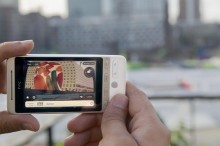
Augmented Reality was initially used for military, industrial, and medical applications, but was soon applied to commercial and entertainment areas as well. In the cultural sector, it can be of particular relevance in the fields of archaeology, architecture, art, city planning, for applications in tourism, education, social innovation Continue reading

DESIDOC Journal of Library & Information Technology, in July dedicated a special issue about Digital Preservation. The Journal endeavours to bring recent developments in information technology, as applicable to library and information science, to the notice of librarians, documentation and information professionals, students and others interested in the field. Continue reading