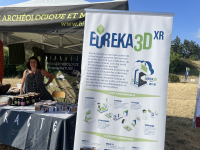

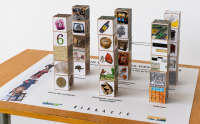
Developed by project partner Bibracte in the context of EUreka3D-XR, two Open Educational Resources (OER) on XR technologies and cultural heritage: “On the Shoulders of the Celts – How yesterday’s inventions have made today’s digital world possible“, a step-by-step guidance … Continue reading

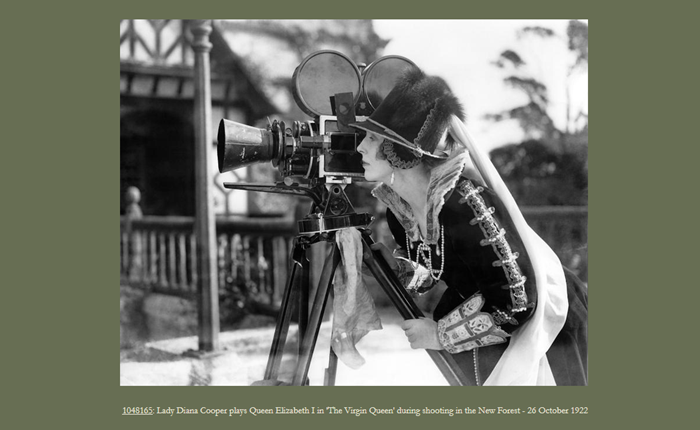
Paper for the 19th Image and Research Conference in Girona, 19-20 November 2026. Abstract Historical photographic archives contain considerably more information than the comparatively small number of images traditionally selected for digitisation and publication. United Archives is therefore developing a … Continue reading
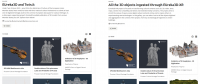
Starting today, it is possible to explore every single object that has been ingested on Europeana through EUreka3D-XR project. Produced by project coordinator Photoconsortium, two new galleries are now available on Europeana: one where all the 3D digitised, reconstructed and … Continue reading
Topic: dch-rp
Sciencegateway.org organises a Science Gateway Institute workshop co-located with IEEE Cluster 2013 Conference. Papers will be co-publishing in a special issue of Concurrency and Computation, Practice and Experience (http://www.cc-pe.net/journalinfo/) together with selected papers presented at the International Workshop on Science Gateways 2013 (http://www.iwsg2013.org). Continue reading
A flexible and dynamic ecosystem, providing integrated services through interoperable infrastructures. It should be open and accessible, and continuously adapting to the changing requirements of research and to new technological opportunities. Continue reading
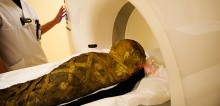
Medelhavsmuseet – the Museum of Mediterranean and Near Eastern Antiquities in Stockholm will digitally place human mummies on a virtual autopsy table. The work is taking place in advance of a new exhibition on Egypt, which is due to open in 2014. It will be possible to zoom into very high resolution to see details like carving marks on a sarcophagus, and the true colors of the mummy. The 3D model also allows to “unwrap” a mummy by peeling off virtual layers of the wrapping to explore the mummy itself and the artifacts that were buried with the body. Continue reading

The goal of the course, organised in 4 webinars, is to create the skills to integrate scientific applications in Science Gateways implemented with the Catania Science Gateway Framework. This will allow the creation of an intercontinental team of deveopers able to respond to requests of integration of specific applications from Virtual Research Communities all around the globe. Continue reading
TERENA and SURFnet has organized the second VAMP workshop on September 30th & October 1st, 2013 in Helsinki, Finland. Goal of VAMP2013 was to foster the deployment of identity management and collaboration tools within the research communities. The organisers invited … Continue reading
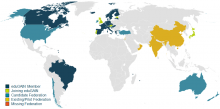
The DCH-RP e-Culture Science Gateway (eCSG) is a standard-based web 2.0 demonstrative platform to show the Proofs of Concepts (PoCs) identified by the DCH-RP project and how they fit with the requirements defined in the Roadmap. Continue reading
The general architecture of the DCH-RP e-Culture Science Gateway (e-CSG) and its web-based and mobile app implementations are the subjects ot this webinar which is organised by the DCH-RP project and also supported by the European Grid Infrastructure. Live demonstrations about how to access and use the e-CSG, both as end-user and repository manager, will be provided. Continue reading
The general architecture of the Catania Science Gateway Framework and some of its implementations are the subjects of this webinar which is jointly organised and supported by CHAIN-REDS, eI4Africa and EGI-InSpire projects. At the webinar attended more than 30 international experts worldwide. Continue reading
Federated identity management (FIM) in general and federated identity management for research communities (FIM4R) is an arrangement that can be made among multiple organisations that lets subscribers use the same identification data to obtain access to the secured resources of all organisations in the group. Specifically in the various research communities there is an increased interest in a common approach to FIM as there is obviously a large potential for synergies. Continue reading
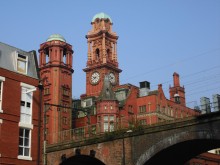
Between 8th and 12th of April 2013, EGI.eu and UK NGI, a partnership between GridPP and the National e-Infrastructure Service (NES), hosted the Community Forum 2013. The event, which was hold in Manchester in conjunction with the 3rd EMI Technical Conference, was very successful and provided a great opportunity to reflect upon the growing diversification in usage of the European Grid Infrastructure from across all research disciplines as well as the widening international collaboration that is taking place. Continue reading