


The BYZART project: creating one of the widest online collections of Byzantine art and archaeology

Share

Funded as a part of the 2016 Generic Services call, this new project BYZART, led by University of Bologna, aims to digitize, catalogue and make available rich archive collections about Byzantine cultural heritage in Europeana, the European digital library.

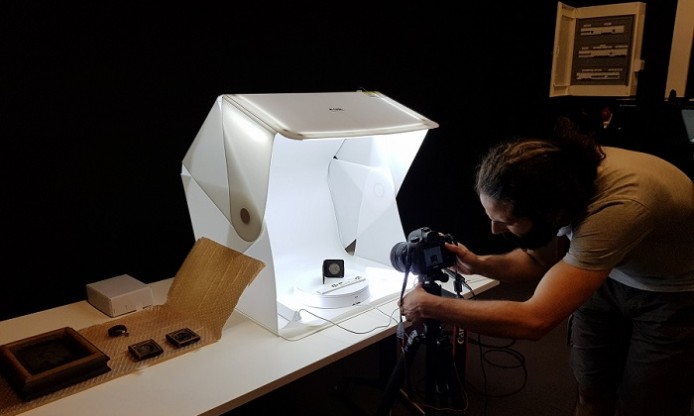
The project aims to make 75,000 new digital objects accessible online through Europeana Collections. During the project photos, video and audio content, as well as 3D surveys and reconstructions about Byzantine history and culture will be digitised. The content and accompanying narratives will capture users’ attention and provide them with a rich online experience. In addition, the digitised data will enhance Europeana’s artistic content by adding to the Byzantine art and archaeology material already available on the platform.
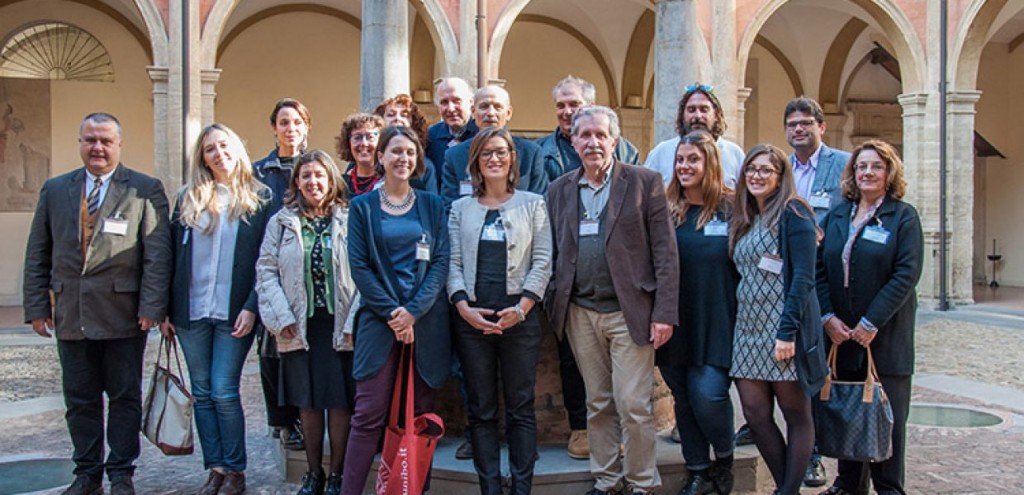
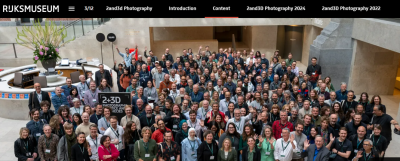
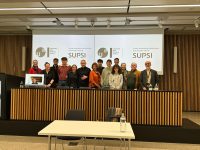
the project group at the kick.off meeting in Bologna

the project group at the kick.off meeting in Bologna

Byzantine culture is one of the milestones of European cultural heritage. For centuries, it spread all over the Mediterranean a homogeneous civilization despite regional diversities with strong influence over later European artistic and cultural expressions. Nevertheless, nowadays the wide heritage of the Byzantine art in Europe is undervalued, even if each Mediterranean region preserves remarkable memories and traces of its Byzantine past.

The BYZART project proposes to raise awareness about this impressive heritage, by showcasing collections of archive photographs, audio-visual materials and 3D reconstructions in Europeana Collections.

More info: https://pro.europeana.eu/post/byzantine-art-and-archaeology


Leave a Reply


Related Articles

Beyond Borders Hackathon: showcasing cultural collections for sustainable tourism promotion
In the aftermath of the Beyond Borders Hackathon, jointly organized by Europeana, Photoconsortium, SECreTour project, UNESCO Chair of the Università della Svizzera Italiana in ICT to develop and promote sustainable tourism in world heritage sites and UNESCO Chair of the Università di Genova in Anthropology of Health, Biosphere and Healing Systems, a new story has been written for Europeana Pro. In the piece, it is explored how the participants had the chance of experimenting with digital ...
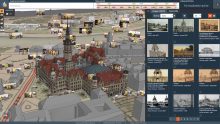
New 4D Browser course launched on Europeana Academy
Developed by the UrbanHistory4D project and hosted Europeana Academy, the 4D Browser course is designed to introduce new users to the 4D Browser - an innovative tool that lets user explore historically reconstructed 3D cityscapes across time. The course can be taken by history enthusiast, cultural heritage professionals, educators and researchers, urban planners and whoever might be curious to explore the transformation of a city through time. By the end of the course, users will have ac...
Europeana Copyright Office Hours
Copyright and policy office hours are informal online sessions that seek to bring cultural heritage professionals together in discussing and addressing common challenges. On September 16th, 15-16:00 CET, professionals will talk about various examples of cultural heritage organisations measuring risk, and some tools available. As cultural heritage institutions need to comply with copyright law, among other areas, they are faced with a lot of legal uncertainty. Just like any other area of law...
Food and Fairytale - creative writing workshop
Organized by Europeana, this creative writing  workshop will use illustrations and imagery from the collections available on Europeana.eu to explore the relationship between fairy tales and food. Anyone can participate, and no previous experience is required. After some warm up exercises you will able to write your story with no obligation to share it. Regiter  and find more information here.