


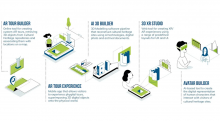
A new blogpost was produced and published on the Common European Data Space for Cultural Heritage to disseminate and promote the five open-source digital tools developed by EUreka3D-XR. In the blogpost, the AR Tour Builder, the AR Tour Experience, the … Continue reading
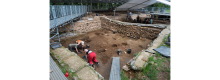
Following the most recent (and still ongoing) aggregation of new objects digitized in the context of the EUreka3D-XR projects, four new galleries on Europeana were created by Bibracte. Start your journey: The Hidden Side of Bibracte A Gaulish public space: … Continue reading
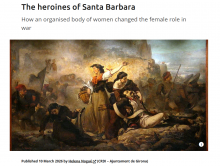
During this year’s Women’s History Month, a new blogpost was published on Europeana.eu in the context of EUreka3D-XR project to celebrate the history of Girona’s bravest women. The blogpost, titled “The heroines of Santa Barbara”, explores the role of those … Continue reading

The first Europeana Creative Climate Action Award invites audience to write an original short story or poem inspired by cultural heritage content on the theme of climate action and one or more of the images in the Europeana Creative Climate Action … Continue reading
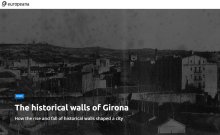
The story of Girona is the story of its walls – built in Roman times, altered in the Middle Ages, and demolished in the 19th and 20th centuries. Now the walls are being virtually reconstructed in 3D by the EUreka3D-XR … Continue reading
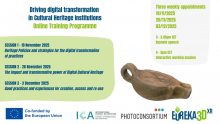
Wednesdays: 19 November, 26 November, 03 December 2025 at 3-5pm CET The programme includes 3 online sessions of 2 hours each, dedicated to build capacity and expand knowledge in cultural heritage professionals involved in digitisation of cultural collections and processes. … Continue reading
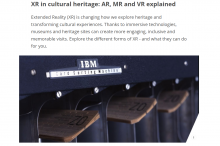
Delve into the world Extended Reality through the new blogpost published on Europeana Pro by Agathe Le Riche-Maugis, in the context of EUreka3D-XR project. Learn the differences between AR, MR and VR in a “hands on” way, discover the five … Continue reading
Wednesdays: 19 November, 26 November, 03 December 2025 at 3-5pm CET EUreka3D-XR is focused on transforming cultural contents such 2D or 3D into extended reality scenarios, and provides capacity building to cultural professionals and managers. After two series of open … Continue reading
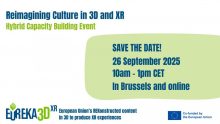
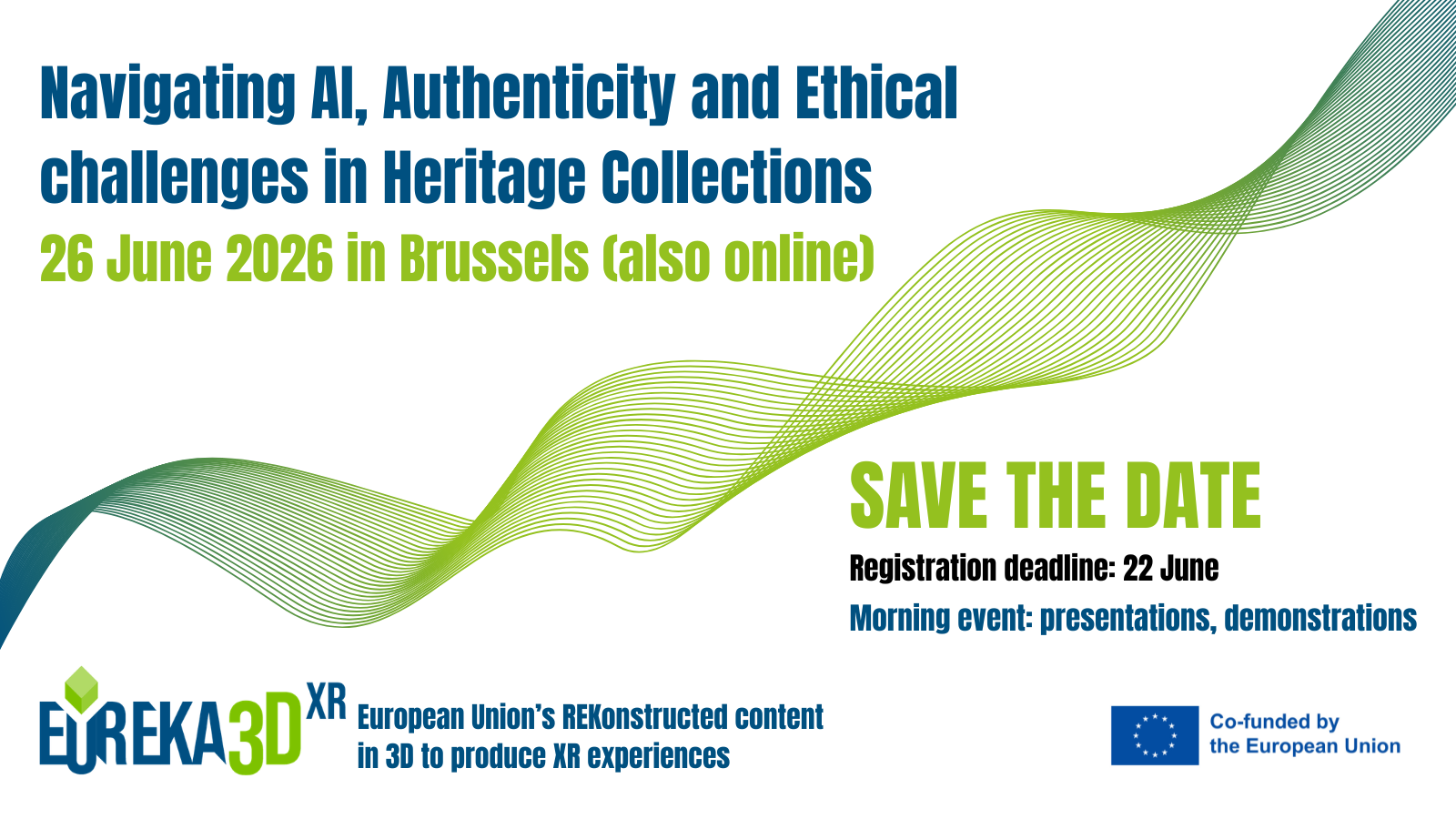
A Hybrid Capacity Building Event in Brussels by EUreka3D-XR 26 September 2025 EUreka3D-XR is focused on transforming cultural contents such 2D or 3D into extended reality scenarios. At the same time, the European cultural heritage sector is facing the 3D … Continue reading
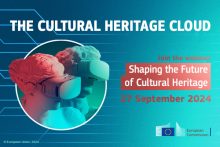
Shaping the Future of Cultural Heritage: Connecting the Cultural Heritage Cloud with the common European data space for cultural heritage and the European Open Science Cloud. The Cultural Heritage Cloud – or European Collaborative Cloud for Cultural Heritage (ECCCH) – … Continue reading