Innovations in museums' pricing strategies serve to build a loyal audience, ensuring self-sustainability while at the same time fulfilling their mission in cultural participation
Research project of MA students in the Museums in Context course at the Erasmus University Rotterdam, MA Cultural Economics led by professor Trilce Navarrete.
Authors: Aylin Beijersbergen, Joanna El Mir, and Martina De Gennaro
All images courtesy of the authors.
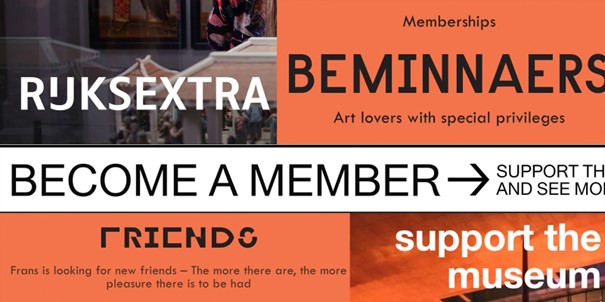
Why stop at one visit? Become a friend, visit often, and enjoy more!
How can small museums innovate in their membership pricing?
As non-profit organizations, museums are charged with the social responsibility of conserving, researching, communicating, and exhibiting elements of culture for their audiences. As such, they answer to various stakeholders, including governments, their boards, their audience, and their benefactors, as argued by Rentschler (2007). Hence, museums are characterized by the ubiquitous tension between the need to fulfil their social responsibilities while at the same time achieving economic viability.
Traditionally a museum’s revenue comes from three sources: audiences, governments, and foundations. While revenue from foundations can be reliable, government support is often unstable and risks of being cut off exists. Regarding audiences, museums are unquestionably good at attracting first-time visitors; however, only about a third return multiple times a year, as stated by The Audience Agency. Therefore, despite reluctance to market museums, museum directors are increasingly concerned with sourcing funds and boosting revenue from museums services. For that reason, pricing is a topic that requires considerable investigation to ensure progress toward resolving this tension, despite having attracted little interest from researchers in the field so far. Particularly, it is important to understand how museums can innovate in their pricing strategies to build a loyal audience and ensure sustainable financial growth while at the same time fulfilling their social responsibility and increasing cultural participation.
Bruno Frey (2012) has long argued that museums are relatively conservative in their pricing; the classical pricing schemes are paid and free entrance as well as exit donations and additional charges for special or temporary exhibitions. Accordingly, our observations suggest that bigger museums have a more innovative admission pricing scheme through an additional service: memberships, or what most of them call friendships, while smaller museums are often less developed in this area. For that reason, we have decided to investigate how smaller museums can innovate in their membership pricing to obtain sustainable benefits and create a loyal audience.
Membership pricing, services and visitors
According to Rushton (2017), museums can capture benefits from membership schemes when their per-visit fee is equal to marginal cost, which is zero in the case of museums. One extra visitor will not induce extra operation costs for the museum, and if the museum is uncrowded, the extra visitor will not deprive other visitors of enjoying their visit. Thus, extra museum visits are non-rival goods. Following this reasoning, Rushton (2017) argues that membership schemes in museums are a financially beneficial solution to the zero marginal cost of an extra visit. Furthermore, he adds that membership prices maximize revenue at a level where a slight price change can drive the number of memberships sold either up or down.
An annual membership allows a museum visitor certain benefits, starting with an unlimited number of visits to the museum throughout the year. The more visits the member makes, the lower the price paid per visit. Other extra perks or services can also be included, such as discounts at the museum shop or café, access to the museum magazine, the opportunity to invite an extra guest, and invitations to opening or exclusive events. Maher and al. (2011) add that memberships can be a great return on investment that help managers anticipate revenue because their fees are due regardless of whether the member visits the museum. However, they argue that a museum must target its memberships to the right customers for this to work.
Setting membership prices according to a museum’s customer base constitutes a challenge for museum directors since museum audiences and their willingness to pay are highly varied. In addition to the usual socio-demographic figures, Falk (2008) suggests five categories of visitors according to the latter’s motivations to enter a museum. He argues that visitors see their behaviour before and after a museum visit as aligned with their personality traits. Thus, the five categories he defines are identity-related profiles and are detailed as the following. First, come the Explorers, who have a self-centred approach to their museum visit and curiosity towards its content. Second, come the Facilitators who see their museum visit as a social experience that facilitates the learning of other individuals in their group. Third, come the Hobbyists who seek a specific content-related experience within a museum. Fourth are the Experience Seekers who live the visit as an experience itself. Fifth are the Spiritual Pilgrims who live their museum visit as a contemplative and healing experience. These categories enable managers to look at museum visitors depending on their needs and interests.
One can say that museums are already profiling their visitors to customize their membership schemes. For example, the Frans Hals Museum in Haarlem offers three kinds of annual memberships. The first is a Vrienden membership for people who want to become actively involved in the museum by helping to fund collection purchase and restoration, as well as educational activities for €32.50 per year. The second membership, a Roemers membership priced at €175 annually, is aimed at individuals between 35 and 50 years of age who enjoy the social aspect of the museum experience. It includes the benefits of the Vrienden membership with an additional bi-annual meeting organized by the Roemers themselves. The third membership, Beminaers, at €1500 annually opens the secret museum doors to its members, allowing them to access a private circle of international artists and curators.
Methodology
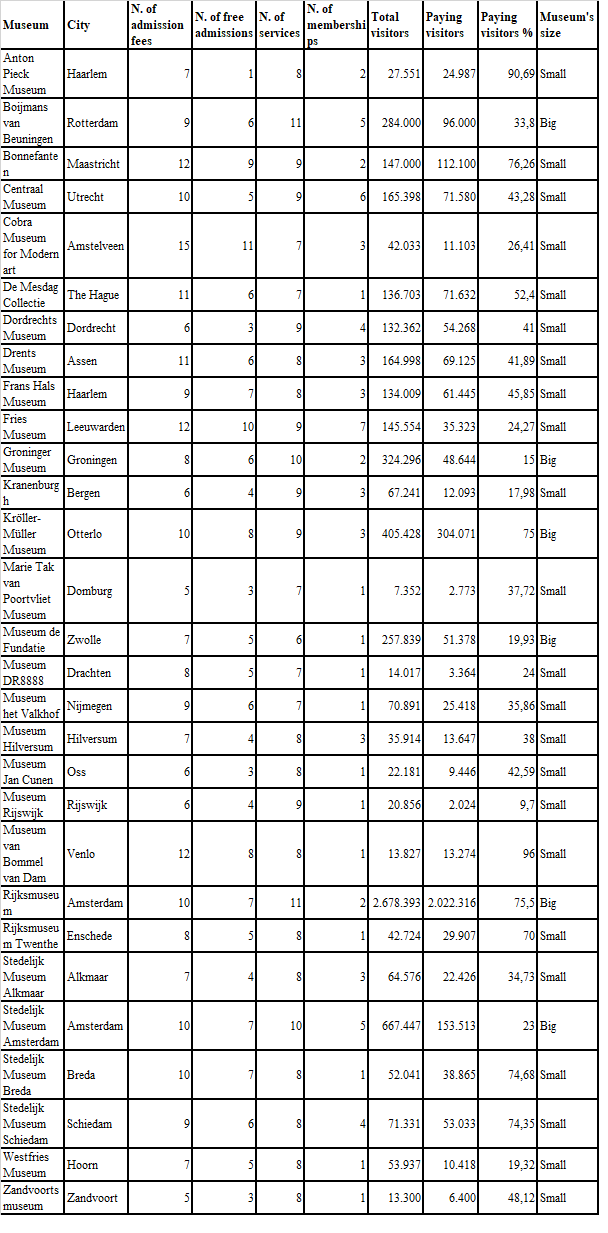
As part of the Museums in Context course at the Erasmus University Rotterdam, we investigate how small museums can innovate in their membership pricing. To do so, we constructed two unique datasets consisting of 29 Dutch fine art museums: one for pricing and services, and one for memberships. To obtain the datasets, we used the website of the Dutch Museum Association for the initial overview of Dutch museums. Here, we filtered for fine art museums which resulted in 79 fine art museums and excluded the 5 museums not in the Dutch Museum Register resulting in 74 official fine art museums. Noteworthily, the number of paying visitors is an important variable in our research. This is because this number can be used to investigate possible effects of innovation in pricing. Therefore, only the museums that provided this information are considered for the data analysis. Of the 74 initial museums in the dataset, only 29 museums provided this information in their annual reports online. Important to note is that the variable total number of visitors is used as an indicator for size. Museums in the dataset are labeled as small if their number of visitors is below the average (215.972), and vice versa concerning large museums.
The main limitations of this research were the small sample size and the insufficient amount of information publicly available. Future research lines can follow by not being limited to fine art museums and increasing the sample size, conducting field research including interviews with experts to obtain valuable insights and surveys with museum visitors to gather information on incentives and consumer behavior.
The numbers
We find three main characteristics of museums pricing their services. First, museums that offer the greatest number of memberships also offer above average (9) number of (free, 6) admission fees. Second, the price of memberships is linked to the regular entry price of a museum: the museums that charge above average (€1025) membership fees also charge above average (€13,24) regular entrance fees. Third, there is a positive relationship between the number of services and number of memberships provided by a museum.
Museums that have above average entry price (€13,24) all provide the following common services: museum shop, museum cafe, wheelchair friendly, activities for children, online exhibition/database, audio tour, and guided tours. Figure 2 shows the ratio of services present in the dataset. Additionally, museums that charge above average one person membership fees (€1.025) have the following membership benefits in common: free entrance, invitation openings and events, and exclusive events. Figure 1 shows the ratio of memberships present in the dataset. Next to that, the results indicate that the bigger the size of the museum, the higher the regular entry prices are. Museums with a total number of visitors above average (215.972) have the following services in common: museum shop, museum cafe, wheelchair friendly, activities for children, online exhibition/database, audio tour, and guided tour. Remarkably, the number of services and memberships significantly positively influence each other, the more services the more memberships.
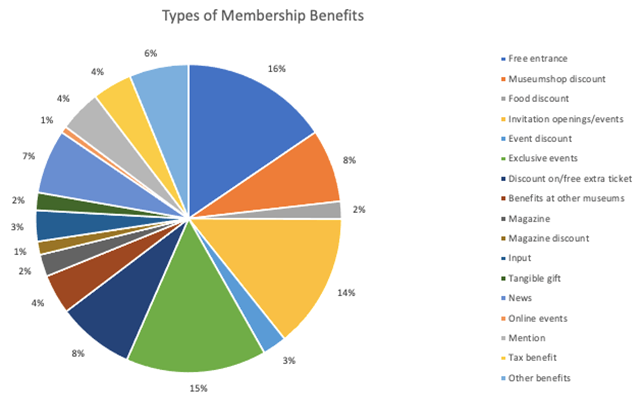
Figure 1: Share of membership benefits
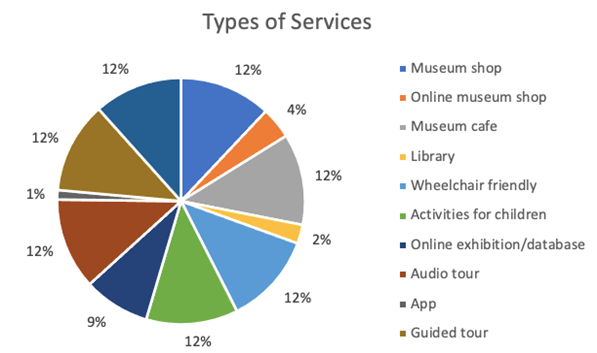
Figure 2: Share of services
Membership pricing innovation
It has become clear that both museums and visitors benefit from museums. Most importantly, memberships create a loyal audience who act as museum ambassadors to spread the word about the museum. This generates traffic to the museum which increases the museum’s benefits and visibility, leading to sustainable financial growth. Visitors are both socially and financially motivated to become members. Socially, membership provides access to a great art community and creates a sense of belonging. Financially, because members benefit from free access to the museum all year round.
Our aim was to investigate how smaller museums can innovate in their membership pricing compared to bigger museums. We expected to find a relationship between the size of the museum and the number of memberships it offers. However, we found that the number of memberships is linked to the number of services. Moreover, our results suggest that bigger museums offer more services. Thus, it appears that the size of a museum and memberships are indirectly connected. Therefore, we argue that smaller museums with limited resources must combine membership benefits with visitor profiles in a more creative manner. We suggest a solution based on Falk’s (2008) categorization that could help small museums to offer specific visitors-targeted memberships to serve the needs of each particular group of visitors and create more satisfied visitors. Consequently, innovate in their membership pricing and in turn create a more inclusive museum while generating more revenue which is much welcomed by small museums.
Table 1: Descriptive statistics museums:

















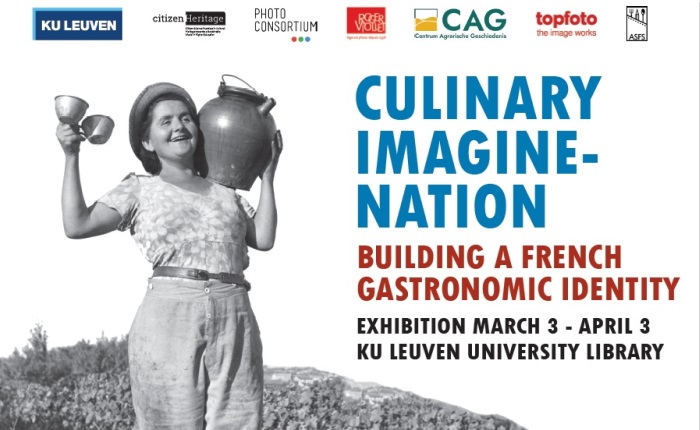
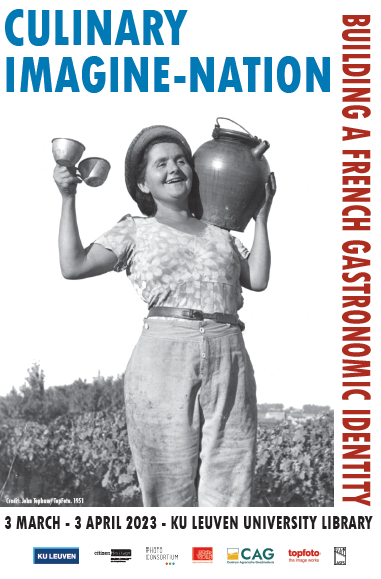 The exhibition is on display at KU Leuven University Library for a month, opening on 3 March 2023. The exhibition is organized by KU Leuven with collaboration and support of TopFoto UK, Photoconsortium, CAG, Roger Viollet of Paris, and is linked to the project CitizenHeritage.