

Electronic Imaging & the Visual Arts
‘The Foremost European Electronic Imaging Events in the Visual Arts’
The Electronic Information, the Visual Arts and Beyond (EVA Conferences) are a series of international interdisciplinary conferences mainly in Europe, but also elsewhere in the world, for people interested in the application of information technology to the cultural and especially the visual arts field.
The first EVA Conference was held at Imperial College, London in 1990, organized by the founders James Hemsley, Kirk Martinez and Anthony Hamber. Events have been held in Athens, Beijing, Berlin, Brussels, California, Cambridge [both UK & USA], Dallas, Delhi, Edinburgh, Florence, Gifu [Japan], Glasgow, Harvard, Jerusalem, Kiev, Laval, London, Madrid, Montreal, Moscow, New York, Paris, Prague, Thessaloniki, Warsaw … .
There are now regular conferences in London (UK), Berlin (Germany), Florence (Italy), Moscow (Russia), Vienna (Austria) and other major cities.

Dr. Irene Pivetti (Chairmain of Only Italia) with Prof.Vito Cappellini (Florence University) – photo (c) Promoter srl archive
The 2013 Florence conference was opened by chairmen Vito Cappellini (Florence University) and James Hemsley (EVA conferences international) and during the opening sponsors and supporters of Italian institutions welcomed the participants.
Session 1 about strategic issues with chairman Paolo Blasi (Florence University) was extremely interesting by discussing projects related to digital archives technologies, 3D technologies for museums, and futuristic projects for access and dissemination of culture and art supported by technology. Among the speakers, dr. Takayuki Morioka from Hitachi, prof. Shinji Shimojo from Osaka University, dr. Andreas Bienert from National Museum in Berlin.
Session 2, moderated by chairman Franco Niccolucci, gave an overview of EC projects and related networks and initiatives. Among the speakers, dr. Valentina Bachi, Andrea de Polo and Antonio Davide Madonna for EuropeanaPhotography, dr. Christine Schoene from Technische Universitat of Dresden, Professor Jurgen Siek from University of Applied Sciences in Berlin; also CENDARI and MARCOPOLO projects were presented.
On day 2, an international forum in the morning about culture and technology was followed by afternoon sessions to discuss about 2D-3D technologies and applications, virtual galleries, museums and related initiatives, access to the culture information.
In this event the users, suppliers and scientific research communities have the possibility to meet and exchange experiences, ideas and plans in the wide area of Culture & Technology. The event was supported by a series of workshops on international cooperation, innovation and enterprises, creative industries and cultural tourism.
EVA Florence 2013 official website: http://www.evaflorence.it/
Download the full programme here


According to the plans of the project, the
The vocabulary has been completed in no less than 12 languages – English (as the pivotal language), French, Dutch, German, Italian, Polish, Danish, Bulgarian, Slovak, Lithuanian, Catalan and Spanish – and consists of over 500 concepts in three facets –photographic technique, photographic practice and keywords – that are structured in a multifaceted, hierarchical way.

The purpose of this seminar was to present national and European projects where the question of terminology and multilingualism is dealt with. Some projects create multilingual terminologies on very specific subjects, some others focus on the implementation of tools to create, manage and reuse these terminologies.


The
On the June 
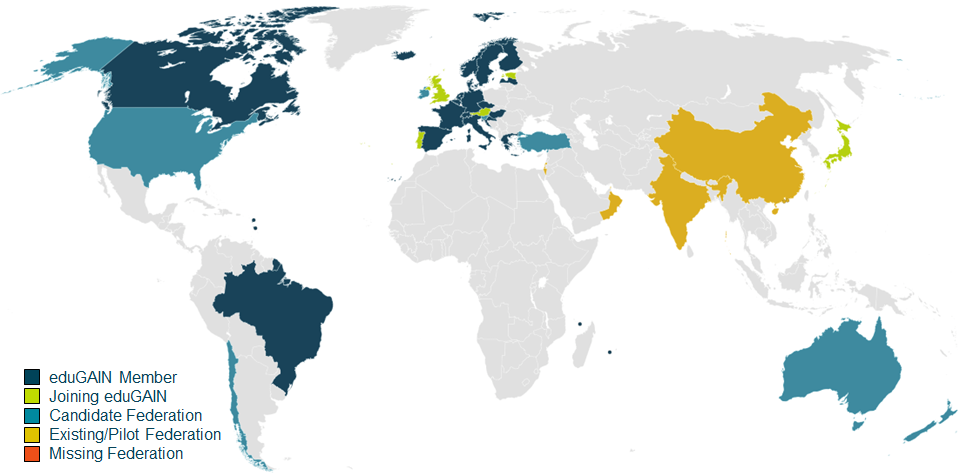
Federated identity management (FIM) in general and federated identity management for research communities (FIM4R) is an arrangement that can be made among multiple organisations that lets subscribers use the same identification data to obtain access to the secured resources of all organisations in the group. Specifically in the various research communities there is an increased interest in a common approach to FIM as there is obviously a large potential for synergies.
One objective of this workshop was finalizing the work on a common FIM4R paper and to discuss related papers. Another major topic was to go from theory to practice and to present and discuss several FIM prototypes currently in development. Third, as the term ‘federated’ already indicates, it will not be possible to find a ‘one size fits all’-solution to all requirements. In addition, there are, especially in the commercial sector, already various existing identity management tools, which would be interesting to connect. Therefore, solutions are thought of, which provide links between different systems. These developments are just in the beginning.
DCH-RP project was invited to attend the event in representance of the humanistic domains and to support and promote of Identity Federations.


The third plenary meeting of