

OpenVGal is an open-source 3D virtual gallery for people and institutions that already have digitized photographs or artwork images. It lets them show the work in a walkable room instead of a page of thumbnails. The exhibition is a folder … Continue reading
Join the European Heritage Hub to its upcoming Policy Talk, ‘INNOVATE. PROTECT. EMPOWER. How cultural heritage can make Public AI a reality’, taking place online on 29 September, from 16:00 to 18:00 CET. The Policy Talk will explore the vision … Continue reading
Topic: software & tools
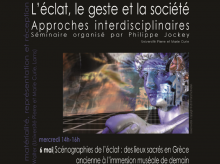
Did ancient statues living in the traditional museums lose their radiance and divine feature? New technologies, combining 3D imagery and multisensory visitor experience, enable to recreate within an innovative space the ancient splendour of the Greek plastic. Sophie Montel recognises … Continue reading
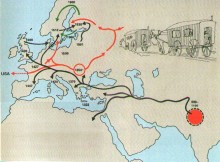
In the Romani Week (April 27 – May 1, 2015), Amalia Sabiescu of Coventry University shares insights from the RICHES European project research: how a Romani community is finding ways to preserve and express its unique identity at a time of cultural change and how the arts, culture and technology can be used as bridges towards intercultural communication and dialogue. Coventry University seeks so to promote a better awareness and understanding of the lives and culture of the Romani/Gypsy/Traveller people. Continue reading

FabLab.iMAL presents its next workshop on laser-cutting, 3D printing & CNC milling, being held in Brussels on 26 May 2015 from 10.00 to 13.00. In 3 hours, you will get introduced to the basics and the safety instructions that will make you able to use the laser-cutter, 3D printers and CNC milling machine. Continue reading
The purpose of this special issue is to bring together interdisciplinary approaches that focus on the application of innovative as well as existing data matching, fusion and mining and knowledge discovery and management techniques to data derived from all areas of Humanistic Sciences. Continue reading

DCDC15 (DCDC as Discovering Collections Discovering Communities), being held at Greater Manchester on 12-13 October 2015, will look at the varied and innovative ways in which archives, museums, libraries and academia can engage with audiences in the digital age, for a more appealing user experience, the enrichment of heritage collections and new collaboration and business opportunities. Continue reading
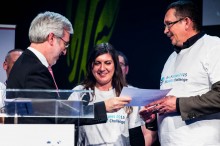
On 25-26 March 2015, in Brussels, the Net Futures 2015 conference was held, gathering more than 1000 people with the aim to maximise the competitiveness of the European technology industry. The event formed an interconnected community involving companies, organisations and people in Research & Innovation, Market Validation & Living Lab Research, Business Development, Entrepreneurship & Enterprise Strategy, Policy Making. It is firm belieg of the organisers that by bridging the gaps between these communities, innovations will more easily and effectively find their way to the market. Continue reading
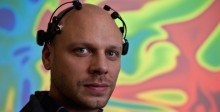
Could neurophysiological and BCI (Brain Computer Interface) tools already control our mind? And could we vice versa already build an individual virtual reality using BCI systems, able to fulfill all users’ desires? And what exactly users actually desire from them? These will be the frame questions of the Friday 24 symposium with dr Aleksander Väljamäe (NGM lab), Pavel Smetana (CIANT) and artist Ivor Diosi. Continue reading

‘What’s next?’ for the museum sector? The Europe’s major conference on the future of Museums call for papers is out. The 2015 edition of MuseumNext will take place in the Swiss city of Geneva between April 19–21. Updates and latest news about the event at Facebook, Twitter and Linkedin. Continue reading

The three consortia awarded with contracts for the prototyping phase – veraPDF consortium, Easy Innova and MediaArea – start development on open source file compliance checkers for documents, still images and moving image materials. This phase will last until December 2016. Continue reading
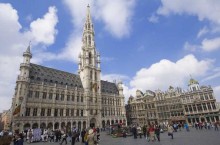
On 26 March 2015 PREFORMA underwent its first review, obtaining an excellent evaluation. The EC reviewers gave the consortium useful recommendations to improve the networking activities and to start planning the testing phase. Continue reading