

OpenVGal is an open-source 3D virtual gallery for people and institutions that already have digitized photographs or artwork images. It lets them show the work in a walkable room instead of a page of thumbnails. The exhibition is a folder … Continue reading
Join the European Heritage Hub to its upcoming Policy Talk, ‘INNOVATE. PROTECT. EMPOWER. How cultural heritage can make Public AI a reality’, taking place online on 29 September, from 16:00 to 18:00 CET. The Policy Talk will explore the vision … Continue reading
Topic: digital preservation
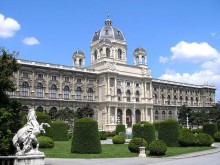
Virtual Multimodal Museum Coordination and Support Action project (www.vi-mm.eu), funded under Horizon 2020, has completed over two years’ work to provide strategic guidance for the European Commission and the wider cultural heritage community, on the future direction of Digital Cultural … Continue reading
This half-day workshop will provide participants with an understanding of what JHOVE program does, how to install and configure the software and how to interpret the results. JHOVE is an open source file format identification, validation and characterisation tool for … Continue reading
Applications are invited from candidates who possess the necessary qualifications in order to fill one (1) full time Marie S. Curie Early Stage Researcher (ESR) Fellow Position in the newly established UNESCO Chair on Digital Cultural Heritage / Digital Heritage … Continue reading
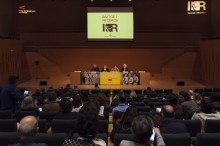
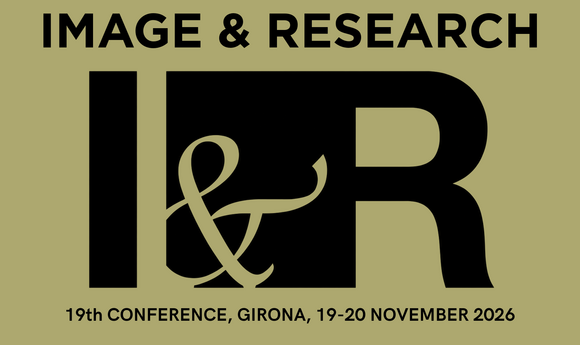
During the third week of November (from 21 to 24) it was held a new edition of the Image and Research Conference, organized by the Centre for Image Research and Diffusion (CRDI) of the Girona City Council with the collaboration … Continue reading
We are pleased to announce that the Call for Contributions for iPRES2019 is now open. iPRES is the premier international conference on the preservation and long term management of digital materials. The 16th International Conference on Digital Preservation will be … Continue reading
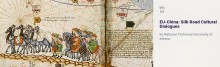
The overall objective of this session, that is organized in the framework of ICT2018 research and innovation event of the Europeana Commission, intends to account for China’s “soft power” strategy and Europe’s multicultural identity and scope that puts the role of … Continue reading

The Egyptology program in the Department of Near Eastern Languages and Cultures at Indiana University –Bloomington and the Indiana University Virtual World Heritage Laboratory, invite Egyptologists and digital humanists with interest in Egyptology to a conference in Bloomington on 29-31 … Continue reading
The Egyptology program in the Department of Near Eastern Languages and Cultures at Indiana University –Bloomington and the Indiana University Virtual World Heritage Laboratory, invite Egyptologists and digital humanists with interest in Egyptology to a conference in Bloomington on 29-30 … Continue reading
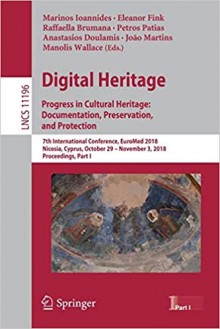
The 21 full papers, 47 project papers, and 29 short papers presented at the 7th International Conference on Digital Heritage, EuroMed 2018, held in Nicosia, Cyprus, in October/November 2018 were carefully reviewed and selected from 537 submissions. The papers are … Continue reading

The Preservation and Archiving Special Interest Group (PASIG) is dedicated to advancing the practice of digital preservation and archiving. It brings together practitioners, industry experts and researchers to share experience in a vendor-neutral forum on how to put preservation and … Continue reading