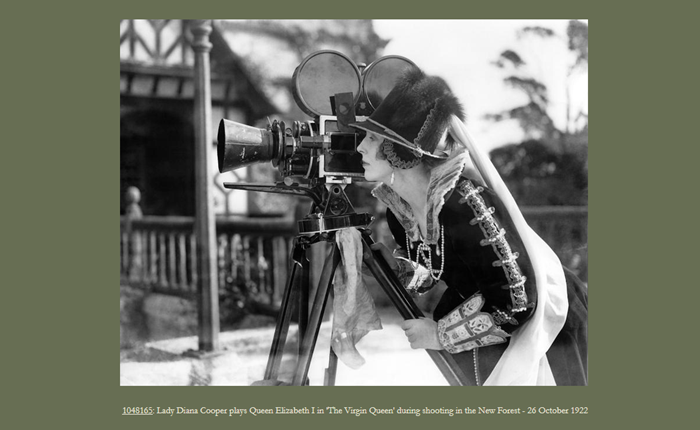

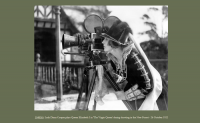
To mark the 2026 World Day for Audiovisual Heritage, prestigious British Archive TopFoto has organised an online event, “Topfoto: Past, Present and Future of Press Photography” online on Octber 27th. The event will explore how press photographs move from newsroom … Continue reading
In the context of small support project CHERISH, Photoconsortium along with CEPIC, developed their first online survey to collect a wide feedback on existing digital challenges in EU for the image professionals. The survey takes approximately 15 minutes to complete, … Continue reading

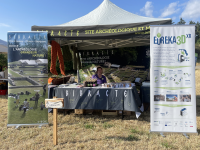
What if the visible remains of a place are only a tiny part of its story? With this blogpost, written by EUreka3D-XR’s partner Bibracte EPCC, you can discover how augmented reality, combined with complementary digital resources, reveals the many hidden … Continue reading
Area: digital heritage
The Centre for Image Research and Diffusion (CRDI) of the Girona City Council and the Association of Archivists of Catalonia, are calling the 15th Image and Research International Conference, which will be held in the Palau de Congressos de Girona from 22th … Continue reading

iPRES 2018 BOSTON – Where Art and Science Meet – The Art In the Science & The Science In the Art of Digital Preservation – will be co-hosted by MIT Libraries and Harvard Library on September 24-27, 2018. The call for contributions seeks abstracts for papers that tell stories about bridging knowledge gaps in teams, implementing technologies, and overcoming barriers towards proper digital stewarding of digital items, assets, works and collections. Continue reading
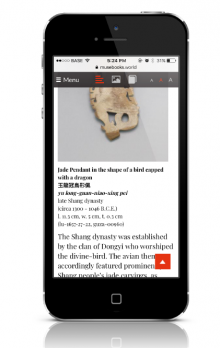
The National Palace Museum (NPM) in Taipei – the most visited art museum in Asia according to The Art Newspaper – has teamed up with Musebooks and will now put its priceless collections online with catalogues in an innovative digital … Continue reading

New Realities: Authenticity & Automation in the Digital Age In San Francisco, at the epicenter of the digital revolution, DigitalHERITAGE 2018 was organized with an amazing lineup of talks, exhibits, workshops, tutorials, special sessions and more, including: Internet Archive founder … Continue reading

A “fourth industrial revolution” is going to transform the way we use languages in the media, according to the organisers of a leading European conference of experts. Rebecca Stromeyer, Chief Executive of ICWE GmbH, the Berlin-based company, which is organising … Continue reading

The Future Technologies Conference (FTC) 2018 is to be held from 13-14 November’18 in Vancouver, Canada. FTC is the world’s pre-eminent forum for reporting technological breakthroughs in the areas of Computing, Electronics, AI, Robotics, Security & Communications. FTC attracts researchers, … Continue reading
The Institute of Mathematics and Informatics at Bulgarian Academy of Sciences has the pleasure to introduce the Eighth International Conference on Digital Presentation and Preservation of Cultural and Scientific Heritage-DiPP2018 which aims at presenting innovative results, research projects and applications … Continue reading

The Minneapolis Institute of Art (Mia) is pleased to announce the winner of the 2018 3M Art and Technology Award: “Riddle Mia This”, a mobile app proposed by technology architect Colin McFadden and digital preservation specialist Samantha Porter of the … Continue reading

Preserving Cultural Heritage is a complex task that requires skills and techniques which need to be constantly upgraded. This 2-days event is thought not only as a classic conference, but also as a multi-level tutoring and an multidisciplinary collaboration opportunity … Continue reading

Call for Submissions: Journal of Dance and Somatic Practices Issue 10.2: ‘Moving the Sensate: Questions of Affect and Embodiment for the 21st Century’ & Open Call The Journal of Dance and Somatic Practices invites submissions on an ongoing basis but welcomes submissions for its … Continue reading