
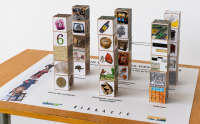
Developed by project partner Bibracte in the context of EUreka3D-XR, two Open Educational Resources (OER) on XR technologies and cultural heritage: “On the Shoulders of the Celts – How yesterday’s inventions have made today’s digital world possible“, a step-by-step guidance … Continue reading
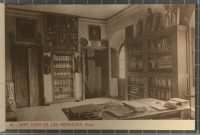
Paper for the 19th Image and Research Conference in Girona, 19-20 November 2026. Abstract Historical photographic archives contain considerably more information than the comparatively small number of images traditionally selected for digitisation and publication. United Archives is therefore developing a … Continue reading
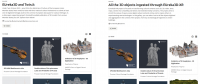
Starting today, it is possible to explore every single object that has been ingested on Europeana through EUreka3D-XR project. Produced by project coordinator Photoconsortium, two new galleries are now available on Europeana: one where all the 3D digitised, reconstructed and … Continue reading
Area: digital heritage

DESIDOC Journal of Library & Information Technology, in July dedicated a special issue about Digital Preservation. The Journal endeavours to bring recent developments in information technology, as applicable to library and information science, to the notice of librarians, documentation and information professionals, students and others interested in the field. Continue reading
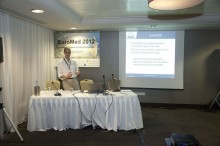
Extract from the article by Steve Brewer, EGI, available on EGI’s blog. EGI, European Grid Infrastructure, was one of the protagonists of this valuable event that collected experts from the digital cultural heritage field, researchers, scientist and technicians. The common goal is to focus on interdisciplinary and multi-disciplinary research on tangible and intangible Cultural Heritage, the use of cutting edge technologies for the protection, preservation, conservation, massive digitalisation and visualization/presentation of the Cultural Heritage content (archeological sites, artifacts, monuments, libraries, archives, museums, etc) Continue reading
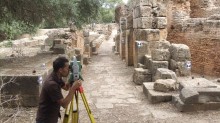
from Dr. Marwan Asmar (Chief Project Editor of Ancient Theatres Enhancement for New Actualities-ATHENA Project). The scanning of the Cherchell and Tipaeza Theaters in Algeria are being digitally fashioned to categorize the intertwining of heritage, culture and tourism. Through the scanner and total station they are being reproduced graphically to bolster their role in different aspects of development, from the local community to attraction hubs. Continue reading
EGI brings together a platform of computing resources from centres across Europe. Many of these have experience in providing services for the DCH research community. EGI is now building on this heritage as a partner in the DCH-RP project and participation in the Euro-Mediterranean Conference in Cyprus. Continue reading
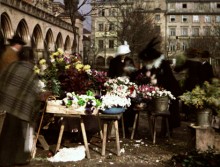
The museum runs a number of departments and holds a variety of different events. The main scope of the museum’s activities at present is exhibitions, education and digitization. In each of these fields we are planning and implementing actions in accordance with the MHF mission which emphasizes improving the availability of its collection through a variety of media. Continue reading
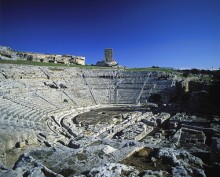
Siracusa activities in Sicily include 3D laser scanning part of the ATHENA work objectives to enhance and sustain ancient theaters. A full team from the Dipartimento di Storia dell’Architettura, Restauro e Conservazione dei Beni Architettonici e stato of the Sapienza Universita di Roma is performing the scanning that is part of an “ATHENA Week” aimed at improving the general knowledge, creating awareness and digital documentation of ancient theaters in the Euromed region. Continue reading
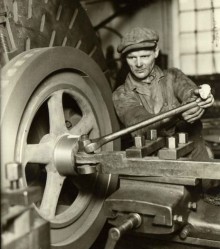
The Workers’ Museum, which opened in 1982, shows exhibitions on everyday life of the workers’ and the labour movement’s history primarily in Denmark, but with an international perspective. The Library and Archives collects documentation on the Danish labour movement in all its branches. Continue reading
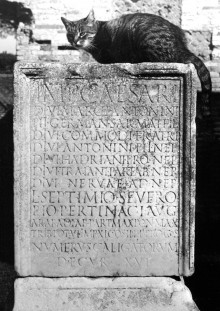
The EAGLE BPN represents a community of research institutions documenting the most recent progress in the study of Classical Epigraphy. By aggregating digital content from unique and authoritative collections in its domain, the BPN brings together a significant quantity of information about ancient writings on ancient artifacts to the wide Europeana audience, thereby enhancing the quality of the historical experience and stimulating discovery in primary source materials never disclosed before to users on such a large scale. Continue reading
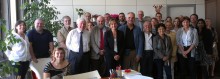
Digital Cultural Heritage Roadmap for Preservation (DCH-RP) is a Coordination Action supported by EC FP7 e-Infrastructures Programme, which will be adding more concrete results in the specific area of the digital preservation of cultural heritage. The kick-off meeting took place in Rome on the 8th of October 2012, hosted by Coordinator ICCU Istituto Centrale per il Catalogo Unico. Continue reading
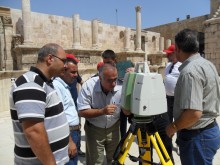
3 D laser technologies training and scan to conserve ancient theaters and ensure their long-term sustainability in Euromed region. The new technologies are part of the EU-funded ATHENA Project and is under the Euromed Heritage Program 4. A very focused contribution from Dr. Marwan Asmar, Chief Project Editor of ATHENA Project. Continue reading