


AI helps with deciphering the Herculaneum papyri

Share

The important papyri retrieved in Herculaneaum and preserved at the National Library in Naples contain basically all our knowledge about Greek philosophical schools. Diogenes Laërtius’ Lives of Eminent Philosophers (3rd century AD) and Philodemus of Gadara’s Syntaxis (75-50 BC) in facts represents the earliest ‘history of philosophy’ to have reached us directly from antiquity. From this work that is exclusively preserved by the Herculaneum papyri we may derive a virtually systematic account of the history of Greek philosophical schools, but unfortunately the original manuscripts which transmit it are in a really poor state, very hard to decipher.

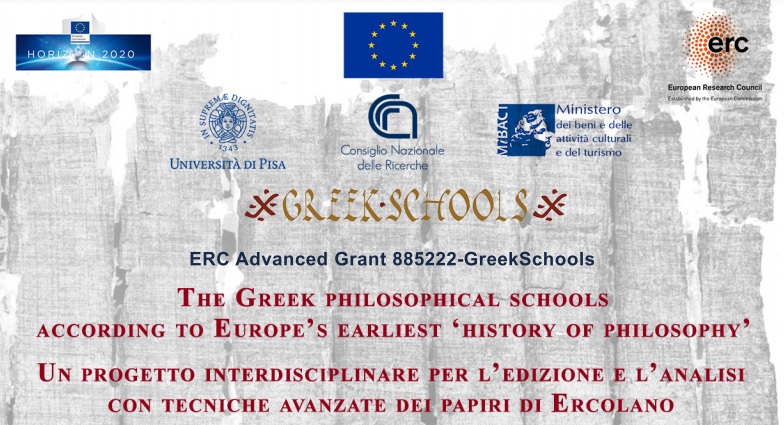
By relying on the most advanced technologies available today, the recently launched project “Greek Schools”, coordinated by the University of Pisa, aims to provide a new innovative critical edition of the whole treatise and its different sections, with extensive introductions and commentaries. By using AI and advanced X-ray and lighting techniques, the technology will help researchers identify written texts, colours, inks and other information that would be invisible to the human eye.

In particular the project will deliver:

  • New Greek text with palaeographic and philological apparatus, modern annotated translation, papyrological and philosophical introduction and commentary, by applying noninvasive techniques to both opisthograph and multi-layered papyri belonging to Philodemus’ Syntaxis in order to (a) read the text hidden on the verso, (b) detect, classify and replace overlapping layers, and (c) read the text concealed inside the latter;
  • combination of state-of-the-art methods with new, sounder philological approaches in order to produce a more reliable and substantially improved critical text of Philodemus’ treatise and its various sections through an innovative editorial system;
  • production of an open-access electronic edition of it through a pioneering open-source scholarly Web platform, engaging the scientific community in an on-going and on-line collaborative review of our critical edition.

The launch meeting was held online on 18th January 2021 (Italian language).

Project website: https://greekschools.eu/


Leave a Reply


Related Articles

SEMIC Conference 2025
On 25 and 26 November, it will be possible to follow SEMIC 2025 remotely and be part of the European Commission’s flagship event on semantic interoperability and digital government, organised in partnership with the Danish Presidency of the Council of the EU. With the theme “Interoperability for Impact,” SEMIC 2025 will explore how shared data, semantics, AI and governance models can turn policy goals into concrete benefits for citizens, businesses and administrations. By registering f...
EUreka3D-XR pilot scenario in Girona moving forward into production
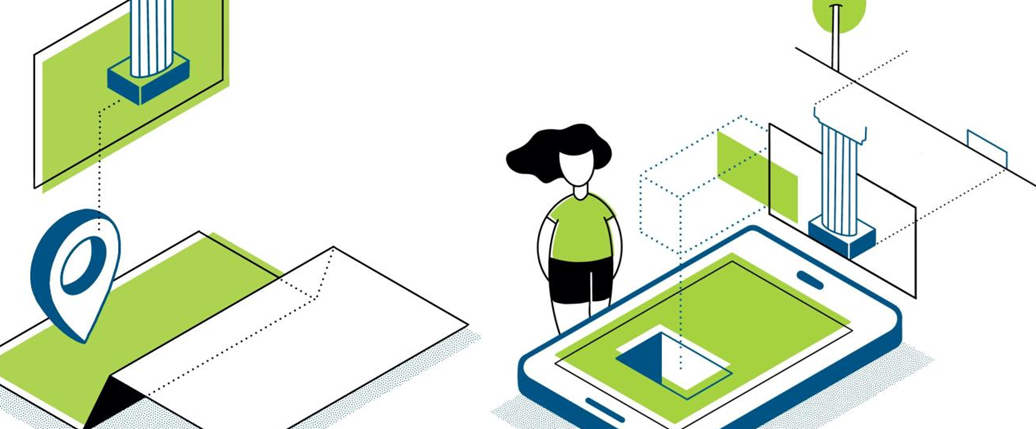
EUreka3D-XR partner Swing:IT Software Engineering Italia S.r.l. team met CRDI Ajuntament de Girona for two fruitful days of work, planning and progressing on the virtual visualisation of the Girona historical walls, one of the three XR scenarios developed in the project. The pilot is about using archival materials to reconstruct in 3D the medieval walls of the city of Girona (Catalonia, Spain); and to reuse such reconstruction for an AR walking tour using a mobile device. The walls we...
EUreka3D-XR Advisory Board meets online
EUreka3D-XR engages with renowned international experts on 3D, cultural heritage documentation, storytelling and visitor experience in AR and XR. This Advisory Board is regularly consulted on project progress, and during the plenary meeting held online on 7-8 July 2025 a dedicated session was organized, to present the early achievements of the pilot scenarios and XR tools that the project is developing. After an opening overview by project coordinator Antonella Fresa (Photoconsortium), joint ...
Results and conclusions of "Report on the Survey 'Digitization and Artificial Intelligence for ...
Following a survey that had as an objective to investigate how AI is impacting digitization of archives and documentary heritage collections across different institutions, a study was published under the name of "Report on the Survey 'Digitization and Artificial Intelligence for Archives and Documentary Heritage Materials'". The survey measured the state of digitization within organizations and assesses the impact of artificial intelligence (AI) on digitization activities. The surve...