EUreka3D featured at Public Domain Day in Europe 2026

CC BY 4.0 – Sebastiaan ter Burg

Co-organized by EUreka3D-XR project partner’s meemoo, this year’s annual Public Domain Day drew attention to the barriers that often still stand in the way of opening up these materials through a two session one-day event offering insights, plenaries and specialised workshops. Public Domain Day welcomed anyone who might be interested in engaging with public domain collections – from collection managers and service providers to researchers and policymakers.

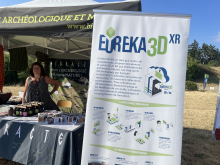
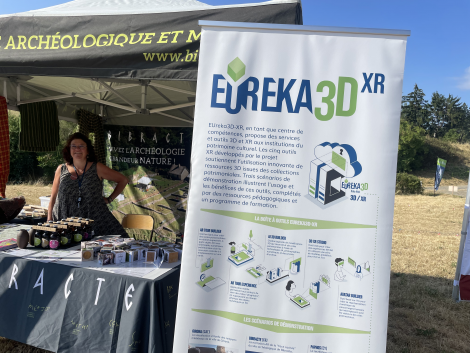
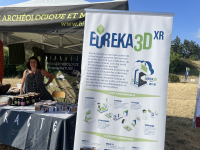
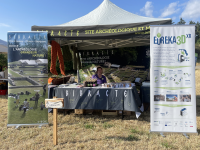
On the occasion,  the project EUreka3D-XR was showcased through a dedicated booth featuring dissemination materials, hosted by Axelle Vanmaele (meemoo), with many people taking interest in the initiative. The project’s presence at the event is aligned with the values of the public domain and open cultural data: EUreka3D-XR makes available to cultural heritage professionals five open-source digital tools, including online services and mobile apps, designed to support the innovative reuse and exploitation of cultural resources, with a particular focus on 3D content. By promoting open access, open data, and open licensing, and through the EUreka3D Data Hub, the project directly contributes to the vision of the common European data space for cultural heritage.


Lambousa fishing trawler featured in Euronews

The Greek edition of Euronews, the pan-European television news network, recently featured the story of the Lambousa boat.

The Lambousa is fishing trawler built in Piraeus in 1955 and for half a century it plowed the Cypriot seas. After years of neglect, the Limassol Municipality decided to preserve it and make it a floating museum of fishing tradition.

In collaboration with Cyprus University of Technology, the Limassol municipality organized its complete repair and holistic digitization, recording and documentation through photogrammetry and scanning, and now the historic vessel is open to visitors again in Limassol.

The 3D model of the boat was made available as open access resource for use and reuse by the Cyprus University of Technology in the context of EUreka3D project and is accessible in Europeana: https://www.europeana.eu/en/item/1268/21_15123_DKf8oUnT

More information about Lambousa: https://elambousa.eu/


Webinar on the state of 3D Digitisation in Cultural Heritage


Organized by Heritage Malta and the UNESCO Chair on Digital Cultural Heritage at the Cyprus University of Technology, the Digitisation of Cultural Heritage: Methodologies, Technologies & Best Practices webinar is dedicated to presenting the results of a groundbreaking global survey carried out in the context of Heritalise project to exame the current state of the art in 3D digitisation of cultural heritage.

The survey explored key questions, including:

  • Who is digitising cultural heritage, what is being digitised, and how and why these activities are undertaken
  • The complexity of data acquisition processes and the quality of resulting datasets
  • The role of paradata, metadata, and data management practices
  • Technologies, tools, and standards currently in use
  • 3D Digital Twin technologies
  • The MemoryTwin approach
  • Challenges and limitations faced by professionals across disciplines
  • Long-term data preservation
  • Applications to both tangible and intangible heritage
  • Practical, ethical, and technical gaps shaping future strategies

The answers to the survey captures how digital data acquisition is being approached across diverse disciplines, institutions, and geographic contexts, highlighting the diversity of practices, priorities, and workflows shaping the digitisation of cultural heritage in its current status.

The webinar will take place online, on the 22nd of January 2026, online, from 13:30 to 14:30 CET. Register for free at this link<<<<


PREAC training – Archaeology and young people: how do you show the invisible?

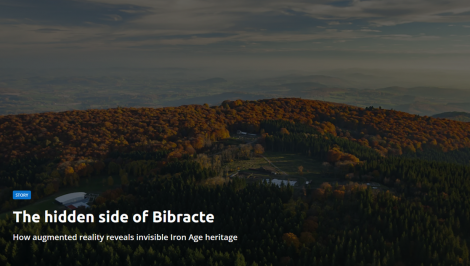
From 1 to 3 December 2025, Bibracte, in partnership with the Musée départemental Arles antique, organised the national training course “Archaeology and Young Audiences: How to show the invisible?”, aimed at professionals working in arts and cultural education.

On the morning of 2 December, the Forum of Archaeology Professions gave participants the opportunity to engage in discussions with specialists about the invisible or less visible aspects of archaeology, as well as the methods and tools used to understand and communicate them to the public.

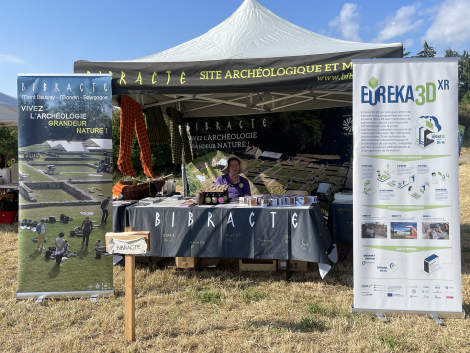
On this occasion, Agathe Le Riche-Maugis presented the five open-source tools developed within the EUreka3D-XR project at the stand entitled “Visual Mediation Technologies: Bringing the Real and the Virtual into Dialogue to Better Tell the Story of Archaeology”. Forty people took part in the event: 13 education professionals (regional pedagogical inspectors, regional advisers for arts and cultural education, and teachers responsible for museum partnerships) and 27 cultural heritage professionals (heads of mediation, mediators and archaeologists). Among them, around fifteen expressed a strong interest in the project and its future outcomes

Video capsules featuring the Forum speakers were also produced at the Musée d’Arles, with the aim of creating resources for future regional training initiatives connected to the same theme. Agathe Le Riche-Maugis’s video will be available on this blog soon.


EUreka3D-XR featured at the International Archives Congress 2025

EUreka3D-XR project was presented at the International Archives Congress 2025, the most important event for the archival community: held in the city of Barcelona after taking over from other major cities, the fourth edition of the event hosted around 2,000 professionals from more than 100 countries around the world.

David Iglésias (CRDI – Ajuntament de Girona), with the speech The Role of Archives in the 3D Transformation of Heritage addressed the importance of archival records in the progress of recreating heritage objects in 3D, especially referring to the Girona scenario in the context of EUreka3D-XR, where will recreate the city’s medieval wall, which was demolished in the early 20th century, serving as a case study for assessing the archival contribution to the creation of 3D digital content related to heritage.


EUreka3D presented at CHNT30

During the Conference on Cultural Heritage and New Techonologies (November 2025), EUreka3D-XR projecy was presented by Prof. Dr. Sander Münster (Time Machine Organization; Jena University) at the “Metadata standard for 3D data. Challenges in 3D models documentation” Round Table.

During the roundtable, Prof. Münster mentioned the joint work that EUreka3D and other projects related to the Data Space for Cultural Heritage are carrying out in the 3D Working Group led by Europeana, also highlighting EUreka3D’s results in supporting the quality of 3D digitization and documentation of cultural heritage – referencing the VIGIE Study, the 3D Digitization Guidelines, and the online training course.

The presentation highlighted the important synergies of EUreka3D with other projects supporting the data space and can be viewed at this link.


Beyond Borders Hackathon: showcasing cultural collections for sustainable tourism promotion

In the aftermath of the Beyond Borders Hackathon, jointly organized by EuropeanaPhotoconsortiumSECreTour projectUNESCO Chair of the Università della Svizzera Italiana in ICT to develop and promote sustainable tourism in world heritage sites and UNESCO Chair of the Università di Genova in Anthropology of Health, Biosphere and Healing Systems, a new story has been written for Europeana Pro.

In the piece, it is explored how the participants had the chance of experimenting with digital cultural heritage, listening to talks on digital transformation in cultural heritage and the use of 2D and 3D digital resources to promote tourism and engaging with Europeana’s open cultural datasets to create digital storytelling projects on Insubria’s geocultural heritage.

Read the story at this link.


The history of Saint Neophytos

Saint Neophytos the Recluse, also known as Saint Neophytos of Cyprus, lived as a hermit and left a vast theological and cultural imprint on the history of his homeland and the Orthodox world at large – his story is now live on Europeana, thanks to a blogpost produced and published in the context of EUreka3D-XR project. The project is in the process of recreating Saint Neophytos’ enkleistra as a virtual experience which will include the first-ever recording of the liturgy that is held on the Saint’s feast day and celebrated only twice a year.

Discover the story of Saint Neophytos<<<<


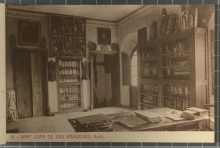
Saint Neophytos’ enkleistra’s frescoes

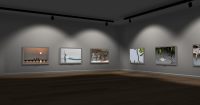
Discover the frescoes of Saint Neophytos’ enkleistra through a new gallery published on Europeana in the context of Eureka3D-XR project.

The gallery was published with the occasion of the publication of a story on Saint Neophytos of Cyprus.

View the gallery at this link.


Europeana Creative Climate Action Award

The first Europeana Creative Climate Action Award invites audience to write an original short story or poem inspired by cultural heritage content on the theme of climate action and one or more of the images in the Europeana Creative Climate Action Award gallery, which has been curated by the Europeana Climate Action Community.

To be submitted before 11 January 2026, the entries will be judged by a Committee within Europeana, and can anyone can participate – both native and non-native English speakers. Winners will be published and will receive prizes.

How to submit your entry:

  1. Check out the Europeana gallery and choose one or more images that inspire you. Your writing doesn’t have to reference the image specifically, but it should be evident that the theme, symbols or atmosphere of your story or poem is reflected somehow in the image you’ve chosen.
  2. Write your story or poem in English, with a maximum of 500 words.
  3. Check out the terms and conditions below.
  4. Complete the submission form by the closing date of 11 January 2026 at 23:59.

Learn more on Europeana’s dedicated blogpost.