
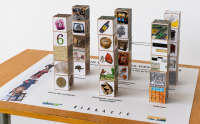
Developed by project partner Bibracte in the context of EUreka3D-XR, two Open Educational Resources (OER) on XR technologies and cultural heritage: “On the Shoulders of the Celts – How yesterday’s inventions have made today’s digital world possible“, a step-by-step guidance … Continue reading
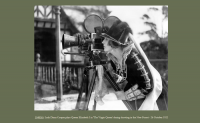
To mark the 2026 World Day for Audiovisual Heritage, prestigious British Archive TopFoto has organised an online event, “Topfoto: Past, Present and Future of Press Photography” online on Octber 27th. The event will explore how press photographs move from newsroom … Continue reading
Topic: museum & library information systems
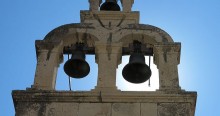
Annual, global conference featuring award-winning museum, heritage and conservation projects. The conference, that celebrates its 17th edition, will take place in the UNESCO heritage site of Dubrovnik on 26-28 September and during the three days programme will feature more then … Continue reading
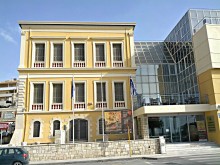
Extended deadline until 31st March: proposals for presentations, workshops, case studies, for CIDOC’s annual conference. Visit the CIDOC 2018 Call for Papers page for submission guidelines and selection criteria: http://www.cidoc2018.com/call-papers. *About the CIDOC 2018 Theme* The ‘Provenance of Knowledge’ is a core element … Continue reading
It is with great pleasure to announce that the 42nd International Conference of the European Library Automation Group will be held at the National Library of Technology in Prague, Czech Republic from June 4 to 7 2018. The European Library Automation … Continue reading

From Data to Wisdom: Resilient Integration across Societies, Disciplines, and Systems. The ACM/IEEE Joint Conference on Digital Libraries in 2018 (JCDL 2018) will be held in conjunction with UNT Open Access Symposium 2018 on June 3 – 6, 2018 in Fort Worth, … Continue reading
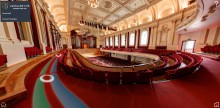
Auckland Live is a part of Regional Facilities Auckland, committed to promoting the arts, and supporting inclusiveness and access to the arts for all. In early December 2017, Auckland Live launched the first Accessibility Virtual Tour for the Town Hall– … Continue reading
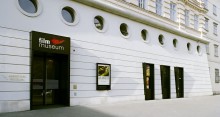
Merle Friedrichsen attended the “No Time To Wait 2” symposium organised by PREFORMA in November 2017 and gave a presentation on “Open Source Tools in the Digital Archive Workflow” from the perspective of the German National Library of Science and Technology. They both veraPDF (PDF/A), and MediaConch (for Matroska/FFV1 – for film) and the result is that all the requirements that they identified regarding open source software for validation are fulfilled (or are possible to fulfill) by these tools. Continue reading

Virtual Multimodal Museum (ViMM) is a high-visibility and participative Coordination and Support Action (CSA), funded under the EU Horizon 2020 programme (CULT-COOP-8-2016). ViMM brings together Europe and the world’s leading public and private sector organizations working on Virtual Museums and … Continue reading
The latest version of veraPDF is now available to download. veraPDF is an open source PDF/A validator, and version 1.10 marks the first release of veraPDF as part of the Open Preservation Foundation’s (OPF) reference toolset. The latest version of veraPDF is now available to download. veraPDF is an open source PDF/A validator, and version 1.10 marks the first release of veraPDF as part of the Open Preservation Foundation’s (OPF) reference toolset. There are also a number of other fixes and improvements which are documented in the latest release notes. Continue reading
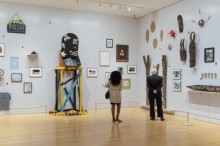
A new exhibition, dedicated to the civic engagement, is currently on view at the Philadelphia Museum of Art. Set up by the artist Jeanne van Heeswijk, Philadelphia Assembled is different from any other exhibition because it is not putting pleasure … Continue reading
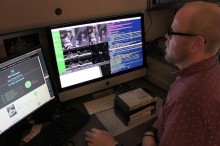
This is the nineth in a series of interviews with people using MediaConch within their institutions. Brian is the head of the Digital Production Unit for the Special Collections & Archives Research Center at Oregon State University Libraries & Press. He is using MediaConch for validation and policy checking during the quality control process for the video files. He also used DPF Manager and veraPDF for quality control of TIFF and PDF files. Continue reading