

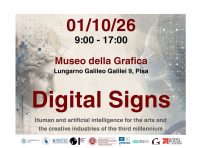
Starting from the sign as a foundational element of the creative act—its becoming meaning, writing, and structure—scholars from different disciplines, ranging from art history to design, from philosophy to mathematics, and from the natural sciences to astronomy, will explore AI … Continue reading
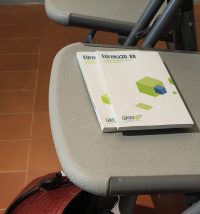
EUreka3D and EUreka3D-XR were presented by Project Coordinator Antonella Fresa at Digital Signs – Human and Artificial Intelligence for the arts and the creative industries of the third millennium symposium, hosted by the Museum of Graphic Arts in Pisa to discuss … Continue reading
Tag: digital preservation
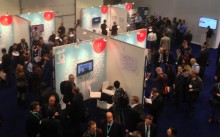
The session, organised by DCH-RP, SCIDIPES, APARSEN, EUDAT, CHAIN REDS and SCAPE, brought together projects and initiatives working world-wide in the domain of DCH, digital arts, digital performances, digital humanities and digital preservation to find synergies and discuss opportunities for cooperation, in particular around the theme of using e-infrastructures for the preservation of DCH. Continue reading
The 3-day EUDAT conference, 28-30 October 2013 – Rome, Italy, addresses new data challenges – the case for cross-disciplinary science and services – in view of the EC’s forthcoming Horizon 2020 programme. International e-infrastructure cooperation and collaboration benefits are high on the agenda, with a particular focus on the recently launched RDA. The community-driven initiatives collaborating with EUDAT will also take an active role in the interactive discussions through associated workshops taking EUDAT synergies to new levels. Continue reading
Towards an e-infrastructure for the Digital Cultural Heritage sector and the humanities research: which are the needs and the requirements of the DCH?
How can this sector benefit from the new and innovative solutions offered by the e-Infrastructures?
Experts tries to answer these question. Continue reading
The need for novel more efficient and affordable solutions for digital preservation is increasing in the Social Science and Humanities. The workshop presented the advancements in the state of the art, to understand which could be the benefits offered, in particular to the Digital Cultural Heritage sector, by the new technologies and e-infrastructures. Continue reading