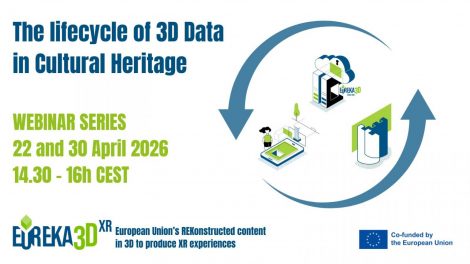
Aimed at cultural heritage professionals, EUreka3D-XR inaugurates a new webinar series, as the project gets closer to its conclusion in July: The Lifestyle of 3D Data in Cultural Heritage webinar serie, that brought together the key results of both EUreka3D and EUreka3D-XR projects to present them in a clear, practical, encompassing and accessible way.
This series offered a complete overview of how 3D data can be created, managed and reused sustainably, connecting technical, policy and practical perspectives, drawing on real tools, workflows and infrastructures developed within the projects, and aligning them with Europeana policies and the common European data space for cultural heritage.
The series was split in two focused sessions, where participants explored the full journey of 3D data in cultural guided by professionals of the sector with first hand experience in the field.
The recordings of the two sessions are now available on EUreka3D-XR’s YouTube channel.
Session 1 (April 22nd 2026)
Session 2 (April 30th 2026)
Programme
SESSION 1 – Wednesday 22 April 2026 14.30-16h CEST
Plan, collect, process and preserve
- 14.30h Introduction, by Antonella Fresa (EUreka3D-XR project coordinator)
- 14.40h Creating 3D data: plan, collect, process, by Marinos Ioannides (Digital Heritage Research Lab at Cyprus University of Technology)
- 15.10h Preservation and management of 3D data, by Ignacio Lamata Martínez (EGI Foundation)
- 15.40h Interactive session
- 15.50h Wrap-up and accessible resources
- 16h End of the session
DAY 2 – Thursday 30 April 2026 14.30-16h CEST
Sharing and reusing 3D data
- 14.30h Introduction, by Antonella Fresa (EUreka3D-XR project coordinator)
- 14.40h Publishing 3D data, by Valentina Bachi (Photoconsortium, EUreka3D-XR project manager)
- 15h 3D, Copyright and the public domain, by Ariadna Matas (Europeana Foundation)
- 15.20h Q&A
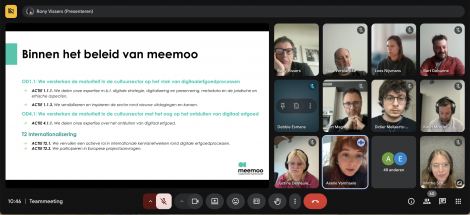
- 15.30h Reuse of 3D in practice: XR scenarios (Axelle Vanmaele, meemoo)
- 15.50h Wrap-up and accessible resources
- 16h End of the session
 EUreka3D-XR project is co-financed by the Digital Europe Programme of the European Union.










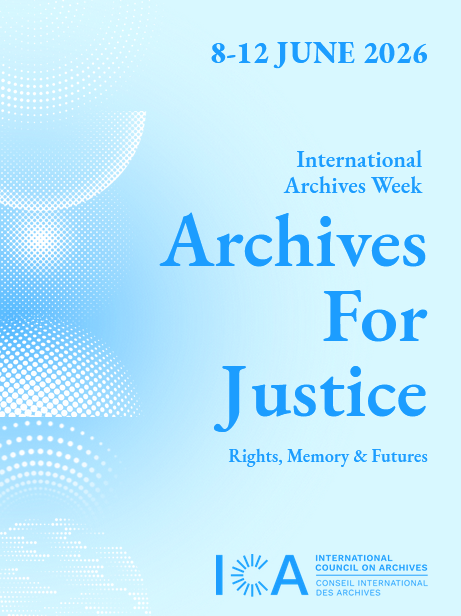 International Archives Week is coming back in 2026, with the theme of Archives for Justice – Rights, Memory & Futures: chosen through a global survey of the archival community, this year’s theme theme places particular emphasis on archives as active infrastructures that sustain justice across time, from past violations and present responsibilities to future claims and aspirations. A specific focus will be reserved on how archives safeguard rights, preserve memory, and support justice — across time and across borders. The programme is built around five subthemes: