

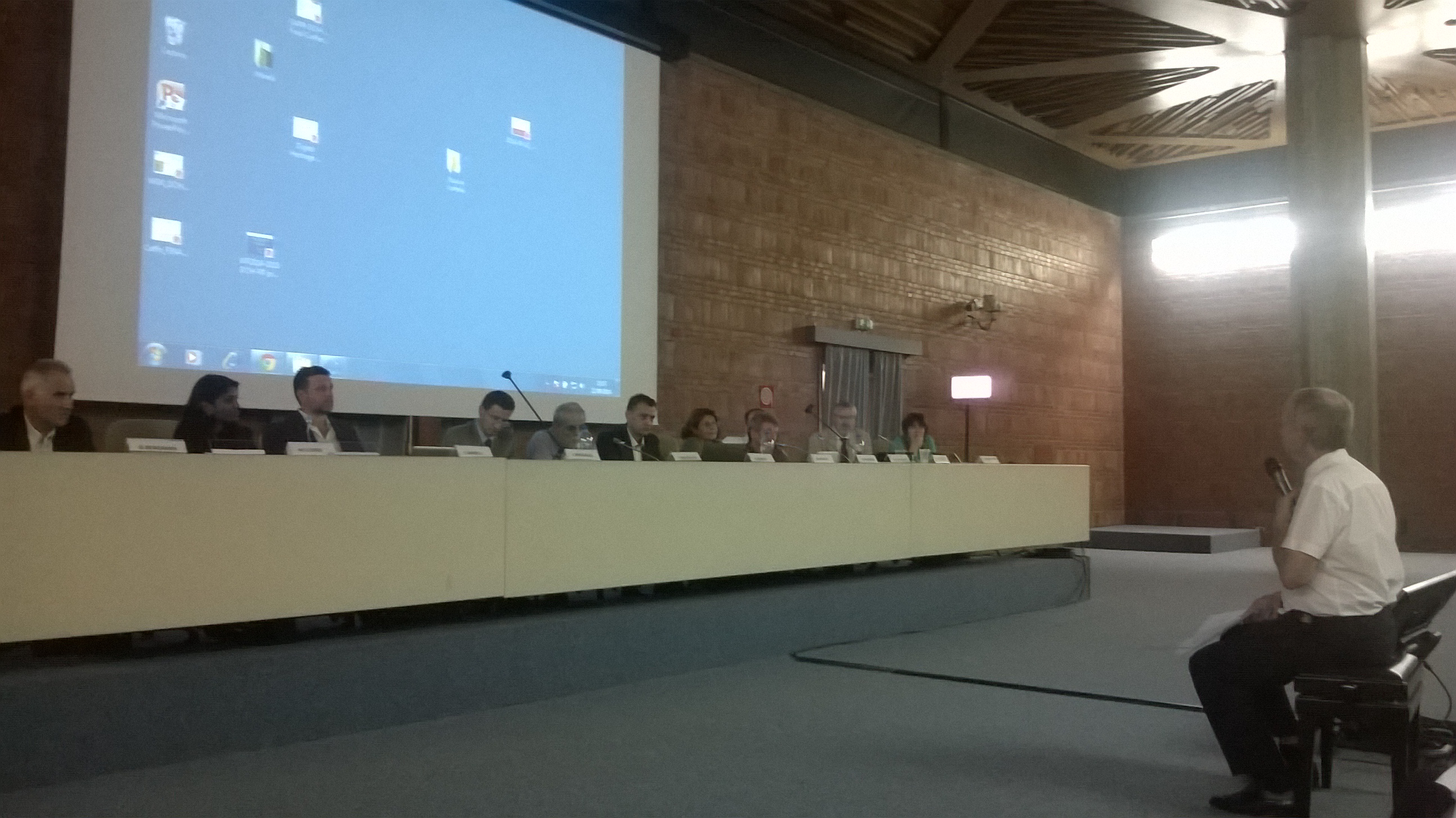
 On 16-17th October, Venice was the venue for culture and knowledge exchange, with focus on digital technologies applied to cultural heritage: the Auditorium Santa Margherita hosted an exciting conference entitled: Digital Cultural Content Re-imagined: New Avenues for the Economy and Society. This conference included important representatives of European cultural institutions together with experts and researchers in the digital cultural heritage domain. The speeches focused on the possibilities of creative re-use for the available cultural data in new applications, and the implicit business potential that lies in this.
The conference is the opening event of EU-funded project Europeana Space, and it is organized by Ca’ Foscari University of Venice – Department of Management, together with Promoter S.r.l. an agency with strong reputation and expertise in the ICT and cultural heritage. www.digitalmeetsculture.net is the official media partner of the conference.
The event started of 16th October at 2.00 pm with the welcome message of Michele Bugliesi, the Rector of Ca’ Foscari University; followed by speeches of Sarah Whatley, project’s coordinator and professor of Dance at Coventry University, Piero Attanasio of AIE the Italian association of Editors, Harry Verwayen of Europeana Foundation, Antonella Fresa of Promoter S.r.l. and other interesting international speakers. The conference explored the potential of digital cultural heritage, to be used in the development of new creative products and services that will boost the creative industry, generating innovation and economic growth.
During the conference, new applications under experimentation were presented on different themes (Dance, Photography, Interactive TV, Games, Museums, Open and Hybrid Publishing), and it was possible to meet the most brilliant actors that operate in these fields in Europe. The following day 17th, the conference took place in the morning (9.30 -12.30 am), while in the afternoon it was possible for the group of registered participants to visit the Venice incubator H-Farm.
Conference website: http://veniceconference2014.europeana-space.eu.
More info:
Europeana Space (www.europeana-space.eu), led by Coventry University and including 29 partners from all over Europe, is an EU-funded project that aims to unlock the business potential of digital cultural heritage through the creative reuse of available cultural data. It encompasses 6 themed pilots where experimentation and new business models are developed. The Europeana Space project is developed in cooperation with Europeana, the European portal for Cultural Heritage.
The Department of Management of Ca’ Foscari University carried out a detailed market analysis of the business potential in the 6 key markets addressed by the project. Coordinator of this activity at Ca’ Foscari is Leonardo Buzzavo, professor of Strategy, who declared: “You can certainly derive economic growth from culture: by identifying effective business models. This is an un-missable challenge for Italy”
Promoter S.r.l. (www.promoter.it) is Technical Coordinator of Europeana Space, and the responsible partner for communication and dissemination, thus supporting Ca’ Foscari University in the organization of the conference. Antonella Fresa, the director, says: “This is a golden opportunity for the creative industries, for the cultural institutions, for students and researchers, for anybody interested in the new scenario of digital cultural heritage. This is the occasion to learn what is happening in this sector: join us, follow us on our blog, website and social networks!”


 The 2014 APA conference launches the APA Centre of Excellence (CoE).