
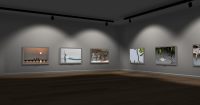
OpenVGal is an open-source 3D virtual gallery for people and institutions that already have digitized photographs or artwork images. It lets them show the work in a walkable room instead of a page of thumbnails. The exhibition is a folder … Continue reading
Join the European Heritage Hub to its upcoming Policy Talk, ‘INNOVATE. PROTECT. EMPOWER. How cultural heritage can make Public AI a reality’, taking place online on 29 September, from 16:00 to 18:00 CET. The Policy Talk will explore the vision … Continue reading
Topic: media
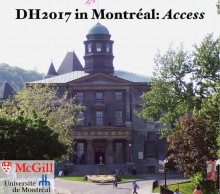
Co-organised by McGill University and the Université de Montréal, Digital Humanities 2017 (DH2017) will take place August 8-11, 2017 in downtown Montréal, Canada on the campus of McGill University. This is the premiere annual conference of the international Alliance of Digital Humanities Organizations (ADHO). The theme of DH2017 is “Access/Accès”. Continue reading
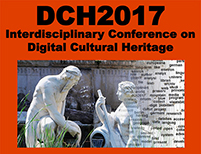
Organised by CODATA-Germany, the German National Committee on Data for Science and Technology of the International Council for Science, the DCH2017 International Conference will take place in Berlin, at the National Library, on August 30 – September 01, 2017. The conference focuses on providing key messages relating to the impact of new technologies and processes on cultural heritage. Continue reading
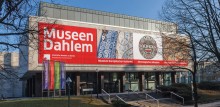
The International Association of Sound and Audiovisual Archives 48th Annual Conference will be hosted on 17-22 September 2017 by the Ethnological Museum in Berlin. IASA 2017 Conference theme is ‘Integration and Innovation: Bringing Workflows and Formats Together in the Digital Era’ and everyone engaged in or curious about the discovery, care, preservation and dissemination of our sound and audiovisual heritage is invited to join. Continue reading
The 2017 edition of the FIAT/IFTA World Conference will be organised in October 2017 in Mexico City. FIAT/IFTA’ s annual conference is a unique opportunity to discover the future of the audiovisual domain and its new tendencies and uses, exchange knowledge and experience, and promote the study of any topic relevant to the development and valorisation of audiovisual archives. Continue reading
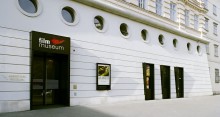
The PREFORMA project and MediaArea are pleased to announce initial details for a 2nd No Time to Wait symposium, hosted by the Österreichisches Filmmuseum – Austrian Film Museum. Members of audiovisual archiving, digital preservation, open media development, and open format standardization communities as well as curious onlookers are welcome to attend, discuss, and present on subjects pertaining to the intersection of open media, standardization, and audiovisual preservation. Continue reading
The Learning Objects, developed in the frame of Linked Heritage, range from Europeana to aggregation, metadata standards, linked data, terminology, etc.) and address an identified shortage of awareness of these important topics. Continue reading

For the Internet Festival, closed on 13th October, Incubator was the keyword for 2013. The organizers have already published the first official data of the event: 60 countries directly or virtually represented; more than 23.000 devices connected (smartphones, pc, tablets); … Continue reading
Florence hosted an international event that includes a Conference, Workshops, Meetings & an Exhibition. The Electronic Information, the Visual Arts and Beyond (EVA Conferences) are a series of international interdisciplinary conferences mainly in Europe, but also elsewhere in the world, for people interested in the application of information technology to the cultural and especially the visual arts field. Continue reading