

OpenVGal is an open-source 3D virtual gallery for people and institutions that already have digitized photographs or artwork images. It lets them show the work in a walkable room instead of a page of thumbnails. The exhibition is a folder … Continue reading

Join the European Heritage Hub to its upcoming Policy Talk, ‘INNOVATE. PROTECT. EMPOWER. How cultural heritage can make Public AI a reality’, taking place online on 29 September, from 16:00 to 18:00 CET. The Policy Talk will explore the vision … Continue reading
Topic: digital archive
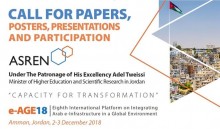
Integrating Arab e-infrastructure in a Global Environment, e-AGE, is an annual international conference organized by the Arab States Research and Education Network, ASREN. Since the launch of ASREN in December 2010 at the League of Arab States, it was decided … Continue reading

About the conference Discovering Collections, Discovering Communities is a collaborative conference series between The National Archives and Research Libraries UK. Now in its sixth year, DCDC brings together colleagues from across the archive, library, museum and academic sectors to explore shared … Continue reading

The 2018 International Image Interoperability Framework (IIIF) Conference was held May 21-25 in Washington, DC, co-hosted by the Library of Congress, the Smithsonian Institution, and the Folger Shakespeare Library. The Conference is intended for a wide range of participants and … Continue reading
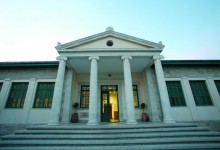
SPECIAL TRACK on METADATA & SEMANTICS for CULTURAL COLLECTIONS & APPLICATIONS Part of the 12th International Conference on Metadata and Semantics Research (MTSR 2018), October 23 – 2018, Limassol, Cyprus. Proceedings will be published in Springer CCIS series AIM AND … Continue reading
WATIFY: Inspire to Transform takes place on 2 May at DNK – Space for Contemporary Dance and Performance, National Palace of Culture (Sofia, Bulgaria) and is organised by WATIFY, an awareness-raising campaign funded by the European Commission to stimulate the … Continue reading

The Faculty of Arts of KU Leuven and KU Leuven Libraries hosted a European Conference for the Humanities on behalf of the European Consortium of Humanities Institutes and Centres (ECHIC, http://www.echic.org/). the 2018 theme is “Equip & Engage: Research and Dissemination … Continue reading
The Faculty of Arts of KU Leuven and KU Leuven Libraries hosted a European Conference for the Humanities on behalf of the European Consortium of Humanities Institutes and Centres (ECHIC, http://www.echic.org/). Like the preceding ECHIC conferences in Dublin, Utrecht, Nottingham, Oporto, … Continue reading

The Centre for Image Research and Diffusion (CRDI) of the Girona City Council and the Association of Archivists of Catalonia, are calling the 15th Image and Research International Conference, which will be held in the Palau de Congressos de Girona from 22th … Continue reading

iPRES 2018 BOSTON – Where Art and Science Meet – The Art In the Science & The Science In the Art of Digital Preservation – will be co-hosted by MIT Libraries and Harvard Library on September 24-27, 2018. The call for contributions seeks abstracts for papers that tell stories about bridging knowledge gaps in teams, implementing technologies, and overcoming barriers towards proper digital stewarding of digital items, assets, works and collections. Continue reading
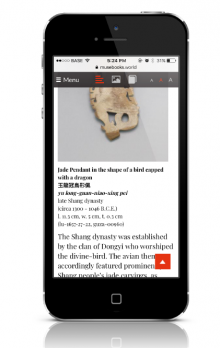
The National Palace Museum (NPM) in Taipei – the most visited art museum in Asia according to The Art Newspaper – has teamed up with Musebooks and will now put its priceless collections online with catalogues in an innovative digital … Continue reading