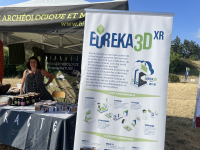

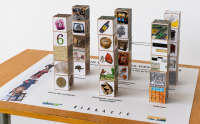
Developed by project partner Bibracte in the context of EUreka3D-XR, two Open Educational Resources (OER) on XR technologies and cultural heritage: “On the Shoulders of the Celts – How yesterday’s inventions have made today’s digital world possible“, a step-by-step guidance … Continue reading

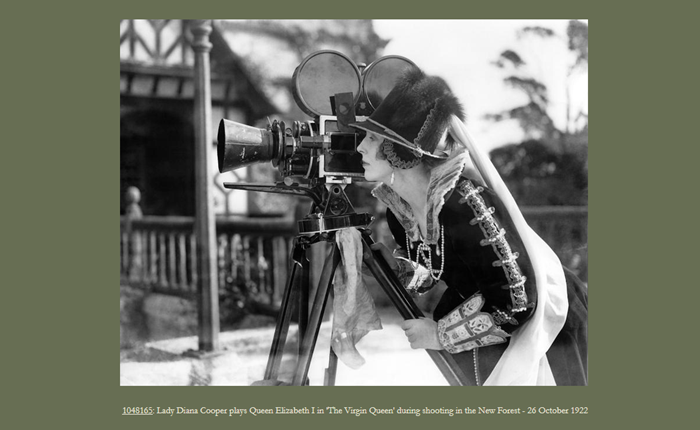
Paper for the 19th Image and Research Conference in Girona, 19-20 November 2026. Abstract Historical photographic archives contain considerably more information than the comparatively small number of images traditionally selected for digitisation and publication. United Archives is therefore developing a … Continue reading
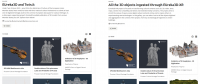
Starting today, it is possible to explore every single object that has been ingested on Europeana through EUreka3D-XR project. Produced by project coordinator Photoconsortium, two new galleries are now available on Europeana: one where all the 3D digitised, reconstructed and … Continue reading
Area: digital heritage

Despite these facts, digital editions are often neglected by the established review institutions. This neglect has a number of consequences: digital editions are somewhat outside the established peer-control process; digital editors in spe cannot rely on criticisms that projects similar to their… Continue reading
Many of the objects within the archive collection have been sourced directly from Davies and her collaborators’ personal collections, whilst other items have been kindly lent by institutions and private contributors. Almost all of these objects that would otherwise remain inaccessible and unavailable appear online for the first time, and in many cases represent the first time objects have been viewed by anyone since their original date of creation. Continue reading
Valuable experts were invited for discussing different themes and for driving question and answer sessions. The participants were from the project consortium and also from other organizations such as the National Archives and the National Museum of Denmark, the Danish Film Institute and LFF Foundation. Arbejdermuseet is one of the partners of Europeana Photography project, providing 25.000 digitized photos that witness the conditions and everyday life of the workers’ and the labour movement’s history. Continue reading

The Succeed project is undertaking a survey on the use of licenses in the field of digitisation and on innovative usages of digitised content. The aim of this survey is to gather information about current practices for licensing data, metadata and tools and on new trends in the exploitation of digitised content. Continue reading

The PREFORMA project informs that the call for tender has been published. Suppliers who want to prepare a proposal can find all the related information and documents in the Tender section of the PREFORMA website. Deadline for submission is August 12th, 2014. Continue reading

Special Track on Metadata & Semantics for Cultural Collections & Applications Part of the 8th International Conference on Metadata and Semantic Research (MTSR 2014), 27 – 29 November 2014, Karlsruhe, Germany Submission deadline: July 13th, 2014 Proceedings will be published … Continue reading
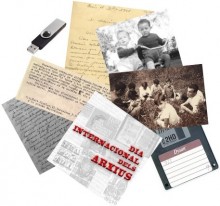
To commemorate the International Archives Day, the Municipal Archive of Girona and the Centre for Image Research and Diffusion of Girona’s City Council have made available to citizens a resource for the preservation of their personal archives. Continue reading

Welcome to the June edition of the EUDAT News Bulletin! These short email bulletins are sent monthly to keep the community updated about the latest news and developments from EUDAT. Continue reading

Models can catwalk through holograms of themselves, T-shirts can hug you and couture is being designed virtually and then printed using a 3D printer – no needle and thread involved. These marvels are developing at full speed, changing the way we see, design, make and buy clothes. Continue reading
CHAIN-REDS and DCH-RP cooperates together to promote and support technological and scientific collaboration across different e-Infrastructures established and operated in various continents, in order to define a path towards a global e-Infrastructures ecosystem that will allow Virtual Research Community, research groups and single researchers to access and efficiently use worldwide distributed resources. Continue reading