

blog by Europeana Sounds appeared on Europeana on 19 December 2016.
The Music Collections of this month is focused on anthropology and its links with sounds and music studies, in France and in the world.
Ethnomusicologists seek to understand what is music and its purpose. In order to study the cultural and social aspects of musicians, they need to collect field recordings. In this Music Collections, you can explore the work of ethnomusicologists through four of the CNRS’ sound collections.
Two collections are provided by the MMSH sound archive center, which holds pluridisciplinary field recordings collections focused on the Mediterranean area:
- A collection of Songs from South of France sung in a variety of languages: Occitan, French, Italian and Italian dialects.
- And a selection of Songs from South of Sahara in Arabic, Tamahaq and Tamasheq.
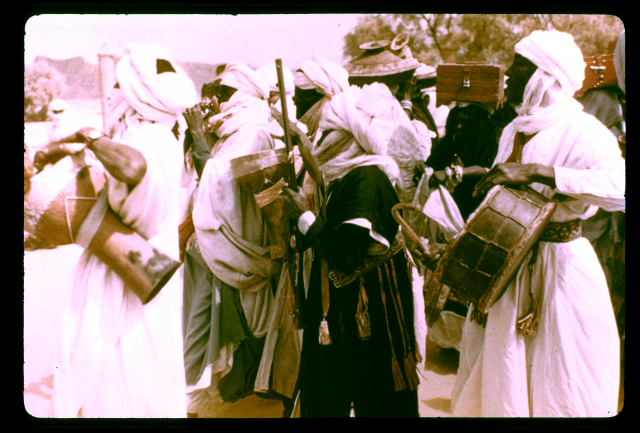
photo: Fonds Marceau Gast – Ahaggar : Les musiciens, photographie de Marceau Gast, 1960 – CC-BY-ND
MMSH sound archives centre also offers to browse violinmakers storytellings who show the technical gestures to build a violin, a cello, a bridge or a bow and how was the violinmakers life at the beginning of the 20th century until today.
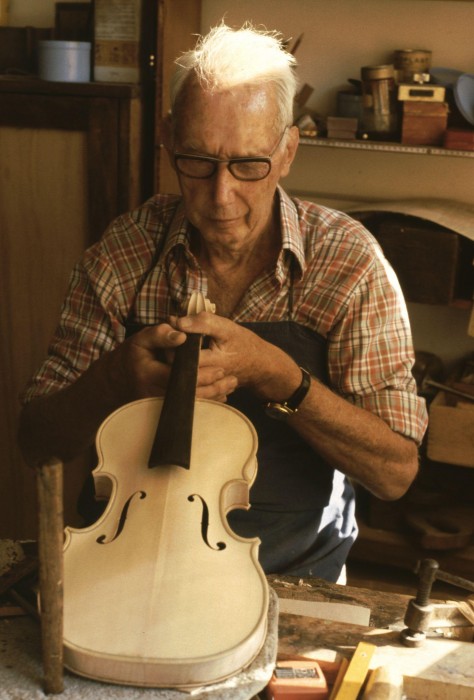
photo: Fonds Hélène Claudot-Hawad : Le métier de luthier – Atelier de Pierre Claudot (La Bouilladisse, France) : Emmanchage – 23 | Hélène Claudot-Hawad – CC-BY-ND
Soundscapes are also essential to understand the links between different spaces and how the sound environment is perceived and produced. The CRESSON collection exposes this pluridisciplinary approach and focuses on the sound dimension from the scale of architectural device, housing, district, to the scale of sound identity of cities. Listen to the extract ”Ambiance port de Lesconil” .
The Phonobase collection will also be on Europeana, and will offer you a trip in the past. www.phonobase.org gathers 10 000 sound excerpts and photos taken from early cylinders and records produced from 1888 to 1920 approximately, and distributed in France and Europe. As a reliable witness, these sources provide a new lighting on the Belle Époque and the soundscape of our ancestors.
This month’s Collection will give you access to the audio archives of the CNRS – Musée de l’Homme, which are dedicated to the ethnomusicology: you will find field recordings of music and oral traditions from all around the world, from 1900 to present.
The CNRS will provide recordings collected during the Mission Ogooue Congo from July to December 1946, with special records of Pygmy music. After that mission in Central Africa, Gilbert Rouget, a French ethnomusicologist, came back with an exceptional collection of 600 field recordings on lacquer disc.
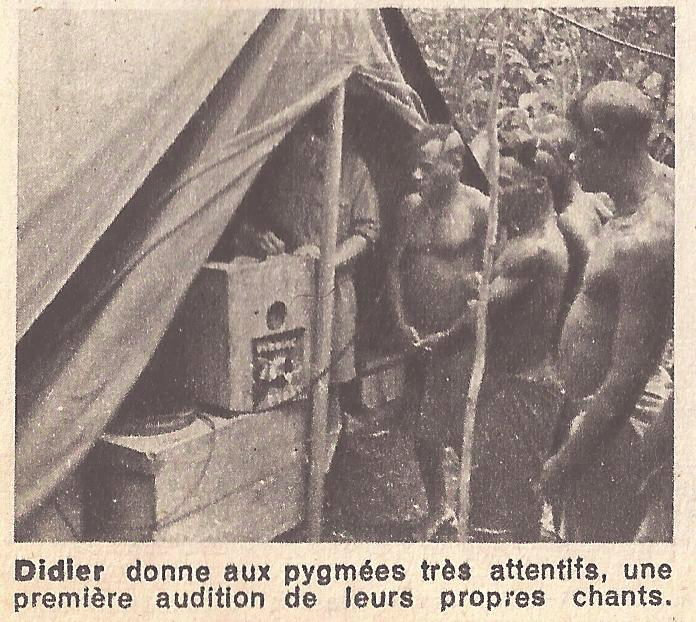
photo: Mission Ogooué Congo 1946 : Photo André Didier, 1946 – CC-BY-ND
Find out more on: music.europeana.eu
by Françoise Acquier (CRESSON), Henri Chamoux (LARHRA), Aude Da Cruz Lima (LESC/CREM), Véronique Ginouvès (Phonothèque MMSH), Joséphine Simonnot (LESC/CREM).
View this article on Europeana blog