


3D Research Challenges in Cultural Heritage V – Paradata, Metadata and Data in Digitisation

Share

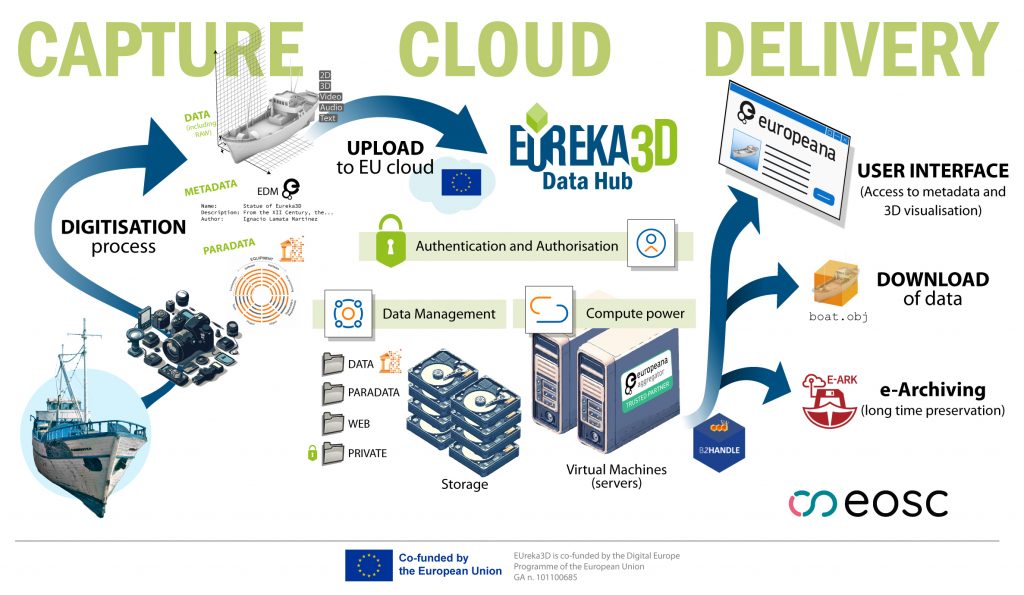
The Digital European Programme-funded project EUreka3D has ended at the close of 2024. The two-year project developed innovative technology, learning resources, and practices to support 3D cultural collections, also shared in the common European data space for cultural heritage.
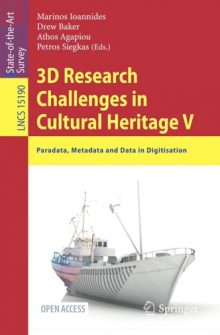
As an outcome of the project, the Springer open access book 3D Research Challenges in Cultural Heritage V – Paradata, Metadata and Data in Digitisation was published following the successful webinar in two parts organized in April and May 2024.

Access the book here: https://link.springer.com/book/10.1007/978-3-031-78590-0

This open access book presents a collection of papers focussing on 3D digitisation in the domain of cultural heritage. The use of data acquisition technologies in digitising cultural heritage holds great potential for preserving and disseminating the history of mankind. However, to exploit these opportunities in full, comprehensive guidelines for documenting the process of digitisation are required. Only then can  the efficiency and credibility of digital representations be assured.
A major focus of the 16 papers included in this State-of-the-Art Survey is on all aspects of the documentation of the digitisation process, i.e., the paradata, which, alongside the metadata, is critical to the scientific rigour, replicability and sustainability of digital heritage resources. The volume provides a useful resource for computer scientists, surveyors, archaeologists, architects, museologists and engineers.


Leave a Reply


Related Articles

How EUreka3D enabled the creation and reuse of 3D heritage – a new publication on Europeana
  The Digital European Programme-funded project EUreka3D has ended at the close of 2024. The two-year project marks a significant milestone in the field of 3D cultural heritage preservation and digitisation. It developed innovative technology and practices to push forward the boundaries of, and capacity for, 3D cultural heritage in the common European data space for cultural heritage. Explore its achievements and learn how the project’s work will continue through EUreka3D-XR i...
PREAC training - Archaeology and young people: how do you show the invisible?
From 1 to 3 December 2025, Bibracte, in partnership with the Musée départemental Arles antique, organised the national training course “Archaeology and Young Audiences: How to show the invisible?”, aimed at professionals working in arts and cultural education. On the morning of 2 December, the Forum of Archaeology Professions gave participants the opportunity to engage in discussions with specialists about the invisible or less visible aspects of archaeology, as well as the methods and to...
XR in cultural heritage: AR, MR and VR explained
Delve into the world Extended Reality through the new blogpost published on Europeana Pro by Agathe Le Riche-Maugis, in the context of EUreka3D-XR project. Learn the differences between AR, MR and VR in a "hands on" way, discover the five tools EUreka3D-XR project is currently working on and learn why Extended Reality is a real game changer in the cultural heritage world. Find the blogpost at this link.
How the EUreka3D project supports 3D in the data space for cultural heritage – a new blog post on Eu...
  3D technologies offer opportunities to broaden access to culture, preserve our shared cultural heritage and spur creativity and innovation. In support of the Twin It! 3D for Europe’s culture campaign, the EUreka3D project tells us how they are supporting cultural heritage institutions to unlock the potential of 3D digitisation for their collections. Discover how with the blog post recently published on Europeana Pro The post offers a very interesting opportunity to explor...