

all images in this post courtesy of Europeana.
In the committments of EUreka3D project, that is focused on supporting the digital transformation process in the cultural heritage sector, a major task is about reflecting on the impact and the increased knowledge that the project delivered to individuals, organisations and other stakeholder communities engaged with the project and involved in our capacity building programme.
The methodology established in EUreka3D makes use of the Europeana Impact Playbook, and in this light we’ve been very happy to attend a series of 4 Impact Assessment workshops run by Europeana in the Fall 2023. We followed The Change Pathway, equipping us with the necessary skills to collect, analyse, respond and share data from our project activities to the benefit of our stakeholders.
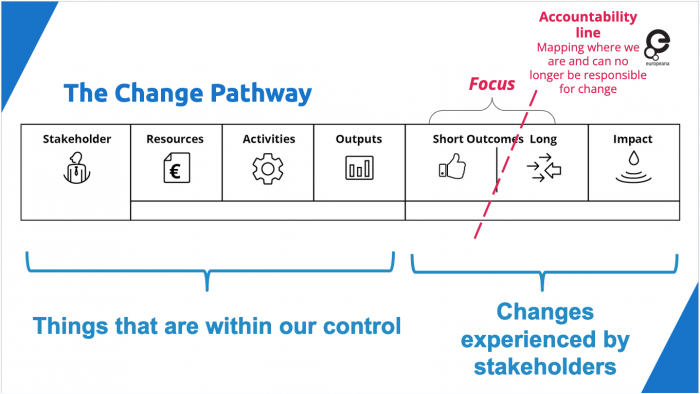
The Europeana Initiative started talking about impact over a decade ago, with a long-term goal to support the cultural heritage sector in understanding how their work creates value for their organization and in the world surrouding them. The Europeana Impact Playbook has been designed as a practical tool for impact-focused project design and impact assessment. It sets out an interactive approach that helps design for impact, plan an impact assessment, collect and analyse the data, draft impact narratives and evaluate the taken approaches.
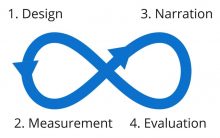 It emphasises that thinking about, and measuring, impact, is not a one-off action, but a flexible and ongoing process that can benefit from in the long-term as you embed impact thinking in your processes and organisational culture.
In the course of Winter 2023 starting on 8th November, Europeana organizes a series of open Impact Cafés for any professional in the cultural sector to ask questions and to learn more about impact design and assessment.
Read more and sign up here: https://pro.europeana.eu/post/sign-up-now-for-our-impact-cafes-and-discover-the-online-impact-playbook
 EUreka3D project is co-financed by the Digital Europe Programme of the European Union.