


Ungaretti, Il Porto Sepolto 1923. Storia di un’edizione

Share

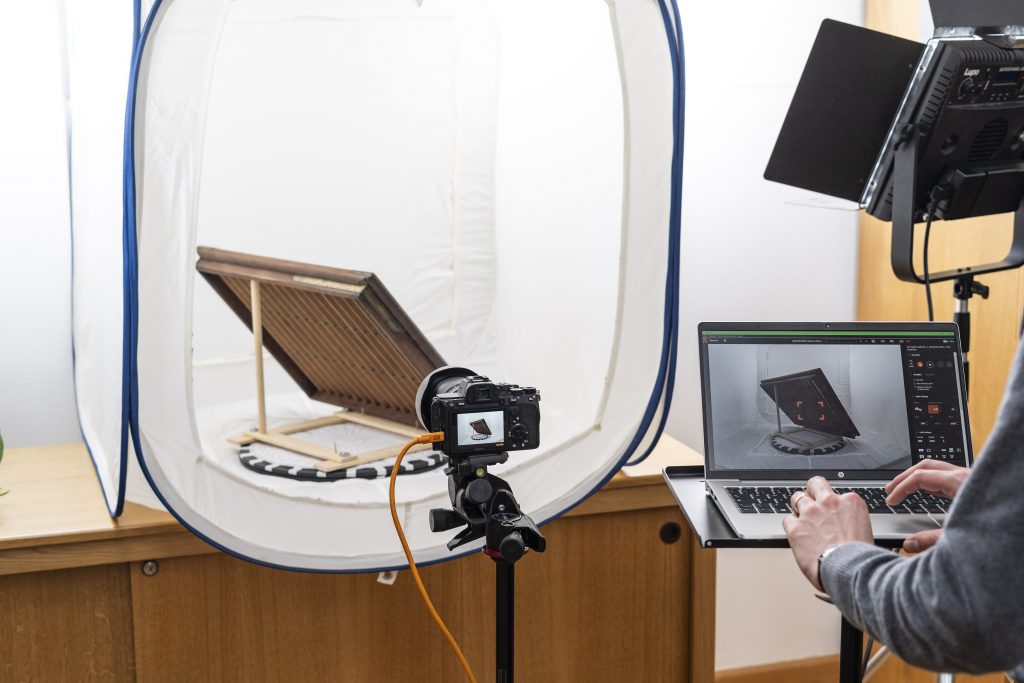
img. EUreka3D project / Museo della Carta

The Museo della Carta in Pescia holds a rich heritage of paper goods consisting of watermarked paper moulds, watermark waxes, punches, watermarked metal sheets, about 7,000 pieces, witnessing the history of paper manufacturing in Tuscany.

One of the items digitized and shared to Europeana in the context of EUreka3D project is a paper mould produced in 1923. It features the watermark with a stylized anchor, flanked at the bottom by the letters “E” and “S”. These are the initials of Ettore Serra (1890-1980), poet, critic, antiquarian, multifaceted and cosmopolitan intellectual, and most of all founder of the publishing house Stamperia Apuana, which published the second and expanded edition of Giuseppe Ungaretti’s collection of poems Il Porto Sepolto printed on a high quality paper specially manufactured by the Magnani Paper Mill in Pescia, using the paper mould currently preserved at the Museo della Carta, and digitized in 3D for EUreka3D project.

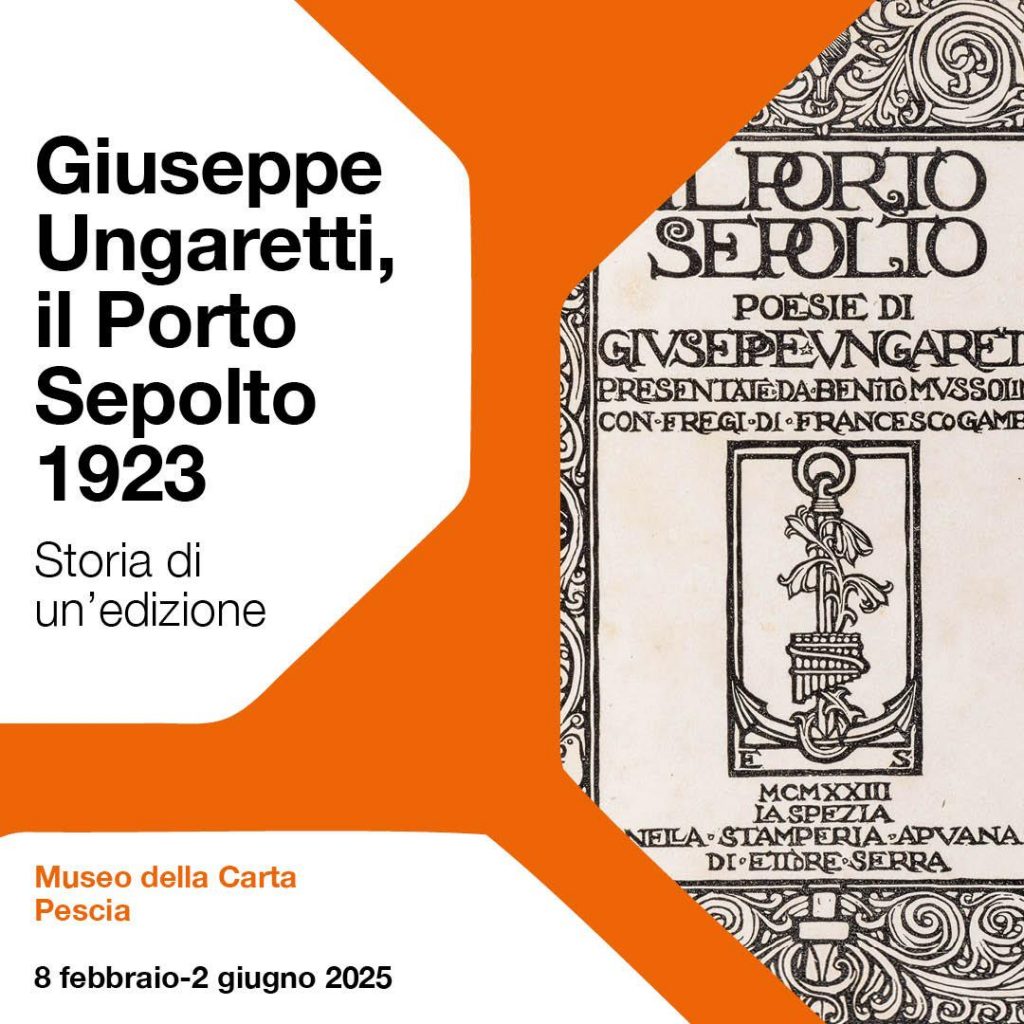
The 3D digitization of this paper mould supported in the Museum additional research about the story of the object itself and of this publication of Il Porto Sepolto. As a direct outcome of this research, an exhibition and catalogue was derived, showcasing the original model, the various documents and stories that surrounded it and the book published by Ettore Serra, and of course the 3D model itself digited in the EUreka3D project. The exhibition Ungaretti, Il Porto Sepolto 1923. Storia di un’edizione opens on 8th February until 2 June 2025 and is part of a series of exhibitions dedicated to artworks, events and important figures in the local history of 1900.

Website: https://museodellacarta.org/en


Leave a Reply


Related Articles

EUreka3D-XR at the Roman Days in Autun
EUreka3D-XR was back in Burgundy for the Roman Days in Autun, where the construction game once again attracted several hundred visitors to the Bibracte stand. This time, there was no demonstration of the application, differently from the event in Arverniales: an AR Tour Builder training workshop is planned for this autumn with the municipal archaeology service, to support the team in designing its own tour showcasing its many 3D models of archaeological remains and reconstructions of lost...
Planning XR projects for cultural heritage
A follow-up course to "Introduction to XR for cultural heritage" is now live on Europeana "Planning XR projects for cultural heritage" is an introductory course that provides a foundation for understanding XR and its applications in cultural heritage, developed as part of the EUreka3D-XR project. Aimed at Cultural Heritage professionals, XR-focused project managers and coordinators, educators, researcher and enthusiasts of XR, the course explores the core concepts of E...
EUreka3D-XR at the Arverniales in Gergovie
This Gallic archaeology festival takes place every year at the Gergovie oppidum, the very place where the Gauls famously resisted the Roman invaders. Around 300 people visited the Bibracte stand, where they could discover the EUreka3D-XR project. Nearly 150 visitors took part in the game “On the Shoulders of the Celts”. Using illustrated cubes, they reconstructed the development of different fields of knowledge and technology, from the Iron Age to the Digital Age, discovering in a play...
The Hidden Side of Bibracte: now blogpost live on Europeana
What if the visible remains of a place are only a tiny part of its story? With this blogpost, written by EUreka3D-XR's partner Bibracte EPCC, you can discover how augmented reality, combined with complementary digital resources, reveals the many hidden layers of Bibracte's archaeological heritage. Read "The hidden side of Bibracte" at this link<<<< EUreka3D-XR project is co-financed by the Digital Europe Programme of the European Union.