|
Digital meets Culture https://www.digitalmeetsculture.net/article/the-china-you-dont-expect/ Export date: Mon Sep 14 9:53:48 2026 / +0000 GMT |
The China You Don't Expect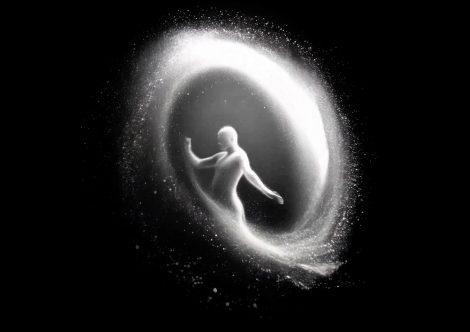 img. courtesy: Claudio Francesconi Two certainties run through our existence: death, and the presence of the Fibonacci sequence in everything around us. Leonardo Fibonacci from Pisa gave the world a mathematical principle that forever reshaped how we read nature, form and growth. Why this sequence — and its golden offspring, PHI — matters so deeply is a question that has occupied centuries of study, but this article looks elsewhere: at what Fibonacci's thought has generated within the visual arts, and how it continues to offer an unexpected bridge between distant cultures. For far too long, we've opposed rationality and emotion, science and poetry, reducing art to a domain detached from mathematics. This romanticised divide has obscured entire artistic genealogies built precisely on order, proportion, optics and geometry. From the Renaissance to the twentieth-century avant-gardes, from kinetic experiments to perceptual research, scientific rigour has never been alien to creativity — it has simply been pushed to the margins of mainstream narrative. Today those margins no longer exist. Digital art, transmedial practices and the rise of Artificial Intelligence have turned mathematics into an everyday language of contemporary creation. Computational tools, once the territory of specialists, are now accessible to anyone with an idea and a piece of software. The result is a moment in which visual traditions overlap without clashing, finding in mathematics a shared, global ground that anyone can read. The Fibonacci sequence is everywhere: in flowers, in urban patterns, in biological systems, in human-made structures. Its ubiquity led me to imagine a show that would truly test its universal character — inviting artists from distant backgrounds to confront the same primordial structure. To celebrate Fibonacci Day in Pisa, I selected several international artists, including two from China — a choice that may seem unusual in a West that still perceives China as distant from contemporary artistic and technological culture. The truth is that we know very little about China's current art scene, and what we do know is often filtered through outdated ideas. It is in this perceptual void that the work of Zhang Nan and Duan Yike emerges — two artists who approached Fibonacci from radically different traditions, imaginaries and conceptual frameworks. Zhang Nan's Form Beyond Boundaries demonstrates how the golden spiral transcends any cultural ownership. It is not a citation but a narrative detonator. The spiral contracts into a primordial core, then bursts into geometric fragments advancing with a precise, almost musical rhythm. On one side it recalls Western traditions of proportion; on the other it resonates with Eastern notions of balance and generative forces. As the sequence progresses, the form collapses and regenerates, shifting from material to immaterial states: the mathematics remains, but transforms, like a living principle. The work merges geometry and philosophy, perception and metaphysics — revealing what it truly means to conceive art as a global territory. Duan Yike's The Spiral of Timeless Murals begins instead with the Dunhuang mural motifs, reinterpreting them through cyclical structures, proportions and spirals aligned with Fibonacci logic. Time is no longer linear: it becomes movement, return, stratification. Mathematics serves not as ornament but as the conceptual scaffolding that allows tradition to be reconstructed and transformed through digital patterns. Dunhuang is not “modernised”: it is read as a complex, natural system built on the same principles that govern growth and universal harmony. The work becomes a bridge between eras, technologies and cultures, reaffirming that what repeats in nature also repeats in human imagination. From these works emerges a China the West rarely sees: not a monolithic ideology, but an artistic scene capable of engaging with universal codes with striking clarity. A China that knows its past but refuses to be constrained by it; that reads Fibonacci not as a borrowed tool but as a framework to rethink itself. A China that experiments, interprets and innovates. And if this exhibition offers one lesson, it is straightforward: when you work with structures that belong to everyone — spirals, proportions, cycles, algorithms — the distinction between “centre” and “periphery” collapses. China stops being an elsewhere to decode and becomes a central actor, fully embedded in the global conversation. Fibonacci, once again, reminds us that growth is never linear: it arrives from unexpected directions, opens lateral paths, overturns inherited assumptions. This is the China you don't expect. And one we should finally start looking at for what it truly is. |
