|
Digital meets Culture https://www.digitalmeetsculture.net/article/musescope-art-guide/ Export date: Wed Oct 7 19:55:53 2026 / +0000 GMT |
MuseScope: a pocket guide to art  Written by Igor Fomin, founder of MuseScope  In May 1945 the Dutch painter Han van Meegeren was arrested in Amsterdam. A previously unknown Vermeer had turned up in the collection of Hermann Göring, and the sale was traced back to van Meegeren. He was charged with selling a national treasure to the enemy. Van Meegeren then confessed that he had painted the picture himself. The investigators did not believe him, so under supervision he painted another “Vermeer”. In 1947 a court sentenced van Meegeren to a year in prison for forgery and fraud, and by then the newspapers had made him the man who fooled Göring. Many paintings have a story like this, though it usually stays in monographs and exhibition catalogues read by specialists. MuseScope tells these stories to everyone else. MuseScope is a pocket guide to art. It covers more than 43,000 artworks, 2,600 artists and nearly 2,000 museums, and each of them has a short story in many languages, written for someone who has never studied art. You can read the story or listen to it on headphones. The result is an audio guide that works in any museum, on a train or at home. Take Vermeer's Girl with a Pearl Earring. Its story begins with the fact that in seventeenth-century Holland a picture like this was called a tronie: a study of a head in an invented costume. Historians have never established who sat for Vermeer. The pearl is too large to be real. Vermeer painted its shine with a couple of strokes of white. In 1881 the collector Arnoldus des Tombe bought the painting at an auction in The Hague for two guilders and thirty cents, and in 1902 he left it to the Mauritshuis, the royal picture gallery in the same city. 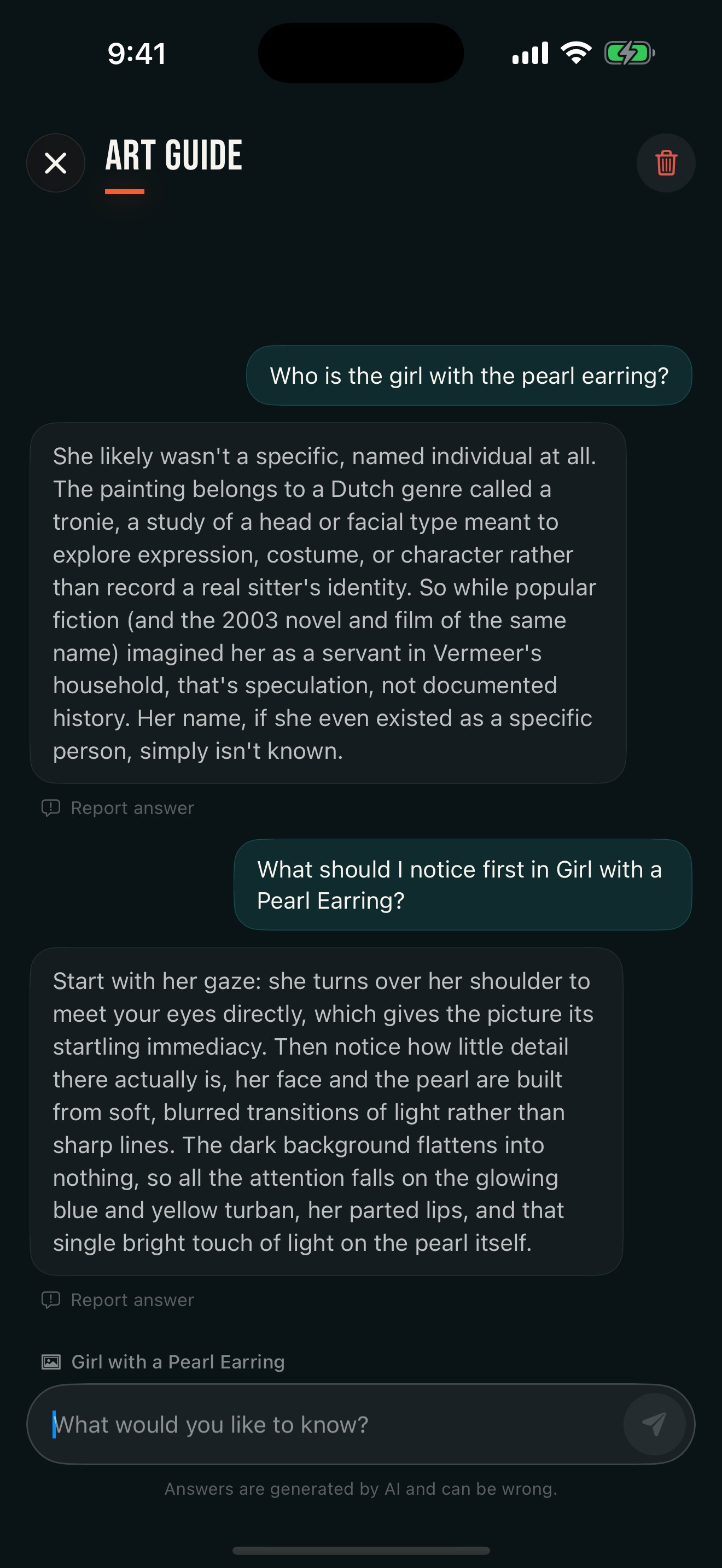
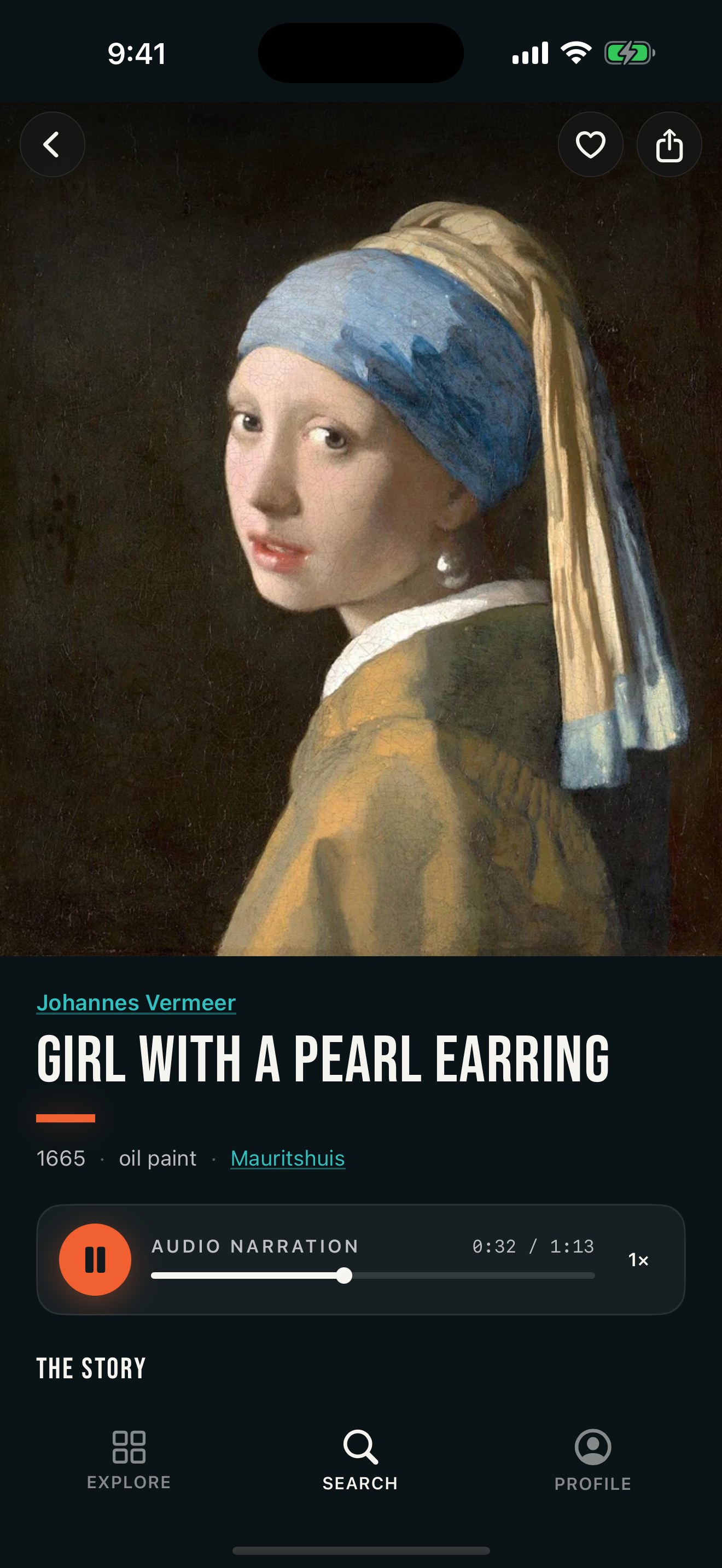
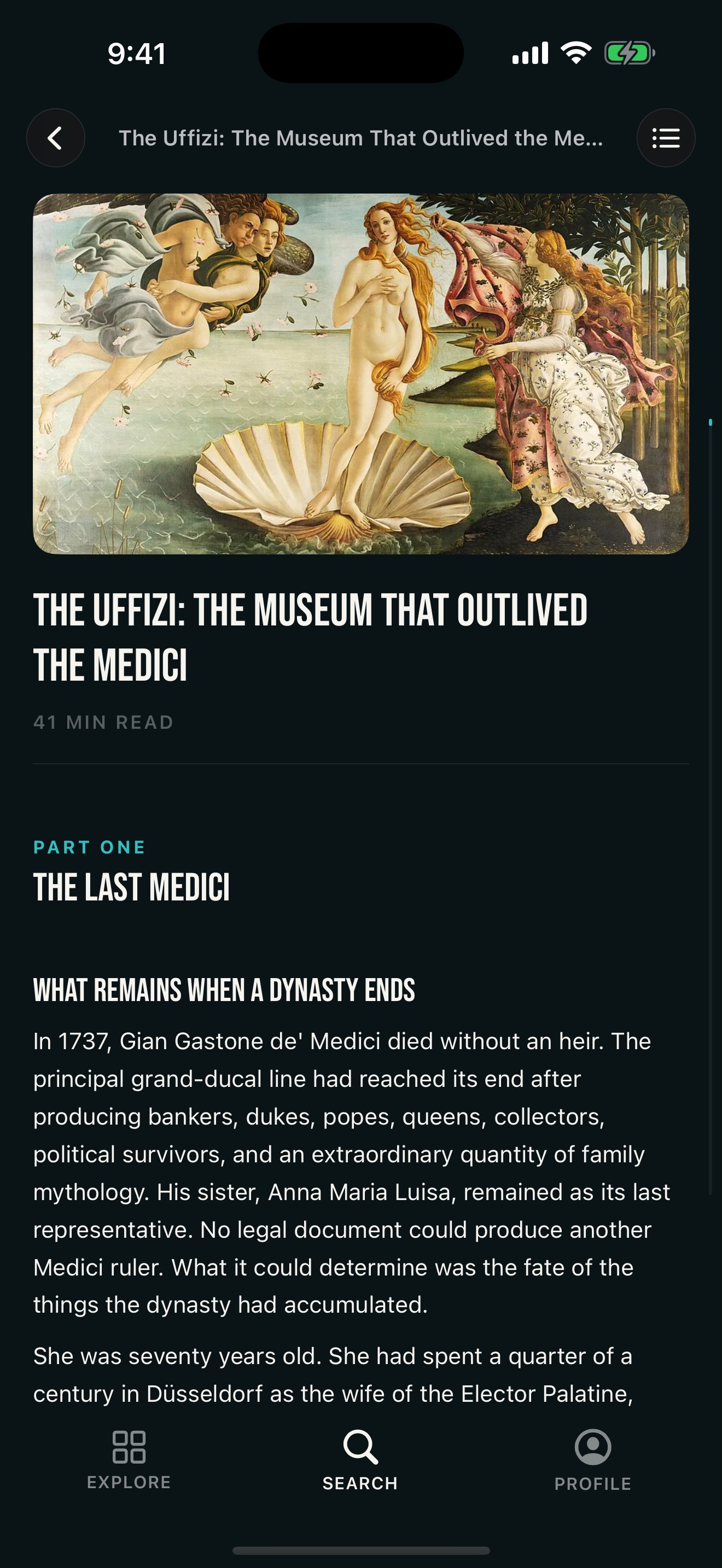
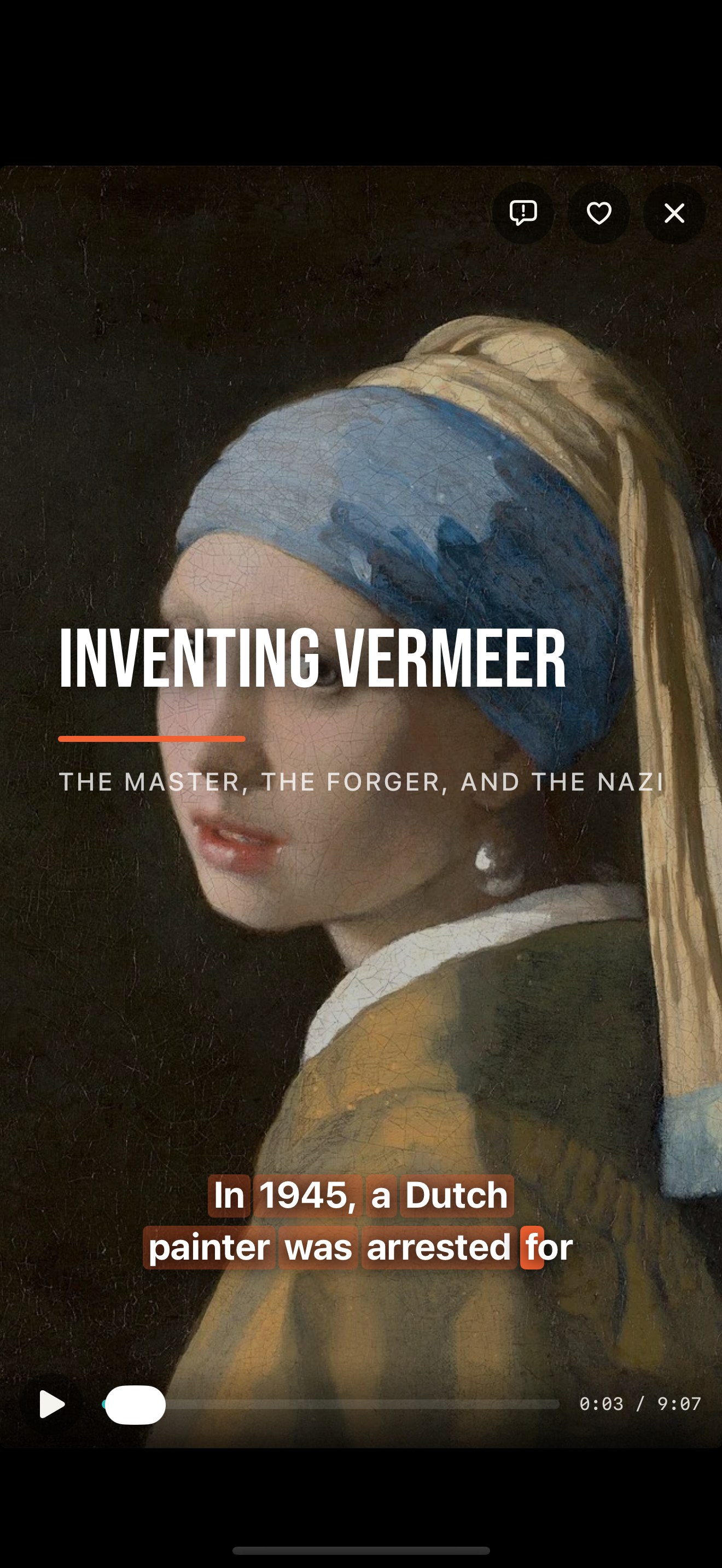
A painting can be found by its title, its artist or its museum. If it is right in front of you, point the phone's camera at it. Any question left after a story can be asked in the app, such as what happened to the Mona Lisa's eyebrows, or why a daylight scene by Rembrandt is called The Night Watch. For anyone planning a trip there are long articles about museums, from the Louvre and the Metropolitan Museum of Art to the Galleria Borghese and the Belvedere in Vienna. There are also video stories in which a narrator leads you through paintings on one theme. One of them follows van Meegeren and his forged Vermeers. We built the catalogue from Wikidata, Wikimedia Commons and the open-access collections that museums publish themselves, and we check the rights to every image. Open data has its share of errors. The Prado, for example, has placed about 3,400 of its works on long-term deposit with nearly 280 institutions, from museums in Toledo and Seville to Spanish embassies abroad, yet open sources list many of these paintings as if they hung in Madrid. We file a painting under the museum where visitors can see it. Every record is checked by several AI agents, which compare its dates, attribution, title and museum. In the hardest cases we turn to museum curators. The stories themselves are written with the latest AI models, from verified records and published research. If a museum finds a mistake in the description of one of its paintings, or would like its collection covered more fully, we would be glad to hear from it. MuseScope is available now on the App Store, with an Android version in development. The catalogue can also be read at musescope.app. Follow MuseScope on their Instagram page @musescope.app |
