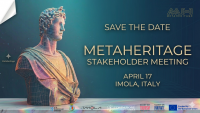


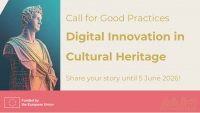
MetaHeritage is building a shared knowledge ecosystem to showcase innovation at the intersection of cultural heritage, technology, and business models: it now invites to innovators, cultural heritage professionals, and SMEs to contribute to its growing Knowledge Hub, a compendium of … Continue reading
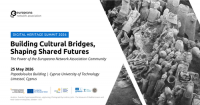
On May 25, 2026 the Europeana Network Association (ENA) event will bring together more than 6,000 multi- and interdisciplinary professionals to expand, enrich, and democratise access to Europe’s digital cultural heritage. This event is targeted at the full spectrum of … Continue reading
Tag: metadata

BPOC – BALBOA PARK ONLINE COLLABORATIVE is facilitating another open discussion on the use of AI in cultural heritage. In this session, we have invited Kerry Kennedy, Public Art Coordinator with the DC Commission on the Arts and Humanities, and Dr. … Continue reading
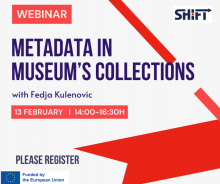
The webinar aims to provide practical knowledge and inspiration for embracing digital innovation in the museum sector and is part of the SHIFT project (Metamorphosis of Cultural Heritage Into Augmented Hypermedia Assets for Enhanced Accessibility and Inclusion) that is being … Continue reading

15th October 2021 h. 9-12 CEST online event via Zoom Enriching photographic heritage through citizen science. This second workshop from the Citizen Heritage project is focused on engaging university students with digital cultural heritage and the importance of good metadata … Continue reading

PAGODE – Europeana China is a project aiming to highlight digital collections of Chinese heritage, with a particular attention on those made available by various cultural heritage institutions in Europeana, the European digital library. Many of those collections would benefit … Continue reading

The 15th International Conference on Metadata and Semantics Research (MTSR 2021), as well as the SPECIAL TRACK on METADATA & SEMANTICS for CULTURAL COLLECTIONS & APPLICATIONS, due to the COVID-19 pandemic, will take place virtually on 29th November – 3rd December 2021. Call … Continue reading
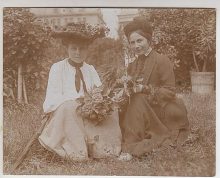
Enriching photographic heritage through citizen science. If it is true that an image is worth a thousand words, the key issue with the mass of digitized photographic heritage that is published in online repositories is allowing users to find the … Continue reading

PAGODE is a project about Chinese heritage in Europeana. The Europeana portal gives access to about 60 million digital cultural heritage items of all sort, from thousands of cultural heritage institutions throughout Europe. Rich and descriptive information to be associated … Continue reading
The 14th International Conference on Metadata and Semantics Research (MTSR 2020), as well as the SPECIAL TRACK on METADATA & SEMANTICS for CULTURAL COLLECTIONS & APPLICATIONS, due to the COVID-19 pandemic will take place virtually on 30th November – 4th … Continue reading

Applications are invited from candidates who possess the necessary qualifications in order to fill one (1) full time Marie S. Curie Early Stage Researcher (ESR) Fellow Position in the newly established UNESCO Chair on Digital Cultural Heritage / Digital Heritage … Continue reading
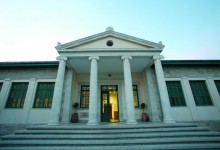
SPECIAL TRACK on METADATA & SEMANTICS for CULTURAL COLLECTIONS & APPLICATIONS Part of the 12th International Conference on Metadata and Semantics Research (MTSR 2018), October 23 – 2018, Limassol, Cyprus. Proceedings will be published in Springer CCIS series AIM AND … Continue reading